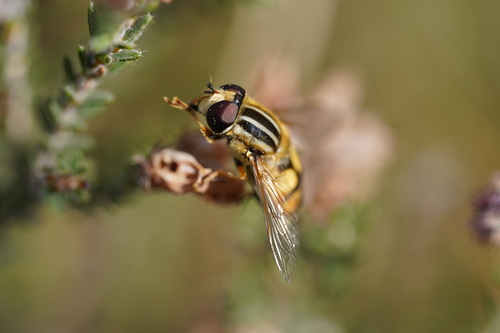
About the Hawthorn Fly
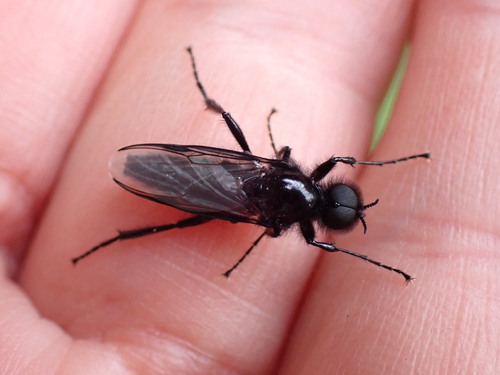
Bibio marci or St. Mark's fly or hawthorn fly, is a species of fly from the family Bibionidae. It is found across much of Europe. Their common name comes from the fact that the adults usually emerge around St Mark's Day, 25 April.
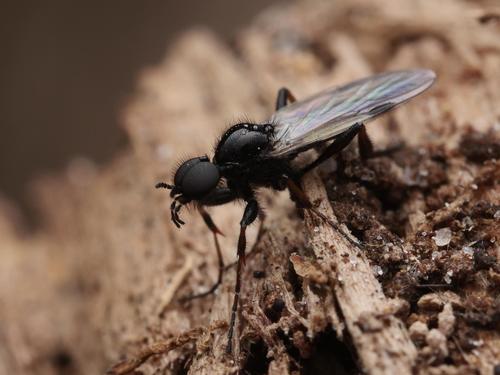
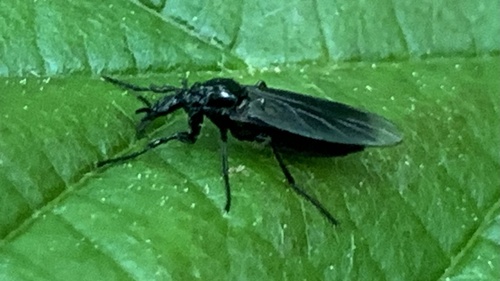
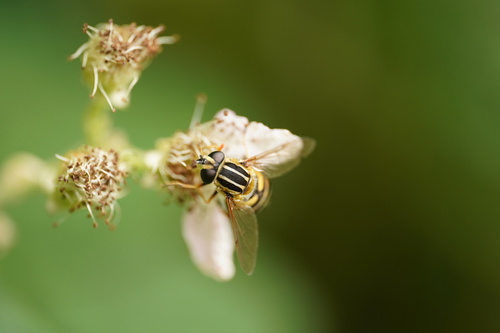
Adult specimens are usually 12-14mm in length. They can be observed hovering with their prominent legs dangling below. The adults feed on nectar and are considered an important pollinator. The body is entirely shiny black and covered in dark hairs, and the wings are translucent or milky-white with prominent dark veins along the leading costal margin.
The species exhibits sexual dimorphism in eye structure: Males have large eyes that meet at the top of the head (holoptic), divided horizontally into upper and lower sections. Females have smaller compound eyes set far apart on the sides of the head (dichoptic).
Like most bibionid larvae, they grow up in grassy areas and are herbivores and scavengers feeding on dead vegetation or living plant roots. Adult females usually lay their eggs in soil or decomposing vegetation. Bibio marci larvae are known to be root damage pests of celery, asparagus, roses, saxifrages... Wikipedia →