

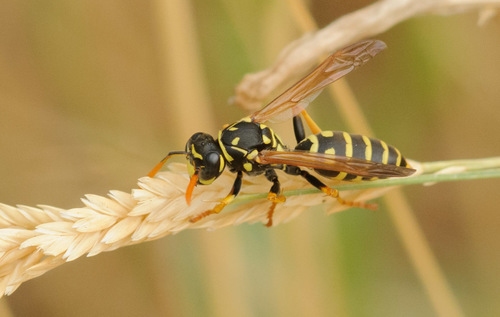
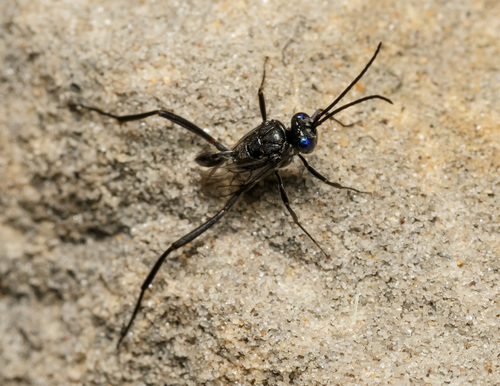
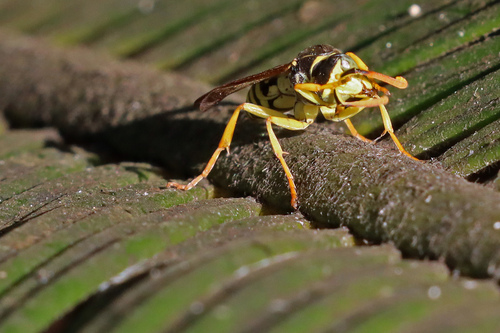


Pubescent Carpenter Bee

Pubescent Carpenter Bee

Xylocopa pubescens

Daily sighting probability ~20% · Possible
at Jerusalem

In 3 days ~40% in a week ~70%

10 Verified sightings at Jerusalem
July Best month

About the Pubescent Carpenter Bee

Xylocopa pubescens is a species of large carpenter bee. Females form nests by excavation with their mandibles, often in dead or soft wood. X. pubescens is commonly found in areas extending from India to Northeast and West Africa. It must reside in these warm climates because it requires a minimum ambient temperature of 18 °C (64 °F) in order to forage.

A common area of study in X. pubescens is its dominance hierarchy and guarding behavior. Colonies start and end with female takeover, either by daughters of the dominant female or by foreign intruders. There is only one reproductively active female in a colony at a time who suppresses the reproduction of other females in the nest. Males hold individual territories which females enter to mate. When an intruder enters another male's territory, the male responds aggressively.

X. pubescens is polylectic, so it forages on many species of plants. It forages on some plants for nectar when preparing bee bread during ontogenesis and forages on others for pollen to feed offspring. Pheromones from Dufour's gland are vital to mark flowers previously visited and also to mark nests so that the foraging bees know where to return. X. pubescens is known to be an effective pollinator, often more effective than honeybees, but it is not commonly used in today's agricultural settings. Wikipedia →

Global Distribution

Parks Where Found

# Park Country Daily sighting probability

More parks will be added in future updates.

Cities Where Found

# City Country Daily sighting probability
1 Tunis 🇹🇳 Tunisia
~50%
2 Athens 🇬🇷 Greece
~40%
3 Luxor 🇪🇬 Egypt
~40%
4 Casablanca 🇲🇦 Morocco
~40%
5 Marrakesh 🇲🇦 Morocco
~40%
6 Tel Aviv 🇮🇱 Israel
~30%
7 Rabat 🇲🇦 Morocco
~20%
8 Cairo 🇪🇬 Egypt
~20%
9 Antalya 🇹🇷 Turkey
~20%
10 Jerusalem 🇮🇱 Israel
~20%

Before you go

What are the chances of seeing a Pubescent Carpenter Bee in Jerusalem?

Possible

About 20% of wildlife watchers report a Pubescent Carpenter Bee sighting in Jerusalem on a given day, based on 10 verified sightings from GBIF citizen-science data. It is the 59th most-seen of the 137 insects we can rate there. Over three days the chance rises to about 40%, and over a week to about 70%, if each day is a fresh chance.

When is the best time to see a Pubescent Carpenter Bee in Jerusalem?

July

In that month about 30% of wildlife watchers report a Pubescent Carpenter Bee in Jerusalem on a given day, against under 5% in February–March, June, September and November–December, the lowest months. That is one of Jerusalem's driest months, with almost no rain against 90 mm in January.

Is Jerusalem the best place to see a Pubescent Carpenter Bee?

10th of 12

Of the 12 cities where we can rate Pubescent Carpenter Bee sightings, Jerusalem ranks 10th at about 20%. The best odds are in Tunis (Tunisia, about 50%), Athens (Greece, about 40%) and Luxor (Egypt, about 40%).

Where does the Pubescent Carpenter Bee sighting chance come from?

GBIF citizen-science records

It is estimated from how often the Pubescent Carpenter Bee is recorded against all the insects logged in Jerusalem (10 verified sightings), calibrated against known sighting rates. Figures are rounded to the nearest 10% because citizen-science data supports honest approximations, not decimals, and months with records from fewer than five people show "—". How it works.

← Back to Jerusalem