Vestal Cuckoo Bumble Bee

Vestal Cuckoo Bumble Bee

Bombus vestalis

Daily sighting probability ~10% · With luck
at Kharkiv

In 3 days ~30% in a week ~60%

15 Verified sightings at Kharkiv
19 In all 2 parks From 2019 to 2026
July Best month
☀️ Diurnal When it's spotted

About the Vestal Cuckoo Bumble Bee

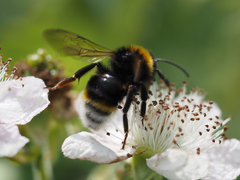
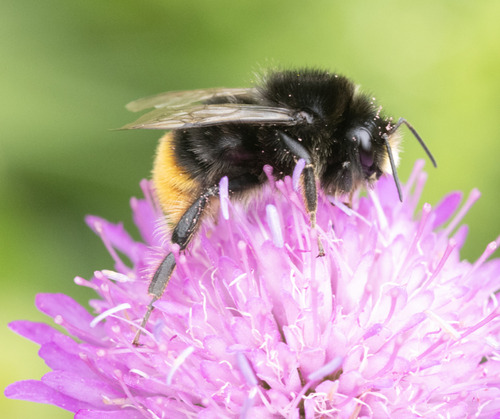
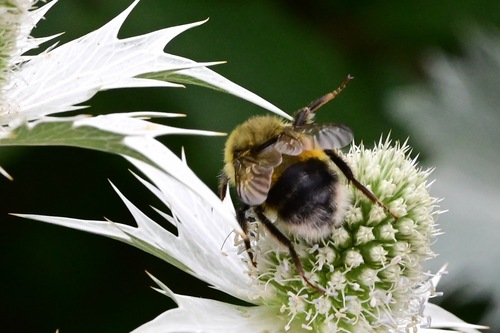
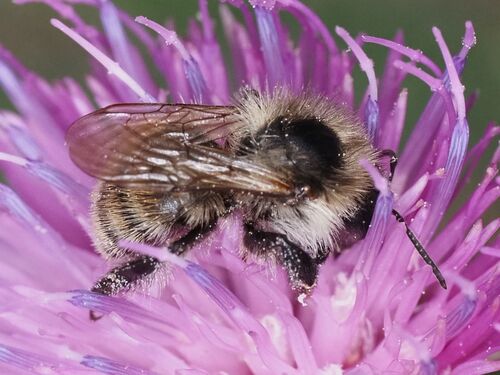
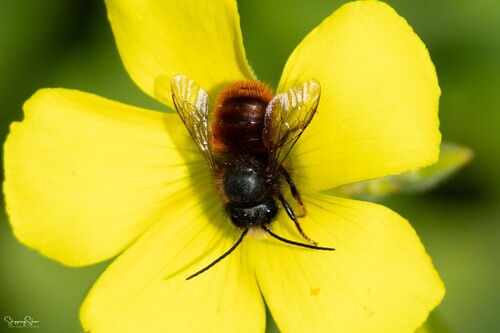
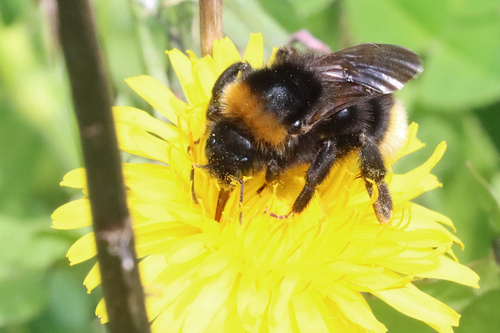
Bombus vestalis, the vestal cuckoo bumblebee, is a species of cuckoo bumblebee that lives in most of Europe, as well as North Africa and western Asia. It is a brood parasite that takes over the nests of other bee species. Its primary host is Bombus terrestris (the buff-tailed bumblebee). After its initial classification as Psithyrus vestalis, this bumblebee was recently reclassified into the genus Bombus, subgenus Psithyrus.

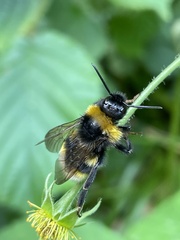
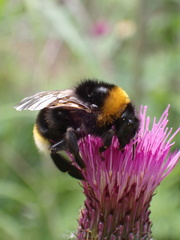
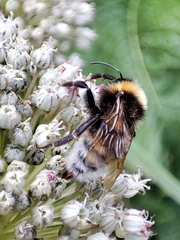
The queen is a large bumblebee with a length up to 21 mm (0.83 in) and a wingspan of 37 mm (1.5 in); the male is considerably smaller (16 mm (0.63 in)). The bumblebee is predominantly black, with an orange collar. The third tergite has a border of yellow hairs, and the hairs on the fifth tergite are mostly white. The males are similar to the females, but smaller and with longer antennae.

It is similar in appearance to another cuckoo bumblebee, Bombus bohemicus, but is distinguishable by either the length of the antennal segments or dissection and comparison of the genitalia. In Bombus vestalis, the fifth antennal segment will be the same length as the third and fourth together.

A key characteristic of Bombus vestalis is the lack of corbiculae or... Wikipedia →
Global Distribution

Parks Where Found

# Park Country Daily sighting probability
1 Sierra Nevada National Park 🇪🇸 Spain
~10%
2 Wadden Sea National Park 🇩🇪 Germany
<5%

Cities Where Found

# City Country Daily sighting probability
1 Warsaw 🇵🇱 Poland
~10%
2 Kharkiv 🇺🇦 Ukraine
~10%
3 Berlin 🇩🇪 Germany
~10%
4 Liverpool 🇬🇧 United Kingdom
~10%
5 London 🇬🇧 United Kingdom
~10%
6 Birmingham 🇬🇧 United Kingdom
~10%
7 Essen 🇩🇪 Germany
~10%
8 Kyiv 🇺🇦 Ukraine
~10%
9 Cologne 🇩🇪 Germany
~10%
10 Munich 🇩🇪 Germany
~10%

Before you go

What are the chances of seeing a Vestal Cuckoo Bumble Bee in Kharkiv?

With luck

About 10% of wildlife watchers report a Vestal Cuckoo Bumble Bee sighting in Kharkiv on a given day, based on 15 verified sightings from GBIF citizen-science data. It is the 107th most-seen of the 289 insects we can rate there. Over three days the chance rises to about 30%, and over a week to about 60%, if each day is a fresh chance.

When is the best time to see a Vestal Cuckoo Bumble Bee in Kharkiv?

July

In that month about 30% of wildlife watchers report a Vestal Cuckoo Bumble Bee in Kharkiv on a given day, against under 5% in June and August–March, the lowest months.

What time of day is best to see a Vestal Cuckoo Bumble Bee?

Between noon and 3 pm

Across all the parks we cover, that three-hour window holds the most Vestal Cuckoo Bumble Bee sightings with a recorded time, and about 9 in 10 of them come between 6 am and 6 pm: it is a daytime animal.

Is Kharkiv the best place to see a Vestal Cuckoo Bumble Bee?

Among the best

Of the 18 cities where we can rate Vestal Cuckoo Bumble Bee sightings, Kharkiv ranks 2nd at about 10%, level with the leaders once rounded. The best odds are in Warsaw (Poland, about 10%).

Which relatives of the Vestal Cuckoo Bumble Bee live in Kharkiv?

Same genus: Bombus

The closest relatives of the Vestal Cuckoo Bumble Bee that you can see in Kharkiv (genus Bombus, Bumble Bees) are Red-Tailed Bumble Bee (about 10%), White-Tailed Bumble Bee (about 10%) and Tree Bumble Bee (about 10%), with each one's daily chance of a sighting.

Where does the Vestal Cuckoo Bumble Bee sighting chance come from?

GBIF citizen-science records

It is estimated from how often the Vestal Cuckoo Bumble Bee is recorded against all the insects logged in Kharkiv (15 verified sightings), calibrated against known sighting rates. Figures are rounded to the nearest 10% because citizen-science data supports honest approximations, not decimals, and months with records from fewer than five people show "—". How it works.

← Back to Kharkiv