
Dusky Lilysquatter

Dusky Lilysquatter

Paracercion calamorum

Daily sighting probability <5% · Rare
at Kochi

In 3 days ~10% in a week ~20%

5 Verified sightings at Kochi
April Best month
☀️ Diurnal When it's spotted

About the Dusky Lilysquatter

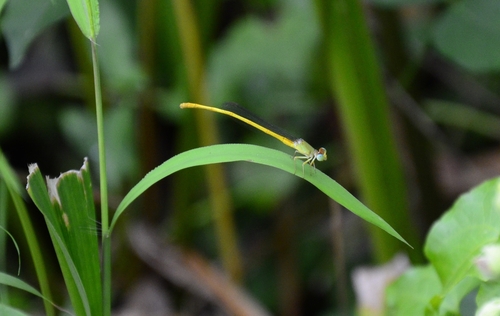
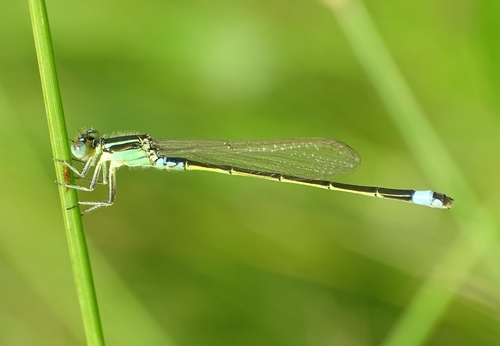
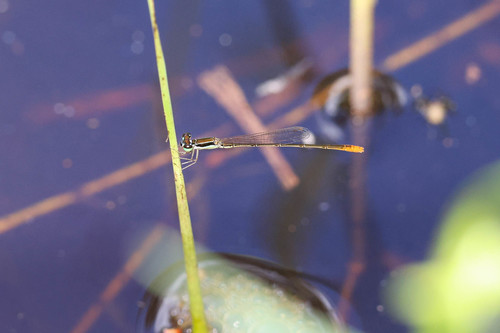
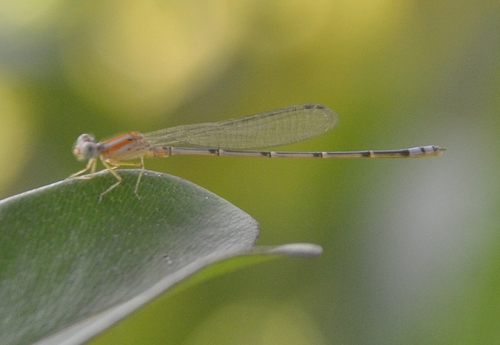
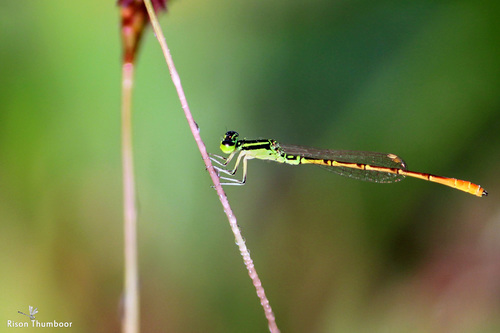
Paracercion calamorum, the dusky lilly-squatter, is a species of damselfly in the family Coenagrionidae. It has a range that extends from southern far-eastern Russia to Japan, and to India and Indonesia. The nominate subspecies P. c. calamorum is known from central and eastern China, Korea and Japan. The subspecies P. c. dyeri occurs in southern China, Hong Kong, Taiwan, Indonesia, India, Nepal, and Thailand.

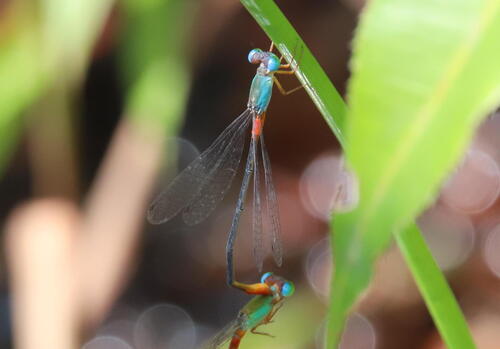
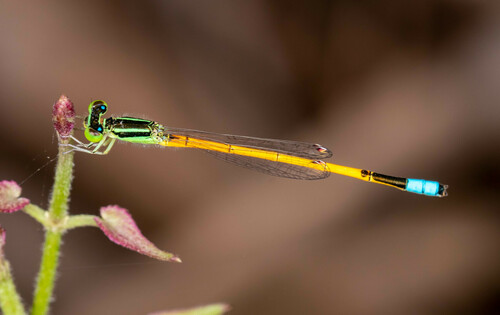
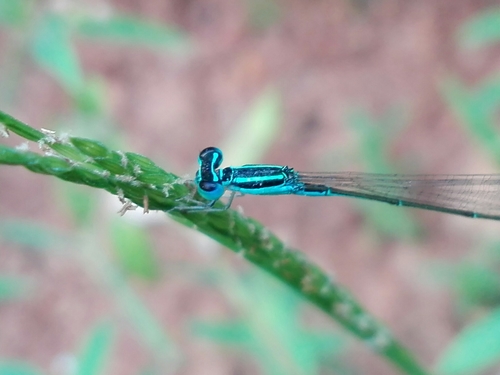
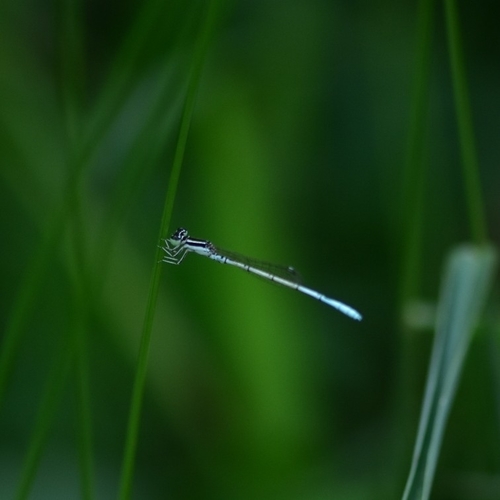
It is a medium-sized damselfly with brown-capped yellowish green eyes. Its thorax is black on dorsum without any or very fine azure blue antehumeral stripes, which are very broad in Paracercion malayanum. Lateral sides of thorax are greenish blue with a fine black line on the upper part of each lateral suture. In old males, all these marks are obscured by bluish white pruinescence. Its wings are transparent and pterostigma is yellow, framed with heavy black nervures. Its abdomen is azure blue with broad black dorsal marks up to segment 7. Segment 2 has a distinct broad dorsal spot connected narrowly to a fine apical ring. This mark will help to distinguish it from Pseudagrion species. Segment 10 has a narrow mid-dorsal black streak. Female is dull... Wikipedia →

Global Distribution

Parks Where Found

# Park Country Daily sighting probability

More parks will be added in future updates.

Cities Where Found

# City Country Daily sighting probability
1 Daegu 🇰🇷 South Korea
~30%
2 Daejeon 🇰🇷 South Korea
~10%
3 Suzhou 🇨🇳 China
~10%
4 Beijing 🇨🇳 China
~10%
5 Osaka 🇯🇵 Japan
~10%
6 Hangzhou 🇨🇳 China
~10%
7 Nanjing 🇨🇳 China
~10%
8 Shanghai 🇨🇳 China
~10%
9 Seoul 🇰🇷 South Korea
~10%
10 Taipei 🇹🇼 Taiwan
~10%

Before you go

What are the chances of seeing a Dusky Lilysquatter in Kochi?

Rare

Under 5% of wildlife watchers report a Dusky Lilysquatter sighting in Kochi on a given day, based on 5 verified sightings from GBIF citizen-science data. It is the 377th most-seen of the 428 insects we can rate there. Over three days the chance rises to about 10%, and over a week to about 20%, if each day is a fresh chance.

When is the best time to see a Dusky Lilysquatter in Kochi?

April and May

In those months about 10% of wildlife watchers report a Dusky Lilysquatter in Kochi on a given day, against under 5% in June to March, the lowest months.

What time of day is best to see a Dusky Lilysquatter?

Between 8 and 11 am

Across all the parks we cover, that three-hour window holds the most Dusky Lilysquatter sightings with a recorded time, and nearly all of them come between 6 am and 6 pm: it is a daytime animal.

Is Kochi the best place to see a Dusky Lilysquatter?

12th of 12

Of the 12 cities where we can rate Dusky Lilysquatter sightings, Kochi ranks 12th at under 5%. The best odds are in Daegu (South Korea, about 30%), Daejeon (South Korea, about 10%) and Suzhou (China, about 10%).

Which relatives of the Dusky Lilysquatter live in Kochi?

Same family: Coenagrionidae

The closest relatives of the Dusky Lilysquatter that you can see in Kochi (family Coenagrionidae, Narrow-winged Damselflies) are Coromandel Marsh Dart (about 40%), Common Bluetail (about 30%) and Wandering Midget (about 20%), with each one's daily chance of a sighting.

Where does the Dusky Lilysquatter sighting chance come from?

GBIF citizen-science records

It is estimated from how often the Dusky Lilysquatter is recorded against all the insects logged in Kochi (5 verified sightings), calibrated against known sighting rates. Figures are rounded to the nearest 10% because citizen-science data supports honest approximations, not decimals, and months with records from fewer than five people show "—". How it works.

← Back to Kochi