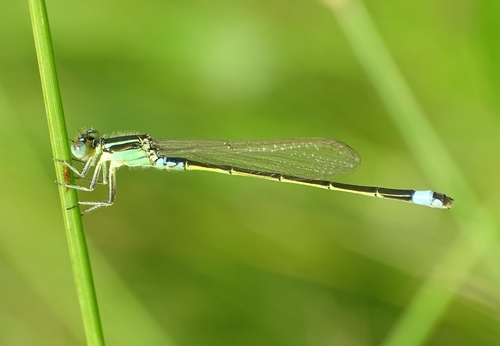
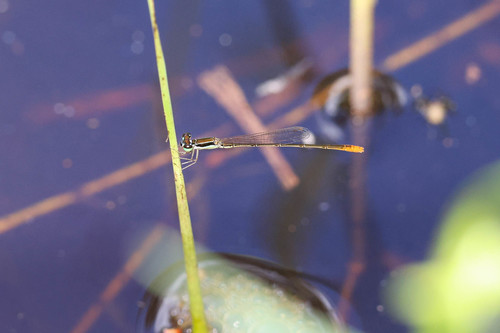
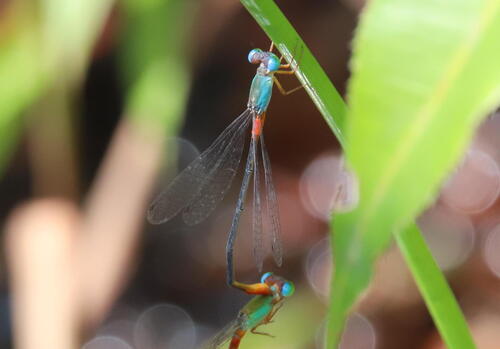
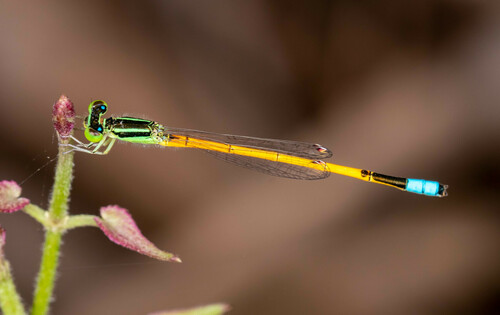
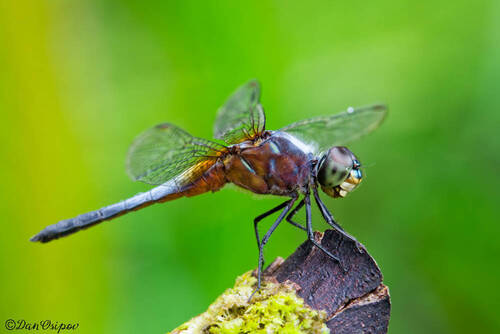
Blue Riverdamsel

Blue Riverdamsel

Pseudagrion microcephalum

Daily sighting probability ~20% · Possible
at Kochi

In 3 days ~50% in a week ~80%

217 Verified sightings at Kochi
14 In 1 park From 2019 to 2026
July Best month
☀️ Diurnal When it's spotted

About the Blue Riverdamsel

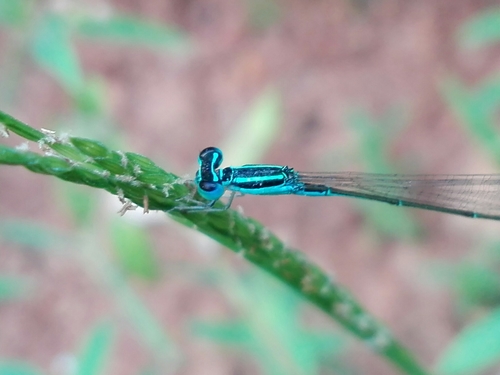
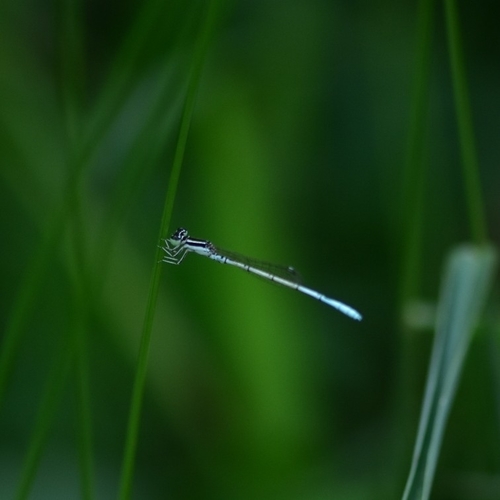
The blue riverdamsel, Pseudagrion microcephalum is a common species of damselfly in the family Coenagrionidae. It is also known as the blue sprite and blue grass dart. For many years, Pseudagrion microcephalum was considered to be a widespread species occurring across southern and eastern Asia, Australasia and the Pacific.

In 2026, Malte Seehausen and Milen Marinov reviewed the Pseudagrion microcephalum species complex and restricted Pseudagrion microcephalum to populations from the Indian subcontinent and Sri Lanka. As part of this revision, Australian, Papuan and Pacific populations previously identified as Pseudagrion microcephalum were reassigned to several distinct species, including Pseudagrion crenatum in Australia and New Guinea. Other populations from Southeast Asia and the western Pacific were also reassigned to newly recognised regional species.

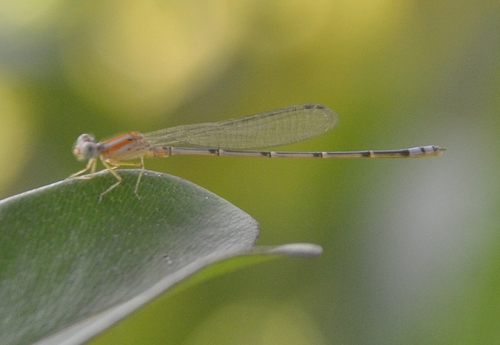
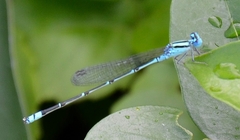
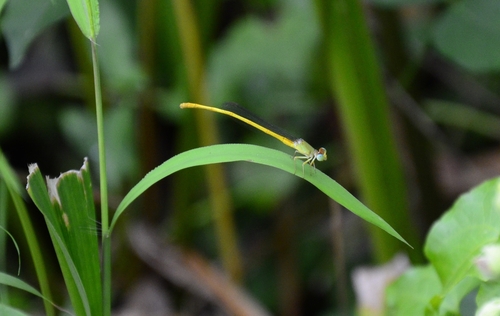
This species can be found in India and Sri Lanka. It is a medium-sized damselfly with pale blue eyes, dark on top. They grow to 38mm in length. Its thorax is azure blue with black, broad dorsal stripes and narrow humeral stripes. Abdominal segments 1 and 2 are blue with... Wikipedia →

Global Distribution

Parks Where Found

# Park Country Daily sighting probability
1 Sepilok 🇲🇾 Malaysia
~10%

More parks will be added in future updates.

Cities Where Found

# City Country Daily sighting probability
1 Kochi 🇮🇳 India
~20%
2 Singapore 🇸🇬 Singapore
~20%
3 Thrissur 🇮🇳 India
~20%
4 Thiruvananthapuram 🇮🇳 India
~20%
5 Kuching 🇲🇾 Malaysia
~20%
6 Denpasar 🇮🇩 Indonesia
~20%
7 Colombo [Sri Jayawardenepura Kotte] 🇱🇰 Sri Lanka
~10%
8 Kollam 🇮🇳 India
~10%
9 Taichung 🇹🇼 Taiwan
~10%
10 Kolkata 🇮🇳 India
~10%

Before you go

What are the chances of seeing a Blue Riverdamsel in Kochi?

Possible

About 20% of wildlife watchers report a Blue Riverdamsel sighting in Kochi on a given day, based on 217 verified sightings from GBIF citizen-science data. It is the 25th most-seen of the 428 insects we can rate there. Over three days the chance rises to about 50%, and over a week to about 80%, if each day is a fresh chance.

When is the best time to see a Blue Riverdamsel in Kochi?

July and September–October

In those months about 30% of wildlife watchers report a Blue Riverdamsel in Kochi on a given day, against about 10% in January to May, the lowest months. Those are among Kochi's wettest months, with about 360 mm of rain a month against 15 mm in January.

What time of day is best to see a Blue Riverdamsel?

Between 8 and 11 am

Across all the parks we cover, that three-hour window holds the most Blue Riverdamsel sightings with a recorded time, and about 8 in 10 of them come between 6 am and 6 pm: it is a daytime animal.

Is Kochi the best place to see a Blue Riverdamsel?

Yes

Of the 18 cities where we can rate Blue Riverdamsel sightings, Kochi has the highest daily chance: about 20%. Next come Singapore (Singapore, about 20%) and Thrissur (India, about 20%).

Which relatives of the Blue Riverdamsel live in Kochi?

Same family: Coenagrionidae

The closest relatives of the Blue Riverdamsel that you can see in Kochi (family Coenagrionidae, Narrow-winged Damselflies) are Coromandel Marsh Dart (about 40%), Common Bluetail (about 30%) and Wandering Midget (about 20%), with each one's daily chance of a sighting.

Where does the Blue Riverdamsel sighting chance come from?

GBIF citizen-science records

It is estimated from how often the Blue Riverdamsel is recorded against all the insects logged in Kochi (217 verified sightings), calibrated against known sighting rates. Figures are rounded to the nearest 10% because citizen-science data supports honest approximations, not decimals, and months with records from fewer than five people show "—". How it works.

← Back to Kochi