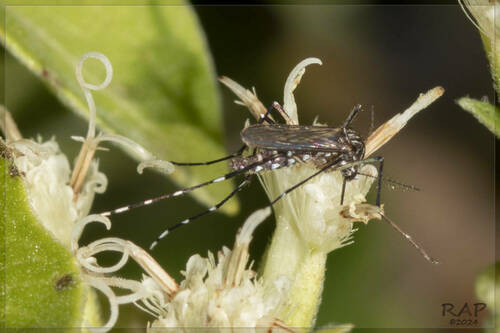
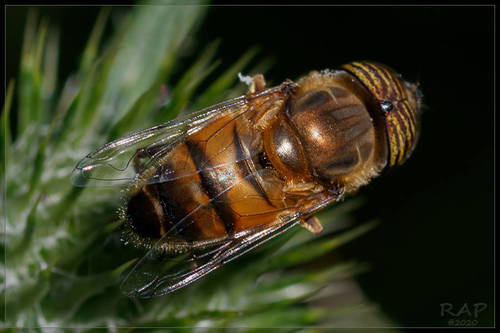
False Stable Fly

False Stable Fly

Muscina stabulans

Daily sighting probability ~10% · With luck
at Lima

In 3 days ~20% in a week ~30%

13 Verified sightings at Lima
October Best month

About the False Stable Fly

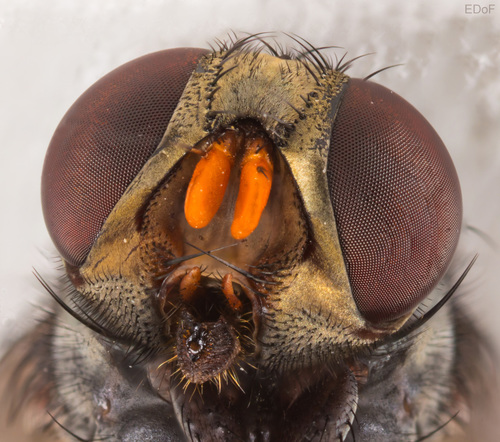
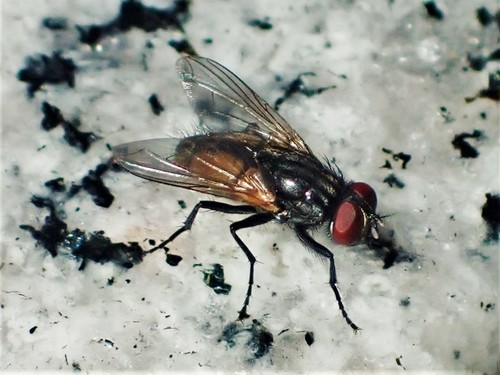
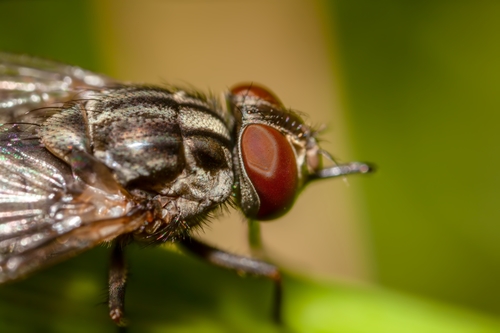
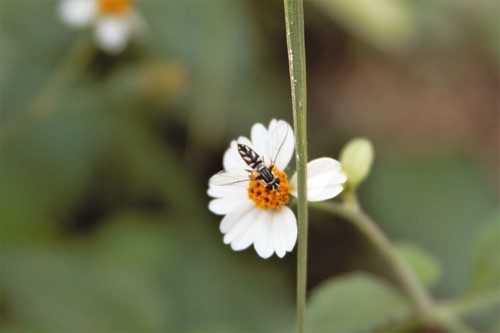
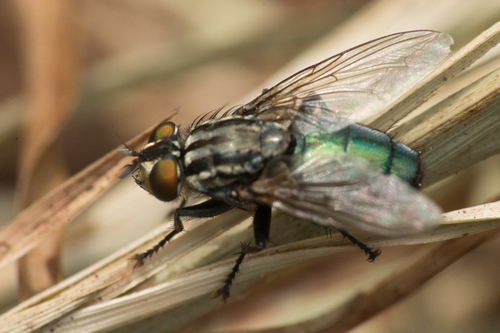
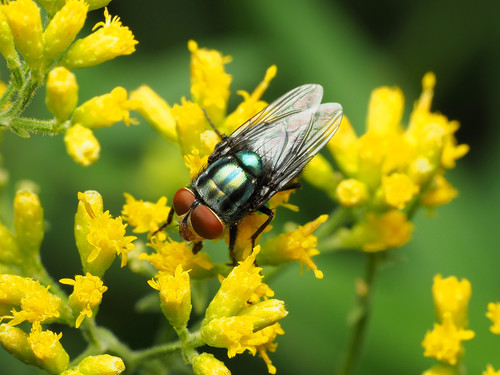
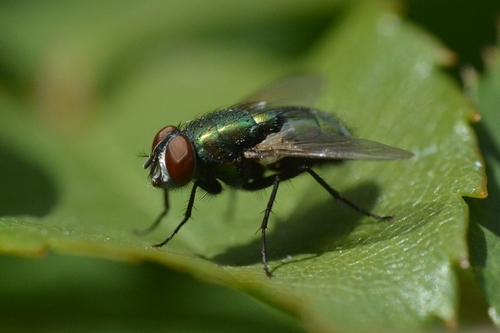
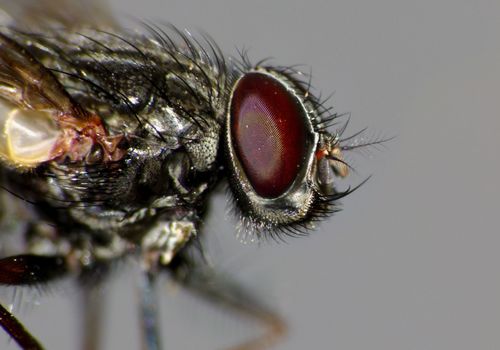
Muscina stabulans (formerly Curtonevra stabulans), commonly known as the false stable fly, is a fly from the family Muscidae. As an adult, Muscina stabulans has partially reddish-brown legs, four characteristic dark stripes along the thorax region, and a pale spot above the thorax. These flies average 8 millimeters (0.3 inches) in length. The abdomen is either entirely black or black with red sides. Its head ranges in color from a dark-grey to a whitish hue. Circular spiracular plates can be found separated by about one plate's width in the posterior area.

Larvae are dullish-white in colour, 6–7 mm long and 1–1.5 mm wide. They consist of 11 segments, with all but the last having a belt of small, well-developed spines going towards the posterior margins. The pseudo-cephalic segment has two hooks. The posterior spiracles have curved spiracular slits.

The false stable fly was found in a study determining synanthropy (ecological association with humans) of adult Muscidae collected in urban, rural and natural environments in Valdivia, Chile. According to the study, M. stabulans are mostly found in rural and natural neighborhoods, and rarely inhabit cities... Wikipedia →
Global Distribution

Parks Where Found

# Park Country Daily sighting probability

More parks will be added in future updates.

Cities Where Found

# City Country Daily sighting probability
1 Guiyang 🇨🇳 China
~30%
2 Athens 🇬🇷 Greece
~10%
3 Lima 🇵🇪 Peru
~10%
4 Buenos Aires 🇦🇷 Argentina
<5%
5 Beijing 🇨🇳 China
<5%
6 Vienna 🇦🇹 Austria
<5%
7 Berlin 🇩🇪 Germany
<5%
8 Lisbon 🇵🇹 Portugal
<5%
9 Yekaterinburg 🇷🇺 Russia
<5%
10 Helsinki 🇫🇮 Finland
<5%

Before you go

What are the chances of seeing a False Stable Fly in Lima?

With luck

About 10% of wildlife watchers report a False Stable Fly sighting in Lima on a given day, based on 13 verified sightings from GBIF citizen-science data. It is the 47th most-seen of the 95 insects we can rate there. Over three days the chance rises to about 20%, and over a week to about 30%, if each day is a fresh chance.

When is the best time to see a False Stable Fly in Lima?

February to October

In those months about 10% of wildlife watchers report a False Stable Fly in Lima on a given day, against under 5% in November to January, the lowest months.

Is Lima the best place to see a False Stable Fly?

3rd of 13

Of the 13 cities where we can rate False Stable Fly sightings, Lima ranks 3rd at about 10%. The best odds are in Guiyang (China, about 30%) and Athens (Greece, about 10%).

Which relatives of the False Stable Fly live in Lima?

Same family: Muscidae

The closest relatives of the False Stable Fly that you can see in Lima (family Muscidae, House Flies and Allies) are Synthesiomyia nudiseta (about 10%) and Common House Fly (about 10%), with each one's daily chance of a sighting.

Where does the False Stable Fly sighting chance come from?

GBIF citizen-science records

It is estimated from how often the False Stable Fly is recorded against all the insects logged in Lima (13 verified sightings), calibrated against known sighting rates. Figures are rounded to the nearest 10% because citizen-science data supports honest approximations, not decimals, and months with records from fewer than five people show "—". How it works.

← Back to Lima