Red-Barred Tortrix

Red-Barred Tortrix

Ditula angustiorana

Daily sighting probability ~10% · With luck
at Liverpool

In 3 days ~20% in a week ~50%

27 Verified sightings at Liverpool
July Best month
🌙 Nocturnal When it's spotted

About the Red-Barred Tortrix

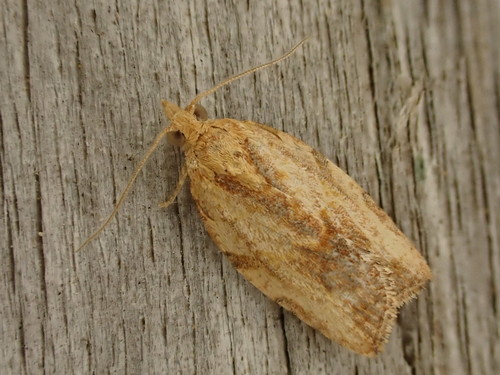
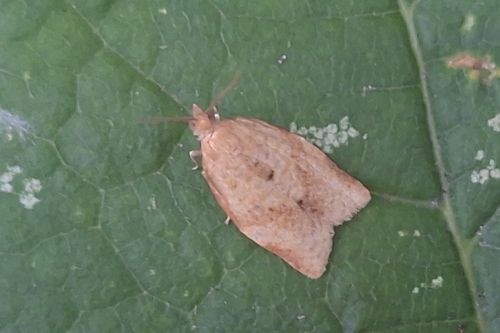
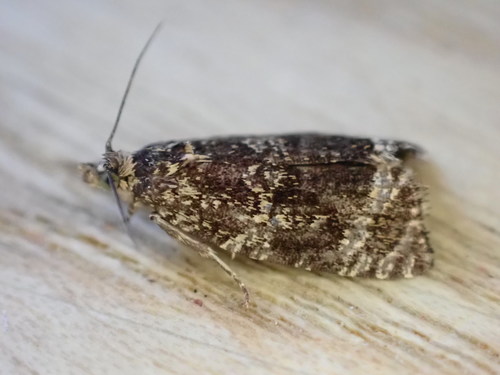
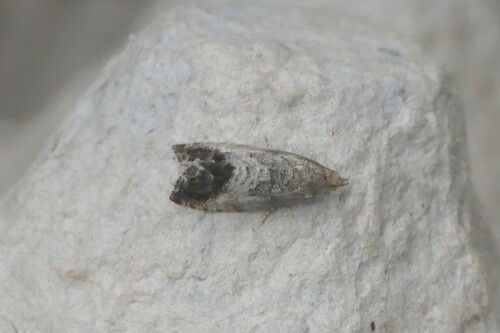
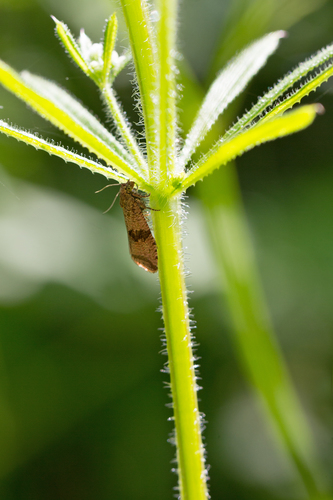
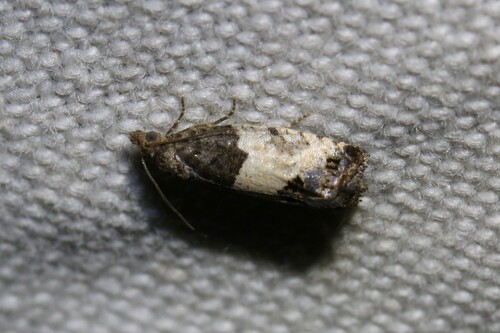
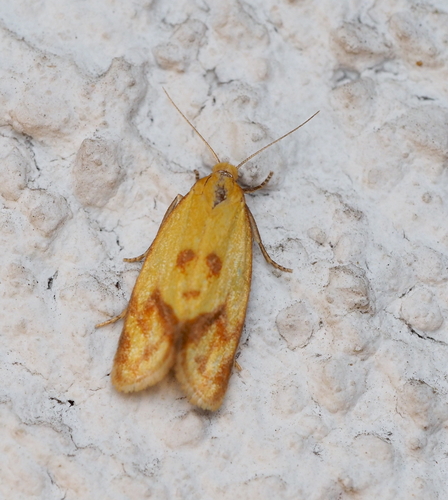
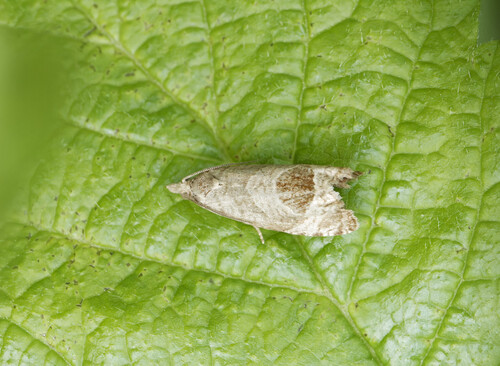
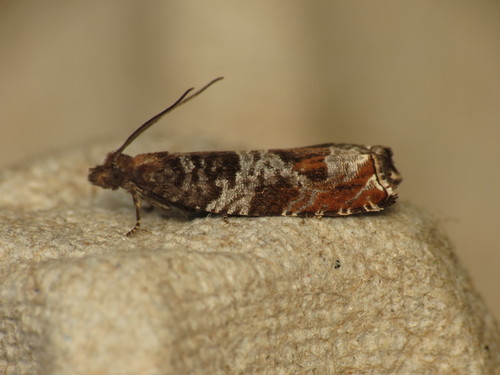
Ditula angustiorana, the red-barred tortrix, is a moth of the family Tortricidae found in Africa, Asia, Europe and North Africa. Other common names are the fruit-tree tortrix and the vine tortrix. The moth was first described by Adrian Hardy Haworth in 1811.

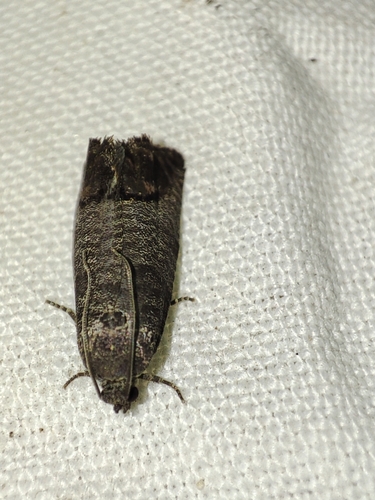
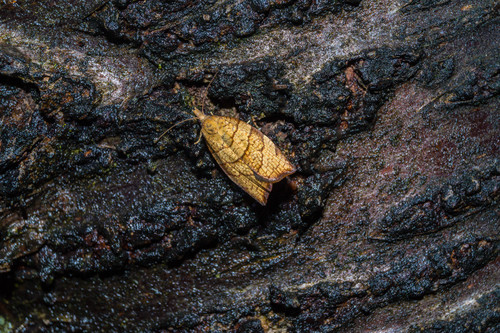
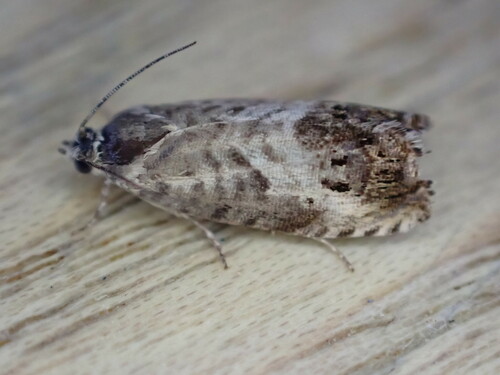
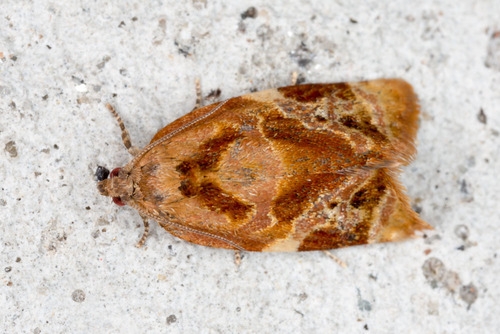
The wingspan is 12–18 mm. The forewings are ferruginous ochreous, blackish-mixed in disc posteriorly. The base and costal fold in the male are dark brown. There is a ferruginous-brown oblique mark from dorsum near the base. The central fascia and costal patch are deep ferruginous, often separated by a whitish suffusion on the costa, and the patch extended as a fascia to the tornus. The hindwings are blackish-grey, in female lighter anteriorly. The larva is greenish-yellowish, with a head and plate of 2 green or light brown.

Single brooded, the moths are on wing from May to August (depending on the location), with an occasional second brood in September and October; has also been recorded in April. The pale yellow eggs are laid in groups on leaves mainly in June and July.

Larvae are found from August to April and May and are polyphagous feeding on the foliage of trees, usually amongst spun leaves and developing... Wikipedia →
Global Distribution

Parks Where Found

# Park Country Daily sighting probability

More parks will be added in future updates.

Cities Where Found

# City Country Daily sighting probability
1 Liverpool 🇬🇧 United Kingdom
~10%
2 London 🇬🇧 United Kingdom
~10%
3 Birmingham 🇬🇧 United Kingdom
~10%
4 Manchester 🇬🇧 United Kingdom
<5%
5 Rotterdam [The Hague] 🇳🇱 Netherlands
<5%
6 Vienna 🇦🇹 Austria
<5%
7 Hamburg 🇩🇪 Germany
<5%
8 Paris 🇫🇷 France
<5%
9 Munich 🇩🇪 Germany
<5%
10 Berlin 🇩🇪 Germany
<5%

Before you go

What are the chances of seeing a Red-Barred Tortrix in Liverpool?

With luck

About 10% of wildlife watchers report a Red-Barred Tortrix sighting in Liverpool on a given day, based on 27 verified sightings from GBIF citizen-science data. It is the 233rd most-seen of the 632 insects we can rate there. Over three days the chance rises to about 20%, and over a week to about 50%, if each day is a fresh chance.

When is the best time to see a Red-Barred Tortrix in Liverpool?

June and July

In those months about 20% of wildlife watchers report a Red-Barred Tortrix in Liverpool on a given day, against under 5% in September and November–April, the lowest months.

What time of day is best to see a Red-Barred Tortrix?

Between 8 and 11 pm

Across all the parks we cover, that three-hour window holds the most Red-Barred Tortrix sightings with a recorded time, and nearly all of them come between 6 pm and 6 am: it is mostly seen at night.

Is Liverpool the best place to see a Red-Barred Tortrix?

Yes

Of the 12 cities where we can rate Red-Barred Tortrix sightings, Liverpool has the highest daily chance: about 10%. Next come London (United Kingdom, about 10%) and Birmingham (United Kingdom, about 10%).

Which relatives of the Red-Barred Tortrix live in Liverpool?

Same family: Tortricidae

The closest relatives of the Red-Barred Tortrix that you can see in Liverpool (family Tortricidae, Tortricid Leafroller Moths) are Light Brown Apple Moth (about 50%), Codling Moth (about 20%) and Chequered Fruit-Tree Tortrix (about 20%), with each one's daily chance of a sighting.

Where does the Red-Barred Tortrix sighting chance come from?

GBIF citizen-science records

It is estimated from how often the Red-Barred Tortrix is recorded against all the insects logged in Liverpool (27 verified sightings), calibrated against known sighting rates. Figures are rounded to the nearest 10% because citizen-science data supports honest approximations, not decimals, and months with records from fewer than five people show "—". How it works.

← Back to Liverpool