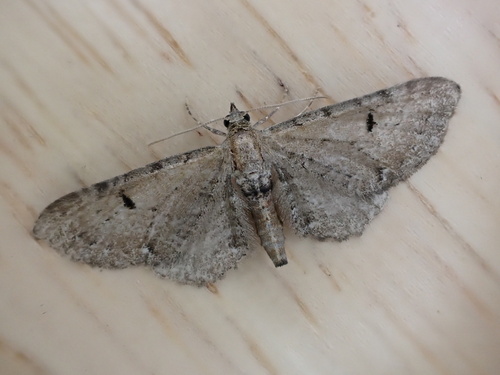
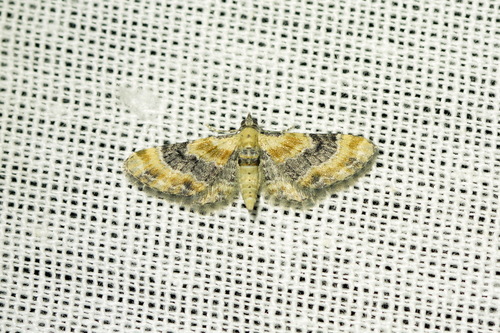
Foxglove Pug

Foxglove Pug

Eupithecia pulchellata

Daily sighting probability <5% · Rare
at London

In 3 days ~10% in a week ~20%

20 Verified sightings at London
14 In 1 park From 2019 to 2026
June Best month
☀️ Diurnal When it's spotted

About the Foxglove Pug

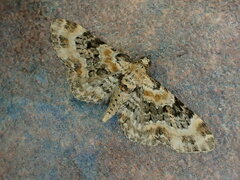
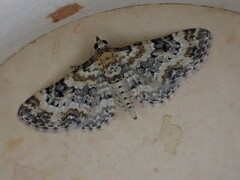
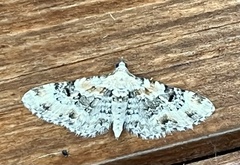
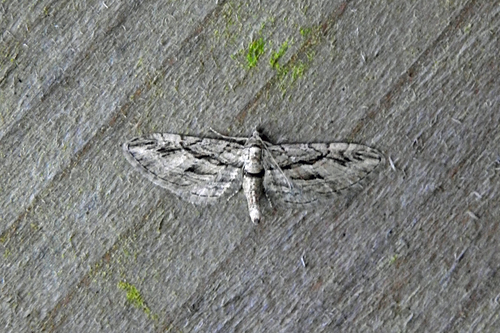
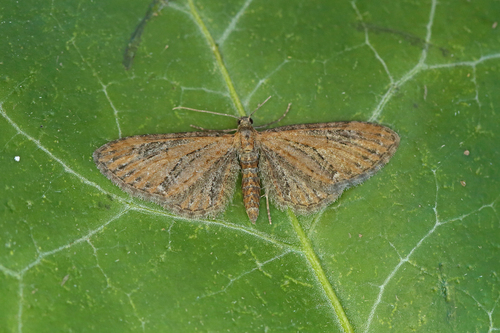
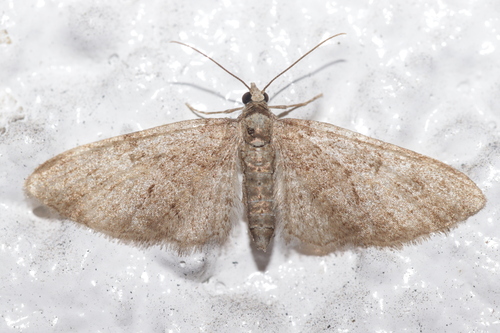
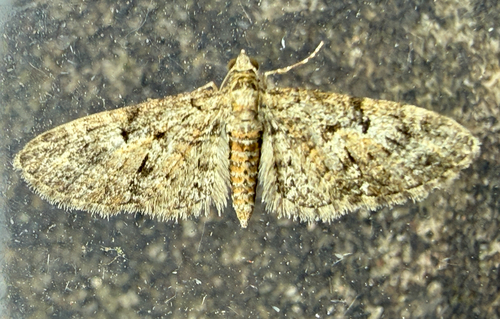
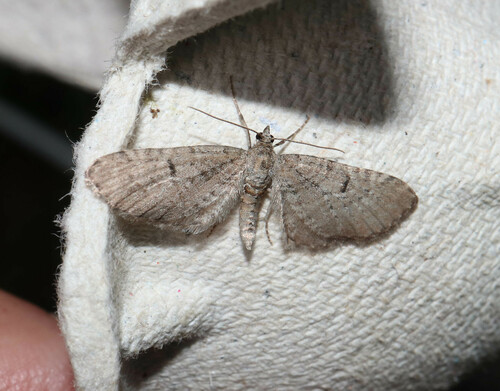
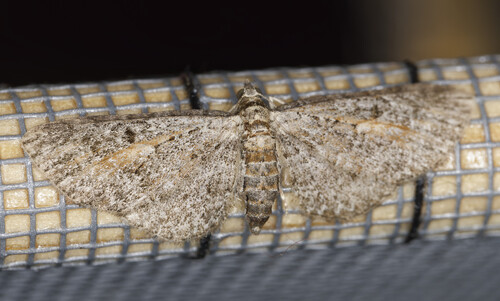
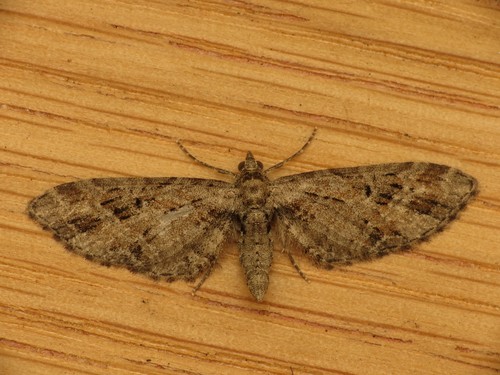
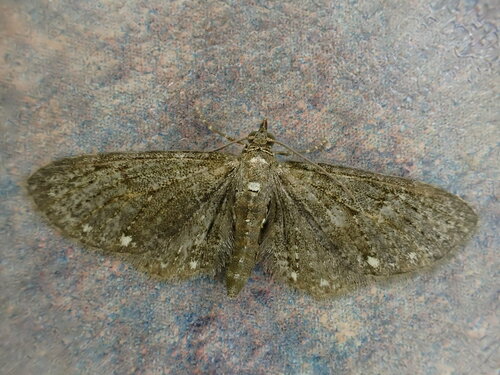
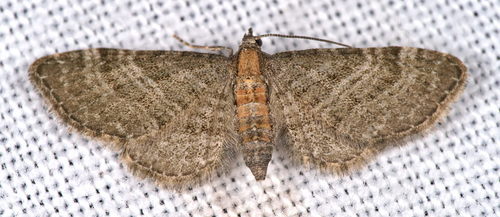
The foxglove pug (Eupithecia pulchellata) is a moth of the family Geometridae found in Europe. It was described by the English entomologist James Francis Stephens in 1831. The wingspan is 18–22 mm and the species is quite colourful for the genus, with alternating bands of dark brown and buffish orange on the forewings. In some races the buff bands can be very pale. There are dark crosslines. The ground colour of the forewings is yellow-red and shows a broad dark grey to dark brown, lightly edged central band, from which a black central spot hardly stands out. There are dark areas at the margin. The hind wings are slightly lighter than the forewings, have a darkened fringing edge and show a small black central spot.(The forewing is, from the inside outwards, coloured as follows: at the base dark grey, then a broad, ochre-yellow transverse band, then an even-broad, white-edged, dark grey transverse band, then whitish-yellow, then an irregular, brownish ochre-yellow transverse band (usually somewhat darker in colour than that further inside the wing), then a white zigzag transverse stripe and outermost grey.)

It flies at night in May and June and is attracted to light... Wikipedia →
Global Distribution

Parks Where Found

# Park Country Daily sighting probability
1 Snowdonia National Park 🇬🇧 United Kingdom
~10%

More parks will be added in future updates.

Cities Where Found

# City Country Daily sighting probability
1 Liverpool 🇬🇧 United Kingdom
~10%
2 Porto 🇵🇹 Portugal
~10%
3 Birmingham 🇬🇧 United Kingdom
<5%
4 London 🇬🇧 United Kingdom
<5%

Before you go

What are the chances of seeing a Foxglove Pug in London?

Rare

Under 5% of wildlife watchers report a Foxglove Pug sighting in London on a given day, based on 20 verified sightings from GBIF citizen-science data. It is the 753rd most-seen of the 1504 insects we can rate there. Over three days the chance rises to about 10%, and over a week to about 20%, if each day is a fresh chance.

When is the best time to see a Foxglove Pug in London?

June

In that month about 10% of wildlife watchers report a Foxglove Pug in London on a given day, against under 5% in July to May, the lowest months.

What time of day is best to see a Foxglove Pug?

Between 6 and 9 am

Across all the parks we cover, that three-hour window holds the most Foxglove Pug sightings with a recorded time, and about 9 in 10 of them come between 6 am and 6 pm: it is a daytime animal.

Is London the best place to see a Foxglove Pug?

4th of 4

Of the 4 cities where we can rate Foxglove Pug sightings, London ranks 4th at under 5%. The best odds are in Liverpool (United Kingdom, about 10%), Porto (Portugal, about 10%) and Birmingham (United Kingdom, under 5%).

Which relatives of the Foxglove Pug live in London?

Same genus: Eupithecia

The closest relatives of the Foxglove Pug that you can see in London (genus Eupithecia, Pug Moths) are Lime-Speck Pug (about 10%), Cypress Pug (about 10%) and Common Pug (about 10%), with each one's daily chance of a sighting.

Where does the Foxglove Pug sighting chance come from?

GBIF citizen-science records

It is estimated from how often the Foxglove Pug is recorded against all the insects logged in London (20 verified sightings), calibrated against known sighting rates. Figures are rounded to the nearest 10% because citizen-science data supports honest approximations, not decimals, and months with records from fewer than five people show "—". How it works.

← Back to London