Lesser Tawny Crescent

Lesser Tawny Crescent

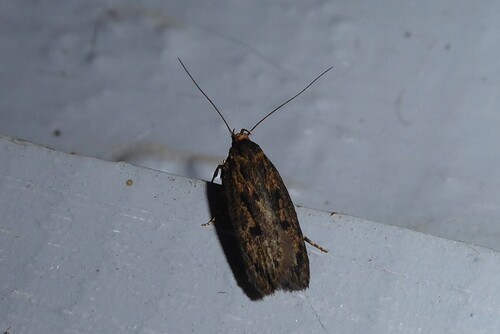
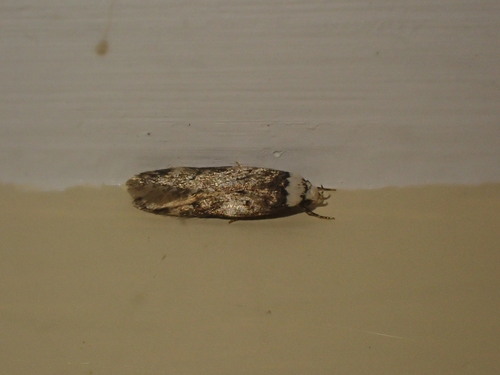
Batia lunaris

Daily sighting probability <5% · Rare
at London

In 3 days ~10% in a week ~30%

36 Verified sightings at London
11 In 1 park From 2019 to 2026
June Best month
☀️🌙 Day & Night When it's spotted

About the Lesser Tawny Crescent

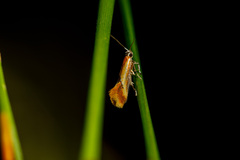
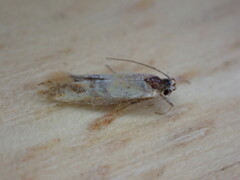
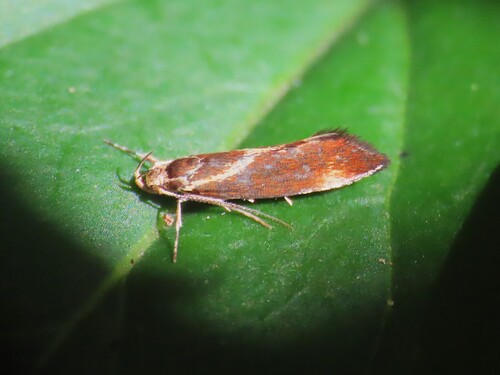
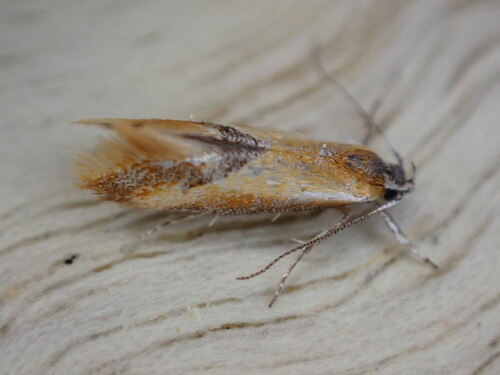
Batia lunaris, the lesser tawny crescent, is a species of gelechioid moth. It belongs to the subfamily Oecophorinae of the concealer moth family (Oecophoridae). It is the type species of the genus Batia, which is sometimes treated as monotypic. But this is not well warranted, as some other species usually placed there differ little from the Lesser Tawny Crescent.

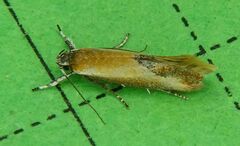
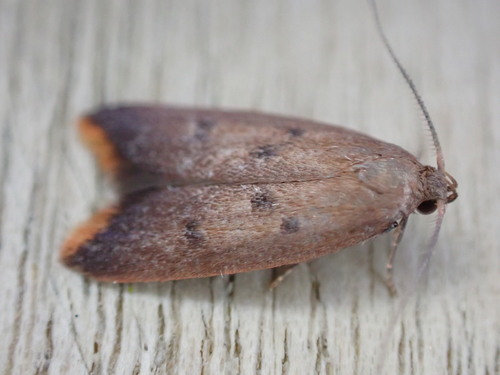
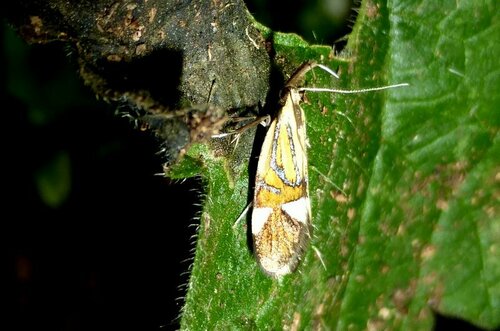
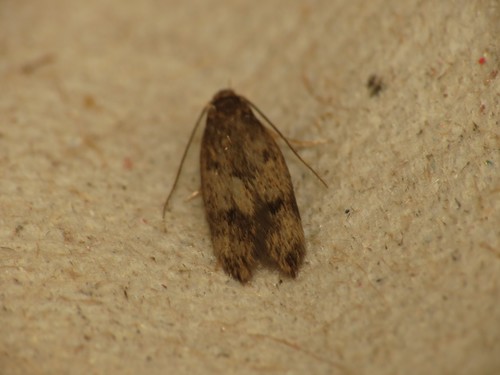
Its wingspan is 7–10 mm, and in general the imagines (adults) resemble the close relative B. lambdella, but are only two-thirds the size of that species. Their forewings are dark ochre, slightly darker at the tips and the hairy fringe surrounding them. At the border between the light and dark parts there is a dark blotch at the dorsal margin, which forms a continuous pointed patch if the wings are laid back while the moth rests.

Meyrick- Head whitish, mixed with dark fuscous. Forewings yellow, towards dorsum orange, costa from base to 2/3 and termen broadly ferruginous; a narrow fuscous costal streak from base to 2/3; a large triangular blackish spot before tornus, its apex irregularly produced towards apex of wing. Hindwings ovate-lanceolate, rather dark grey.

It is found in Europe, where it... Wikipedia →
Global Distribution

Parks Where Found

# Park Country Daily sighting probability
1 Bavarian Forest National Park 🇩🇪 Germany
~10%

More parks will be added in future updates.

Cities Where Found

# City Country Daily sighting probability
1 Liverpool 🇬🇧 United Kingdom
~10%
2 Portland 🇺🇸 United States
<5%
3 London 🇬🇧 United Kingdom
<5%
4 Seattle 🇺🇸 United States
<5%
5 Birmingham 🇬🇧 United Kingdom
<5%
6 Vienna 🇦🇹 Austria
<5%
7 Vancouver 🇨🇦 Canada
<5%

Before you go

What are the chances of seeing a Lesser Tawny Crescent in London?

Rare

Under 5% of wildlife watchers report a Lesser Tawny Crescent sighting in London on a given day, based on 36 verified sightings from GBIF citizen-science data. It is the 593rd most-seen of the 1504 insects we can rate there. Over three days the chance rises to about 10%, and over a week to about 30%, if each day is a fresh chance.

When is the best time to see a Lesser Tawny Crescent in London?

June and July

In those months about 10% of wildlife watchers report a Lesser Tawny Crescent in London on a given day, against under 5% in August to May, the lowest months.

What time of day is best to see a Lesser Tawny Crescent?

Between 9 pm and midnight

Across all the parks we cover, that three-hour window holds the most Lesser Tawny Crescent sightings with a recorded time, and about 6 in 10 of them come between 6 pm and 6 am: it is seen both by day and at night.

Is London the best place to see a Lesser Tawny Crescent?

3rd of 7

Of the 7 cities where we can rate Lesser Tawny Crescent sightings, London ranks 3rd at under 5%. The best odds are in Liverpool (United Kingdom, about 10%) and Portland (United States, under 5%).

Which relatives of the Lesser Tawny Crescent live in London?

Same family: Oecophoridae

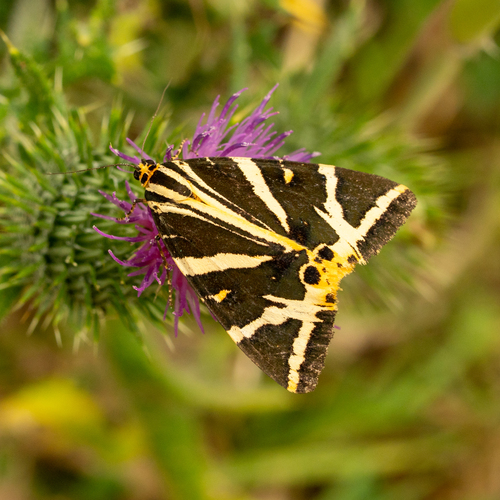
The closest relatives of the Lesser Tawny Crescent that you can see in London (family Oecophoridae, Concealer Moths) are Ruddy Streak (about 20%), Brown House Moth (about 10%) and White-Shouldered House Moth (about 10%), with each one's daily chance of a sighting.

Where does the Lesser Tawny Crescent sighting chance come from?

GBIF citizen-science records

It is estimated from how often the Lesser Tawny Crescent is recorded against all the insects logged in London (36 verified sightings), calibrated against known sighting rates. Figures are rounded to the nearest 10% because citizen-science data supports honest approximations, not decimals, and months with records from fewer than five people show "—". How it works.

← Back to London