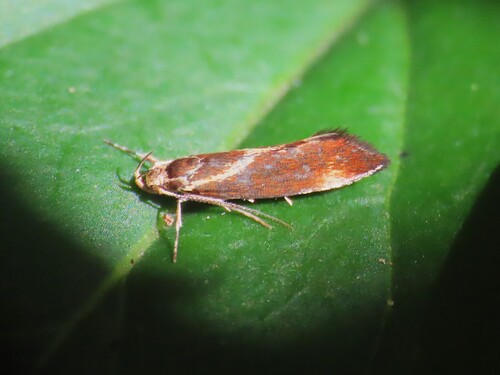
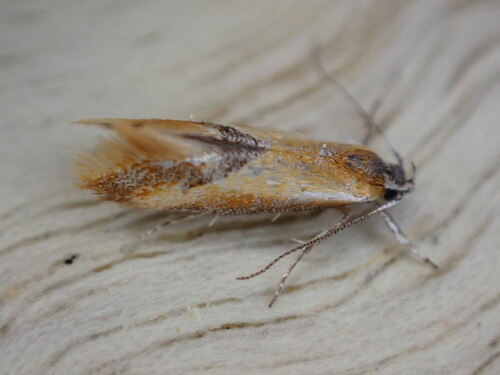
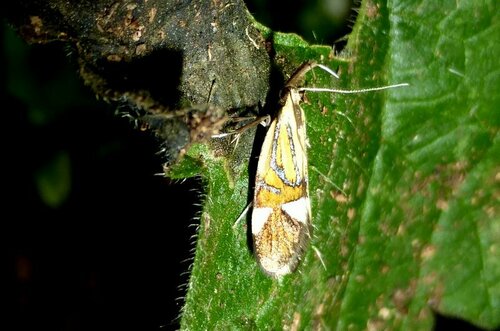
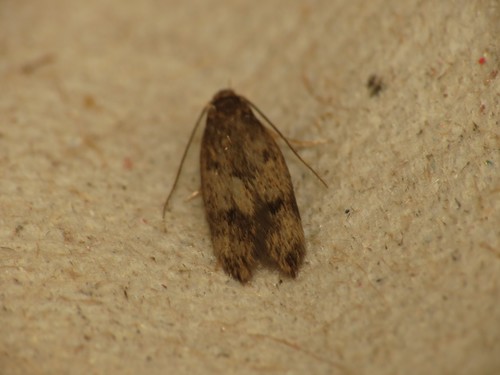
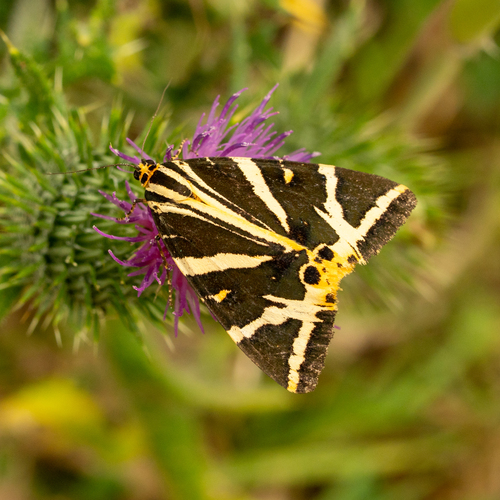
White-Shouldered House Moth

White-Shouldered House Moth

Endrosis sarcitrella

Daily sighting probability ~10% · With luck
at London

In 3 days ~30% in a week ~50%

190 Verified sightings at London
87 In all 4 parks From 2019 to 2026
May Best month
☀️🌙 Day & Night When it's spotted

About the White-Shouldered House Moth

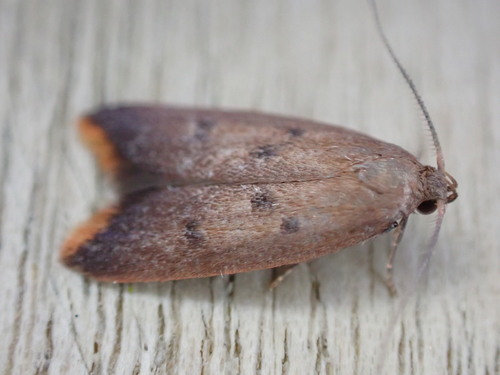
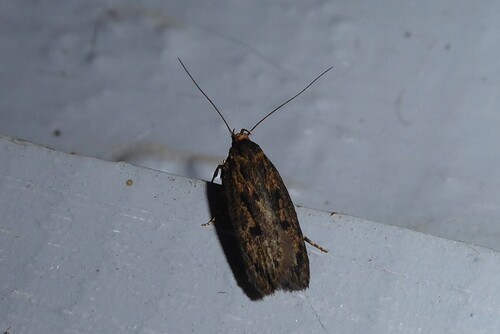
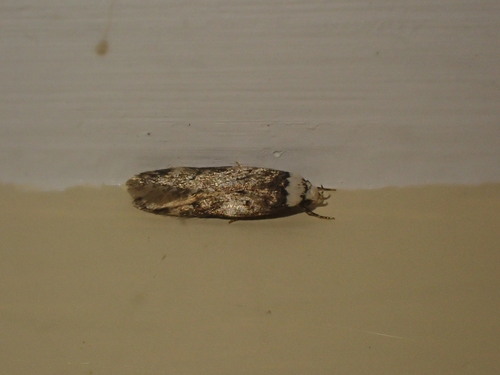
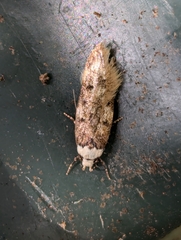
The white-shouldered house moth (Endrosis sarcitrella) is a species of gelechioid moth. It belongs to the subfamily Oecophorinae of the concealer moth family (Oecophoridae), just like the brown house moth (Hofmannophila pseudospretella). Though several presumed congeners of E. sarcitrella were described, its genus Endrosis is currently understood to be monotypic.

This moth is a common species, found by now almost worldwide due to its synanthropic habits. It occurs regularly inside buildings, and being continuously-brooded, can be found at any time of year. It frequents light sources, and can be found in outbuildings where dried food such as grain is kept. It also inhabits birds nests.

The larva is a little grub-like caterpillar and lives on dry plant and animal debris, where it spins itself a small silken hideout. Recorded foodstuffs include dried fruits, cereals (including bran and flour) and other seeds, potatoes, rotting wood, and even insect specimens, wool and old textiles, and guano.

As type species of Endrosis, the white-shouldered house moth was originally included in the genus when it was established (by Jacob Hübner in 1825) as Alucita betulinella, a scientific... Wikipedia →
Global Distribution

Parks Where Found

# Park Country Daily sighting probability
1 Rakiura National Park 🇳🇿 New Zealand
~20%
2 Wadden Sea National Park 🇩🇪 Germany
~10%
3 Blue Mountains National Park 🇦🇺 Australia
~10%
4 Cairngorms National Park 🇬🇧 United Kingdom
~10%

Cities Where Found

# City Country Daily sighting probability
1 Liverpool 🇬🇧 United Kingdom
~20%
2 Birmingham 🇬🇧 United Kingdom
~10%
3 London 🇬🇧 United Kingdom
~10%
4 Auckland 🇳🇿 New Zealand
~10%
5 Manchester 🇬🇧 United Kingdom
~10%
6 Leeds 🇬🇧 United Kingdom
~10%
7 Dublin 🇮🇪 Ireland
~10%
8 Copenhagen 🇩🇰 Denmark
~10%
9 Seattle 🇺🇸 United States
~10%
10 Rotterdam [The Hague] 🇳🇱 Netherlands
<5%

Before you go

What are the chances of seeing a White-Shouldered House Moth in London?

With luck

About 10% of wildlife watchers report a White-Shouldered House Moth sighting in London on a given day, based on 190 verified sightings from GBIF citizen-science data. It is the 177th most-seen of the 1504 insects we can rate there. Over three days the chance rises to about 30%, and over a week to about 50%, if each day is a fresh chance.

When is the best time to see a White-Shouldered House Moth in London?

May

In that month about 20% of wildlife watchers report a White-Shouldered House Moth in London on a given day, against under 5% in February, the lowest month.

What time of day is best to see a White-Shouldered House Moth?

Between 8 and 11 pm

Across all the parks we cover, that three-hour window holds the most White-Shouldered House Moth sightings with a recorded time, and about half of them come between 6 am and 6 pm: it is seen both by day and at night.

Is London the best place to see a White-Shouldered House Moth?

3rd of 16

Of the 16 cities where we can rate White-Shouldered House Moth sightings, London ranks 3rd at about 10%. The best odds are in Liverpool (United Kingdom, about 20%) and Birmingham (United Kingdom, about 10%).

Which relatives of the White-Shouldered House Moth live in London?

Same family: Oecophoridae

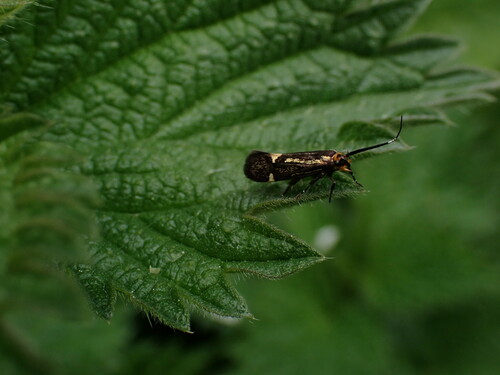
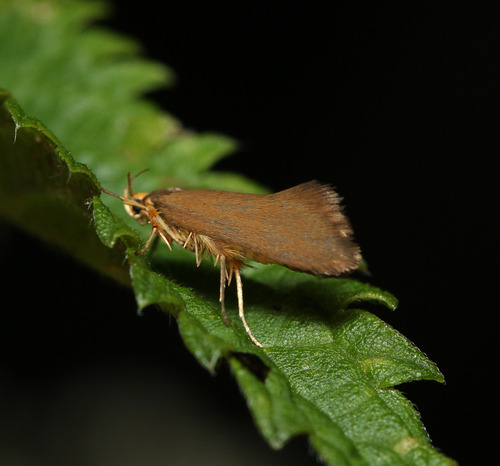
The closest relatives of the White-Shouldered House Moth that you can see in London (family Oecophoridae, Concealer Moths) are Ruddy Streak (about 20%), Brown House Moth (about 10%) and Sulphur Tubic (about 10%), with each one's daily chance of a sighting.

Where does the White-Shouldered House Moth sighting chance come from?

GBIF citizen-science records

It is estimated from how often the White-Shouldered House Moth is recorded against all the insects logged in London (190 verified sightings), calibrated against known sighting rates. Figures are rounded to the nearest 10% because citizen-science data supports honest approximations, not decimals, and months with records from fewer than five people show "—". How it works.

← Back to London