





Common Tubic

Common Tubic

Alabonia geoffrella

Daily sighting probability <5% · Rare
at London

In 3 days ~10% in a week ~30%

29 Verified sightings at London
21 In all 2 parks From 2019 to 2026
May Best month
☀️ Diurnal When it's spotted

About the Common Tubic

Alabonia geoffrella is a species of gelechioid moth. Here, it is placed within the subfamily Oecophorinae of the concealer moth family (Oecophoridae). Alternatively it has been placed in the Elachistidae or Depressariinae together with its presumed closest relatives.

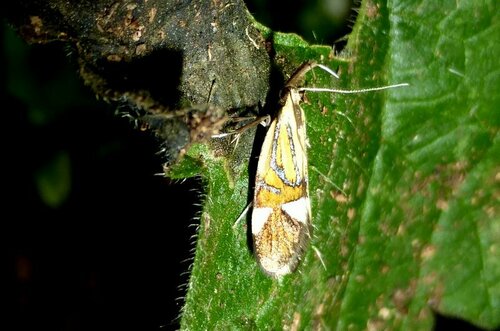
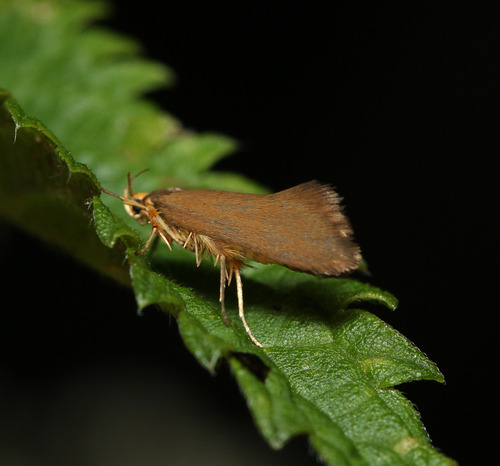
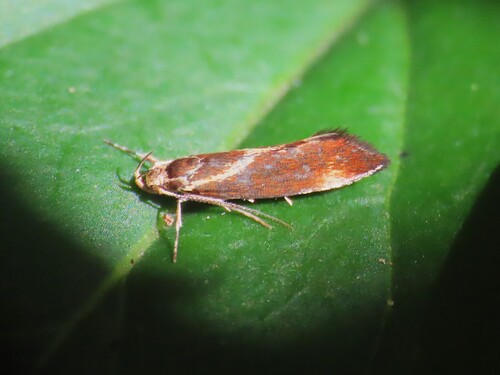
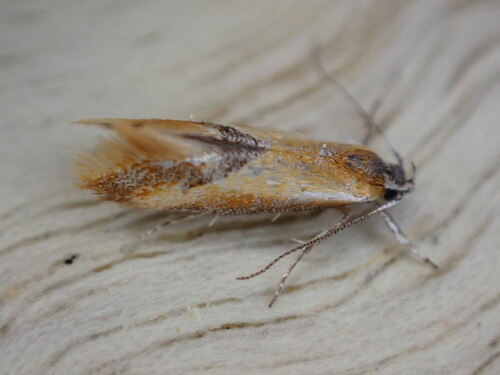
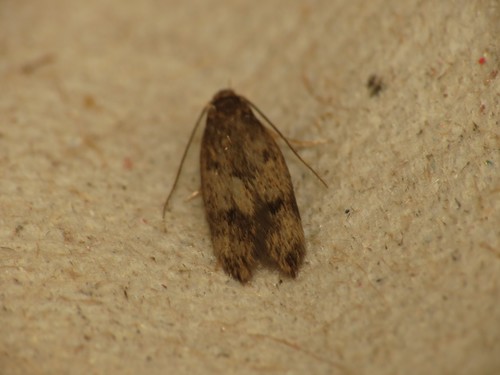
The adults fly from May to June depending on the location. The wingspan of this day-flying (or diurnal) moth is 17–21 mm, and it is quite colorful, with a light to dark rusty-red background, bold white markings and a more delicate metallic-blue pattern. The labial palps are conspicuously enlarged. Meyrick describes it - Head and thorax are yellow, with a central dark fuscous stripe. Forewings yellow, posteriorly becoming deeper and suffused with dark fuscous, especially on veins; a bluish-silvery blackish-edged streak from base above middle to 2/5, thence bent down to join a similar straight subdorsal streak from base above middle of dorsum; a bluish-silvery blackish-edged transverse streak from costa before middle to disc; a large whitish -yellow dark -edged triangular spot on costa at 2/3, and another before tornus. Hindwings dark fuscous.

The caterpillars feed on rotting wood; mostly living under tree... Wikipedia →

Global Distribution

Parks Where Found

# Park Country Daily sighting probability
1 Cévennes National Park 🇫🇷 France
~10%
2 Pyrénées National Park 🇫🇷 France
<5%

Cities Where Found

# City Country Daily sighting probability
1 Paris 🇫🇷 France
<5%
2 London 🇬🇧 United Kingdom
<5%

Before you go

What are the chances of seeing a Common Tubic in London?

Rare

Under 5% of wildlife watchers report a Common Tubic sighting in London on a given day, based on 29 verified sightings from GBIF citizen-science data. It is the 629th most-seen of the 1504 insects we can rate there. Over three days the chance rises to about 10%, and over a week to about 30%, if each day is a fresh chance.

When is the best time to see a Common Tubic in London?

May and June

In those months about 10% of wildlife watchers report a Common Tubic in London on a given day, against under 5% in July to April, the lowest months.

What time of day is best to see a Common Tubic?

Between 9 am and noon

Across all the parks we cover, that three-hour window holds the most Common Tubic sightings with a recorded time, and about 9 in 10 of them come between 6 am and 6 pm: it is a daytime animal.

Is London the best place to see a Common Tubic?

Among the best

Of the 2 cities where we can rate Common Tubic sightings, London ranks 2nd at under 5%, level with the leaders once rounded. The best odds are in Paris (France, under 5%).

Where does the Common Tubic sighting chance come from?

GBIF citizen-science records

It is estimated from how often the Common Tubic is recorded against all the insects logged in London (29 verified sightings), calibrated against known sighting rates. Figures are rounded to the nearest 10% because citizen-science data supports honest approximations, not decimals, and months with records from fewer than five people show "—". How it works.

← Back to London