Purple Clay

Purple Clay

Diarsia brunnea

Daily sighting probability <5% · Rare
at London

In 3 days ~10% in a week ~20%

7 Verified sightings at London
31 In all 3 parks From 2019 to 2026
July Best month
☀️🌙 Day & Night When it's spotted

About the Purple Clay

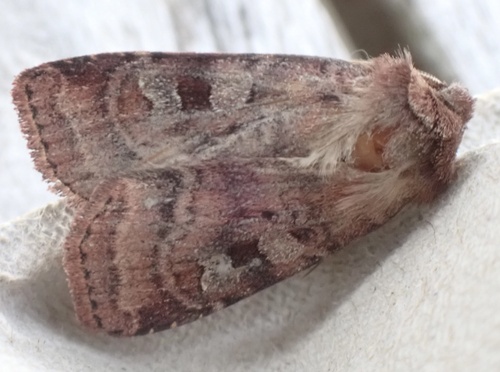
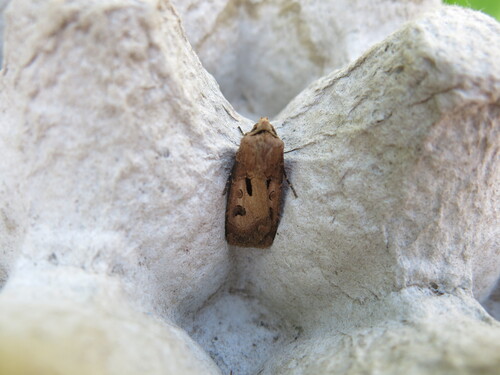
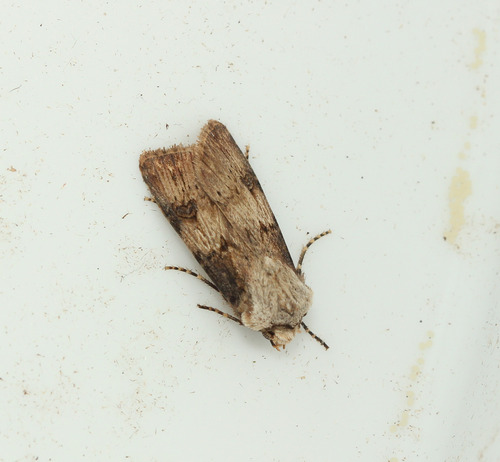
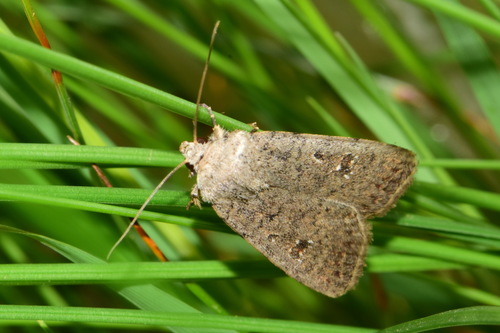
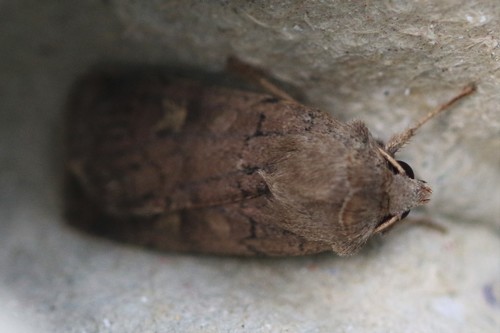
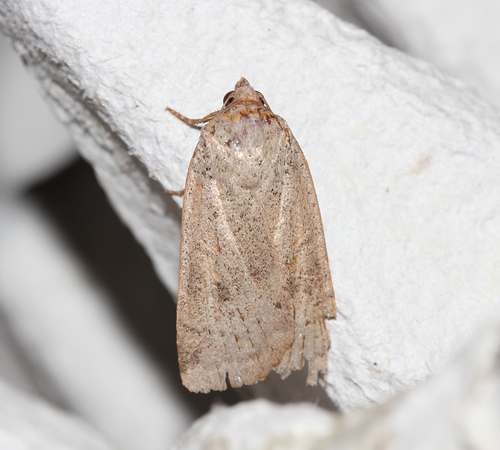
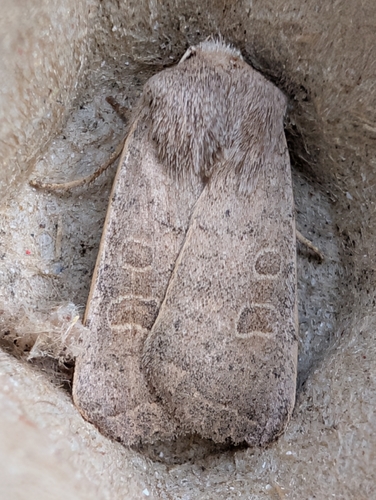
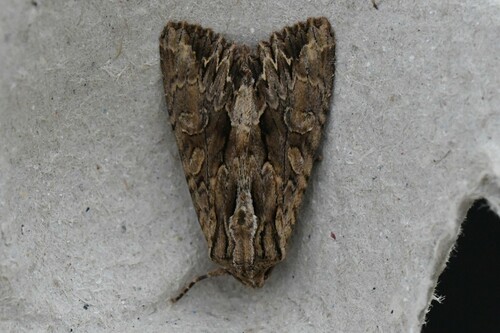
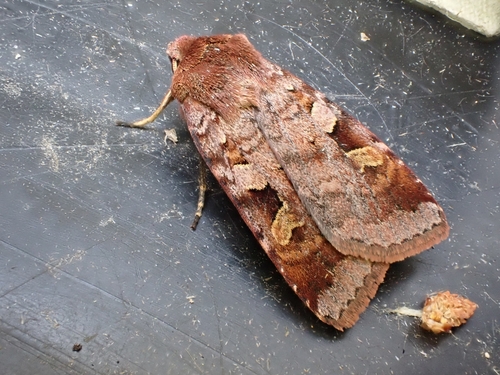
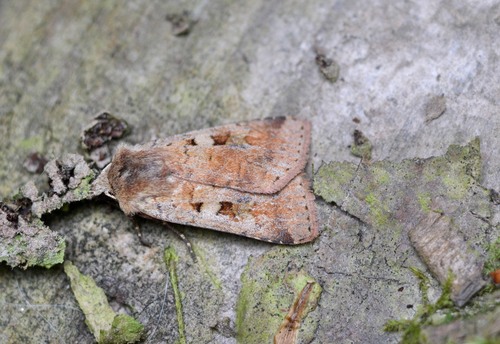
Diarsia brunnea, the purple clay, is a moth of the family Noctuidae. The species was first described by Michael Denis and Ignaz Schiffermüller in 1775. It is found in most of Europe, east to Transcaucasia, the Caucasus, central Asia, Siberia, the Kuriles, Amur, Ussuri, Sakhalin, Korea, Japan, and China, including China's Tibet region.

The wingspan is 35–38 mm. Forewing pinkish or purplish-plum coloured; the costal half with a fulvous and yellow tinge; cell deep olive brown; claviform marked by a dark spot at its end; orbicular oblong, of the ground colour; reniform outlined or filled with ochreous; hindwing luteous (muddy yellow) fuscous; cilia pink.

Adults are on wing from July to August. Larva dark brown; dorsal and subdorsal lines pale, lateral lines whitish; a row of pale yellow dark-edged oblique stripes, and a yellow stripe across segment 11. The larvae feed on a wide range of herbaceous plants and shrubs, including Rumex species (including Rumex acetosella), Dryopteris filix-mas, Luzula sylvatica, Deschampsia flexuosa, Brachypodium sylvaticum, Vaccinium myrtillus, Vaccinium uliginosum, Prunus spinosa, Primula, Rubus, Urtica, Salix and Betula. Wikipedia →
Global Distribution

Parks Where Found

# Park Country Daily sighting probability
1 Snowdonia National Park 🇬🇧 United Kingdom
~10%
2 Bavarian Forest National Park 🇩🇪 Germany
~10%
3 Pyrénées National Park 🇫🇷 France
<5%

Cities Where Found

# City Country Daily sighting probability
1 Liverpool 🇬🇧 United Kingdom
~10%
2 London 🇬🇧 United Kingdom
<5%

Before you go

What are the chances of seeing a Purple Clay in London?

Rare

Under 5% of wildlife watchers report a Purple Clay sighting in London on a given day, based on 7 verified sightings from GBIF citizen-science data. It is the 1219th most-seen of the 1504 insects we can rate there. Over three days the chance rises to about 10%, and over a week to about 20%, if each day is a fresh chance.

When is the best time to see a Purple Clay in London?

Any time of year

In every month with enough records, under 5% of wildlife watchers report a Purple Clay in London on a given day, so our monthly data shows no clear season.

What time of day is best to see a Purple Clay?

Between 10 pm and 1 am

Across all the parks we cover, that three-hour window holds the most Purple Clay sightings with a recorded time, and about half of them come between 6 am and 6 pm: it is seen both by day and at night.

Is London the best place to see a Purple Clay?

2nd of 2

Of the 2 cities where we can rate Purple Clay sightings, London ranks 2nd at under 5%. The best odds are in Liverpool (United Kingdom, about 10%).

Where does the Purple Clay sighting chance come from?

GBIF citizen-science records

It is estimated from how often the Purple Clay is recorded against all the insects logged in London (7 verified sightings), calibrated against known sighting rates. Figures are rounded to the nearest 10% because citizen-science data supports honest approximations, not decimals, and months with records from fewer than five people show "—". How it works.

← Back to London