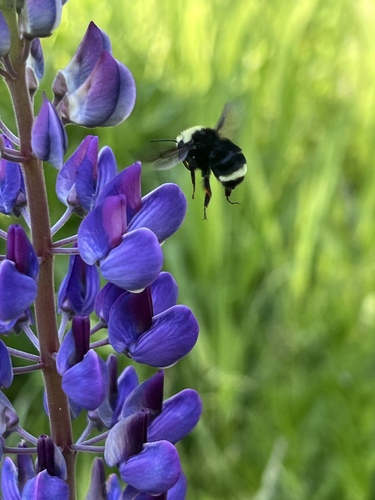
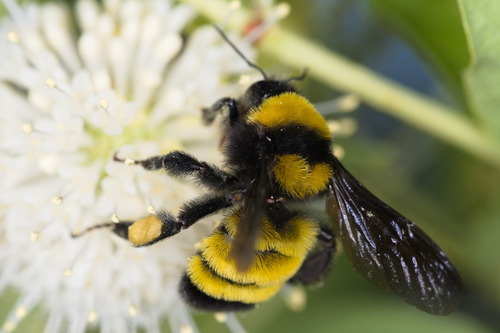
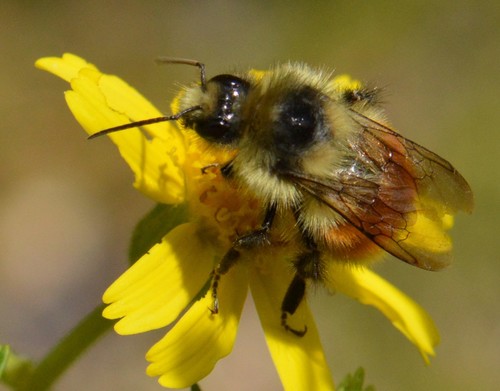
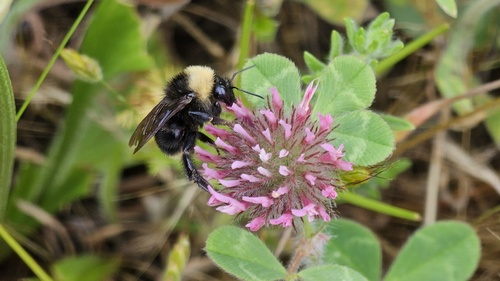
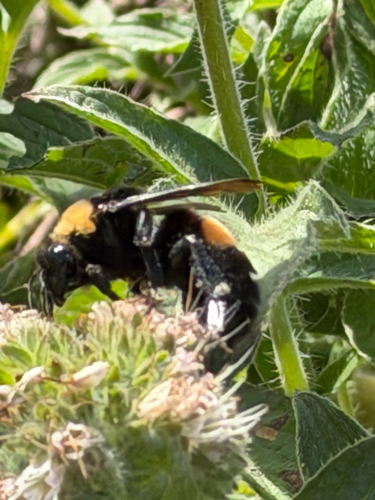
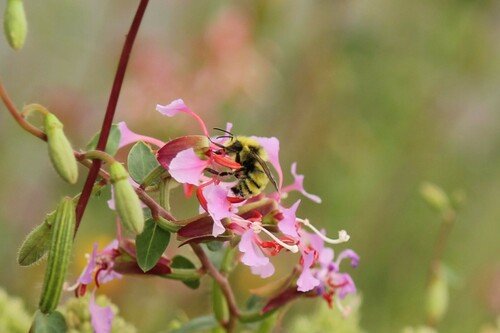
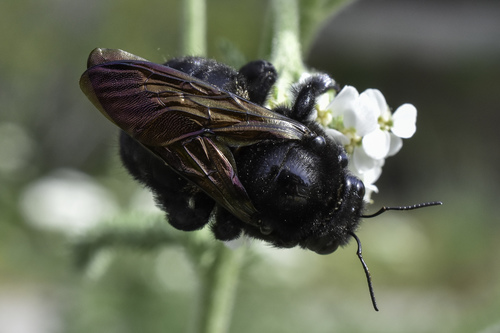
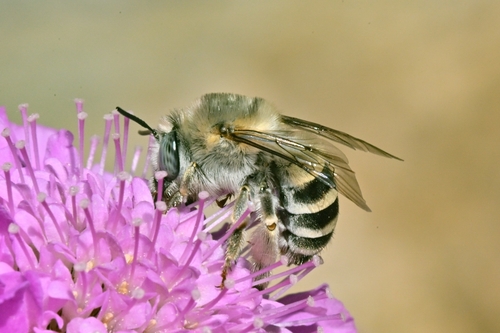
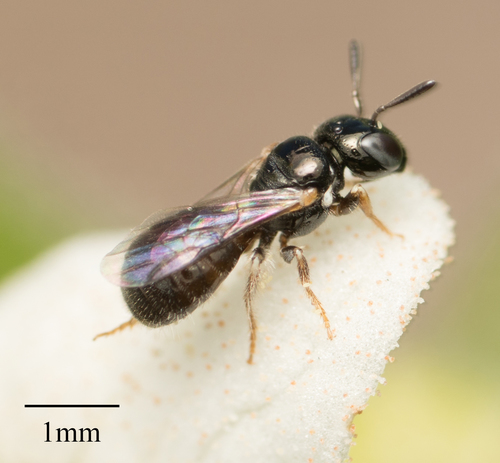
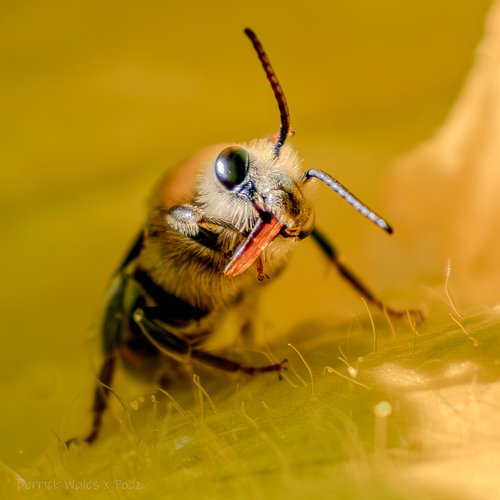
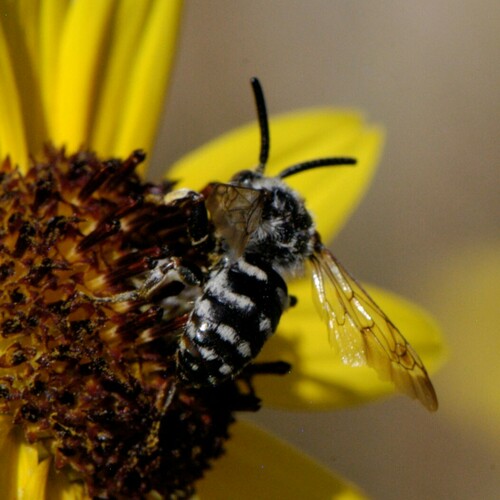
Yellow-Faced Bumble Bee

Yellow-Faced Bumble Bee

Bombus vosnesenskii

Daily sighting probability ~10% · With luck
at Los Angeles

In 3 days ~20% in a week ~50%

835 Verified sightings at Los Angeles
594 In all 6 parks From 2019 to 2026
June Best month
☀️ Diurnal When it's spotted

About the Yellow-Faced Bumble Bee

Bombus vosnesenskii, the yellow-faced bumblebee, is a species of bumblebee native to the west coast of North America, where it is distributed from British Columbia to Baja California. It is the most abundant species of bee in this range, and can be found in both urban and agricultural areas. Additionally, B. vosnesenskii is utilized as an important pollinator in commercial agriculture, especially for greenhouse tomatoes. Though the species is not currently experiencing population decline, urbanization has affected its nesting densities, and early emergence of the B. vosnesenskii has been implicated in the increasing lack of bee diversity on the West coast.

The genus name Bombus – the bumblebee – comes from the Latin word which means a buzzing or humming sound. There are 250 species split into 38 subgenera within the genus Bombus. These subgroups share similar morphologies, despite their varied habitats and behavioral patterns. However, many of the groups are monophyletic based on the distinct genitalia of the male bee. Genetic studies have revealed the bumblebee to be closely related to the sting-less bee and the honey bee.

Bombus vosnesenskii falls into... Wikipedia →

Global Distribution

Parks Where Found

# Park Country Daily sighting probability
1 Sequoia and Kings Canyon National Parks 🇺🇸 United States
~40%
2 Pacific Rim National Park Reserve 🇨🇦 Canada
~30%
3 Channel Islands National Park 🇺🇸 United States
~30%
4 Yosemite National Park 🇺🇸 United States
~20%
5 Great Bear Rainforest 🇨🇦 Canada
~10%
6 Olympic National Park 🇺🇸 United States
~10%

Cities Where Found

# City Country Daily sighting probability
1 Vancouver 🇨🇦 Canada
~30%
2 San Diego 🇺🇸 United States
~20%
3 Portland 🇺🇸 United States
~20%
4 Seattle 🇺🇸 United States
~20%
5 Sacramento 🇺🇸 United States
~10%
6 San Francisco 🇺🇸 United States
~10%
7 Los Angeles 🇺🇸 United States
~10%

Before you go

What are the chances of seeing a Yellow-Faced Bumble Bee in Los Angeles?

With luck

About 10% of wildlife watchers report a Yellow-Faced Bumble Bee sighting in Los Angeles on a given day, based on 835 verified sightings from GBIF citizen-science data. It is the 36th most-seen of the 851 insects we can rate there. Over three days the chance rises to about 20%, and over a week to about 50%, if each day is a fresh chance.

When is the best time to see a Yellow-Faced Bumble Bee in Los Angeles?

January to August

In those months about 10% of wildlife watchers report a Yellow-Faced Bumble Bee in Los Angeles on a given day, against under 5% in September to December, the lowest months.

What time of day is best to see a Yellow-Faced Bumble Bee?

Between 11 am and 2 pm

Across all the parks we cover, that three-hour window holds the most Yellow-Faced Bumble Bee sightings with a recorded time, and about 9 in 10 of them come between 6 am and 6 pm: it is a daytime animal.

Is Los Angeles the best place to see a Yellow-Faced Bumble Bee?

7th of 7

Of the 7 cities where we can rate Yellow-Faced Bumble Bee sightings, Los Angeles ranks 7th at about 10%. The best odds are in Vancouver (Canada, about 30%), San Diego (United States, about 20%) and Portland (United States, about 20%).

Which relatives of the Yellow-Faced Bumble Bee live in Los Angeles?

Same genus: Bombus

The closest relatives of the Yellow-Faced Bumble Bee that you can see in Los Angeles (genus Bombus, Bumble Bees) are Sonoran Bumble Bee (about 10%), Black-Tailed Bumble Bee (about 10%) and California Bumble Bee (about 10%), with each one's daily chance of a sighting.

Where does the Yellow-Faced Bumble Bee sighting chance come from?

GBIF citizen-science records

It is estimated from how often the Yellow-Faced Bumble Bee is recorded against all the insects logged in Los Angeles (835 verified sightings), calibrated against known sighting rates. Figures are rounded to the nearest 10% because citizen-science data supports honest approximations, not decimals, and months with records from fewer than five people show "—". How it works.

← Back to Los Angeles