





Completed

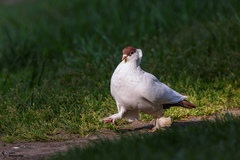


Rock Pigeon
Columba livia
- KingdomAnimalia (Animals)
- PhylumChordata (Chordates)
- ClassAves (Birds)
- OrderColumbiformes (Pigeons and Doves)
- FamilyColumbidae (Pigeons and Doves)
- GenusColumba (Typical Old World Pigeons)
- SpeciesColumba livia (Rock Pigeon)
In 3 days ~50% in a week ~80%
30 Verified sightings at Luanda
July Best month
☀️ Diurnal When it's spotted
About the Rock Pigeon
The rock dove (Columba livia), also known as the common pigeon or rock pigeon (but see also Petrophassa), is a member of the bird family Columbidae (doves and pigeons). In common usage, it is often simply referred to as the "pigeon", although the rock dove is the wild form of the bird; the pigeons familiar to most people are the domesticated forms of the wild rock dove.
Wild rock doves are uniformly pale grey with two black bars on each wing, with few differences being seen between males and females; i.e. they are not strongly sexually dimorphic. The domestic pigeon, often called "Columba livia domestica", which includes about 1,000 different breeds, is descended from this species. Escaped domestic pigeons are the origin of feral pigeons around the world. Both forms can vary widely in the colour and pattern of their plumage unlike their wild ancestor, being red, brown, checkered, uniformly coloured, or pied.
Habitats include various open and semi-open environments where they are able to forage on the ground. Cliffs and rock ledges are used for roosting and breeding in the wild. Originating in Southern Europe, North Africa, and Western Asia, when including their domestic and feral descendants, they are an example of a least-concern species per IUCN among birds, being abundant with an estimated population of 17 to 28 million wild and feral birds in Europe alone and up to 120 million worldwide. Wikipedia →
Recent sightings of Rock Pigeon in Luanda
LIVEiNaturalistGlobal Distribution
Parks Where Found
| # | Park | Country | Daily sighting probability |
|---|
More parks will be added in future updates.
Closest Relatives at Luanda










Before you go
What are the chances of seeing a Rock Pigeon in Luanda?
Possible
About 20% of wildlife watchers report a Rock Pigeon sighting in Luanda on a given day, based on 30 verified sightings from GBIF citizen-science data. It is the 15th most-seen of the 45 birds we can rate there. Over three days the chance rises to about 50%, and over a week to about 80%, if each day is a fresh chance.
When is the best time to see a Rock Pigeon in Luanda?
July
In that month about 30% of wildlife watchers report a Rock Pigeon in Luanda on a given day, against about 10% in October, the lowest month. That is one of Luanda's driest months, with almost no rain against 80 mm in April. February–March, June and December have too few records to rate.
What time of day is best to see a Rock Pigeon?
Between noon and 3 pm
Across all the parks we cover, that three-hour window holds the most Rock Pigeon sightings with a recorded time, and about 9 in 10 of them come between 6 am and 6 pm: it is a daytime animal.
Is Luanda the best place to see a Rock Pigeon?
292nd of 353
Of the 353 cities where we can rate Rock Pigeon sightings, Luanda ranks 292nd at about 20%. The best odds are in Amman (Jordan, over 90%), Jalandhar (India, over 90%) and Sincan (Turkey, over 90%).
Which relatives of the Rock Pigeon live in Luanda?
Same family: Columbidae
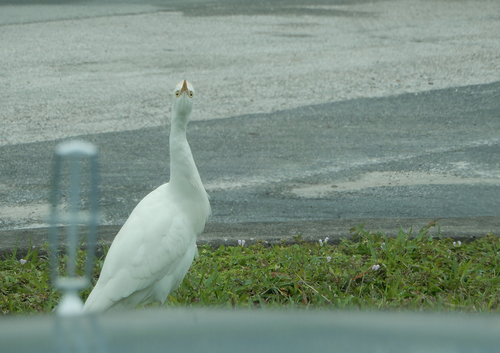
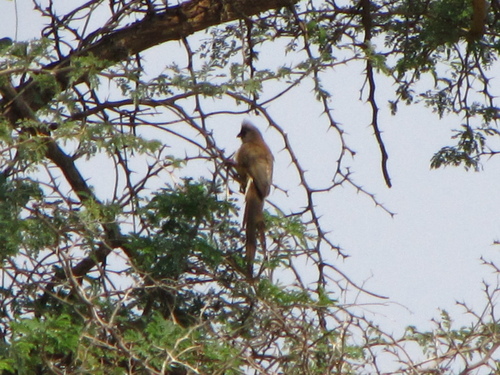
The closest relatives of the Rock Pigeon that you can see in Luanda (family Columbidae, Pigeons and Doves) are Laughing Dove (about 30%), Cape Turtle Dove (about 10%) and Red-eyed Dove (about 10%), with each one's daily chance of a sighting.
Where does the Rock Pigeon sighting chance come from?
GBIF citizen-science records
It is estimated from how often the Rock Pigeon is recorded against all the birds logged in Luanda (30 verified sightings), calibrated against known sighting rates. Figures are rounded to the nearest 10% because citizen-science data supports honest approximations, not decimals, and months with records from fewer than five people show "—". How it works.
