Common House Fly

Common House Fly

Musca domestica

Daily sighting probability <5% · Rare
at Madrid

In 3 days ~10% in a week ~20%

5 Verified sightings at Madrid
9 In 1 park From 2019 to 2026
October Best month
☀️ Diurnal When it's spotted

About the Common House Fly

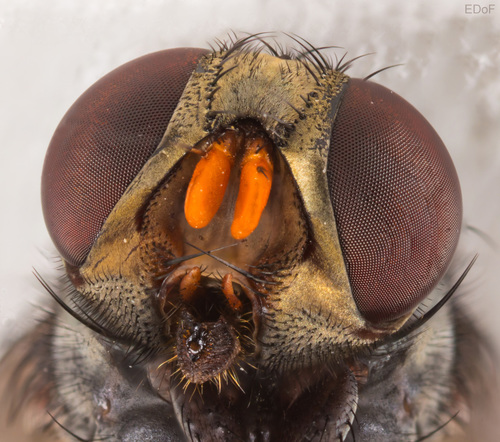
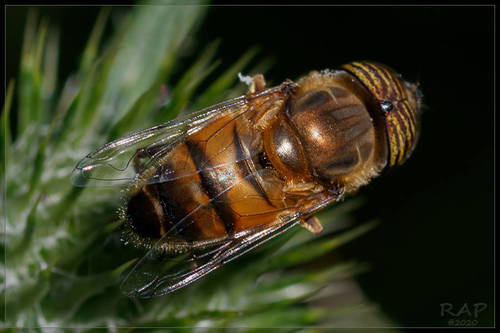
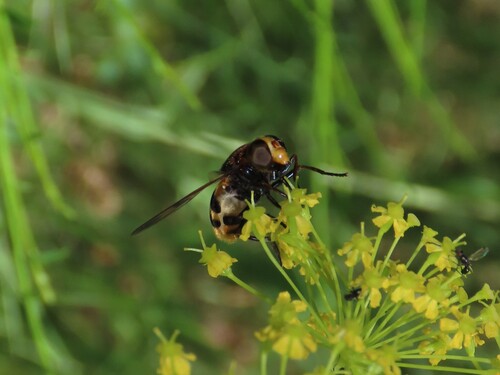
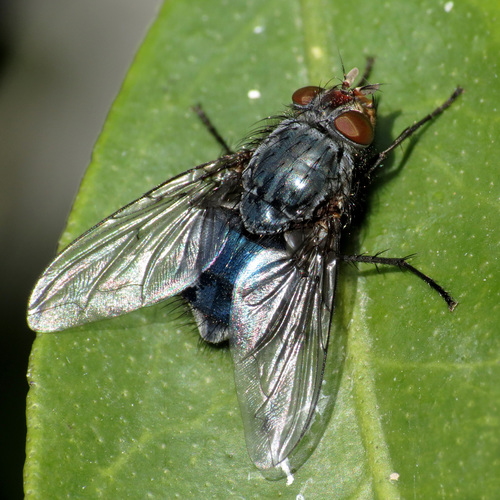
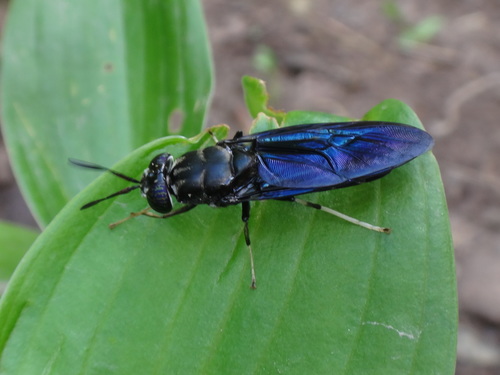
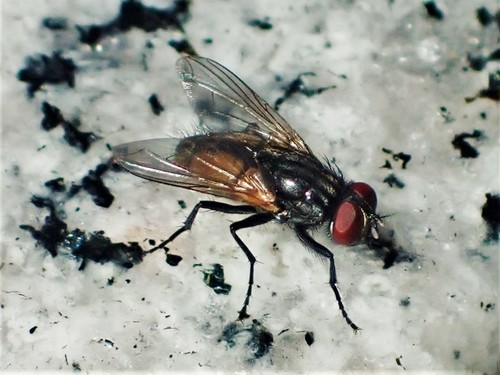
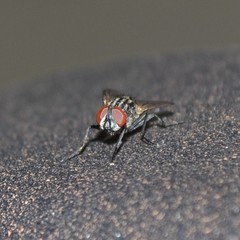
The housefly (Musca domestica) is a fly of the suborder Cyclorrhapha. From its place of origin, perhaps in the Middle East, it has spread around the world as a commensal of humans. Adults are gray to black, with four dark, longitudinal lines on the thorax, slightly hairy bodies, and a single pair of membranous wings. They have red compound eyes, set farther apart in the slightly larger female.

The female housefly usually mates only once and stores the sperm for later use. It lays batches of about 100 eggs on decaying organic matter such as food waste, carrion, or feces. These soon hatch into legless white larvae, known as maggots. After two to five days of development, these metamorphose into reddish-brown pupae, about 8 millimetres (3⁄8 inch) long. Adult flies normally live for two to four weeks, but can hibernate during the winter. The adults feed on a variety of liquid or semi-liquid substances, as well as solid materials which have been softened by their saliva. They can carry pathogens on their bodies and in their feces, contaminate food, and contribute to the transfer of food-borne illnesses, while, in numbers, they can be physically annoying. For these reasons, they are considered pests.

Houseflies, with short life cycles and the ease with which they can be maintained, have been found useful for laboratory research into aging and sex determination. Houseflies appear in literature from Ancient Greek myth and Aesop's "The Impertinent Insect" onwards. Authors sometimes choose the housefly to speak of the brevity of life, as in William Blake's 1794 poem "The Fly", which deals with mortality subject to uncontrollable circumstances. Wikipedia →
Global Distribution

Parks Where Found

# Park Country Daily sighting probability
1 Table Mountain National Park 🇿🇦 South Africa
<5%

More parks will be added in future updates.

Cities Where Found

# City Country Daily sighting probability
1 Surabaya 🇮🇩 Indonesia
~20%
2 Prayagraj 🇮🇳 India
~20%
3 Santo Domingo 🇩🇴 Dominican Republic
~10%
4 Cairo 🇪🇬 Egypt
~10%
5 Tel Aviv 🇮🇱 Israel
~10%
6 Jerusalem 🇮🇱 Israel
~10%
7 Dubai 🇦🇪 United Arab Emirates
~10%
8 Hyderabad 🇮🇳 India
~10%
9 New Delhi 🇮🇳 India
~10%
10 Colombo [Sri Jayawardenepura Kotte] 🇱🇰 Sri Lanka
~10%

Before you go

What are the chances of seeing a Common House Fly in Madrid?

Rare

Under 5% of wildlife watchers report a Common House Fly sighting in Madrid on a given day, based on 5 verified sightings from GBIF citizen-science data. It is the 409th most-seen of the 457 insects we can rate there. Over three days the chance rises to about 10%, and over a week to about 20%, if each day is a fresh chance.

When is the best time to see a Common House Fly in Madrid?

July and October

In those months about 10% of wildlife watchers report a Common House Fly in Madrid on a given day, against under 5% in August–September and November–June, the lowest months.

What time of day is best to see a Common House Fly?

Between 9 am and noon

Across all the parks we cover, that three-hour window holds the most Common House Fly sightings with a recorded time, and nearly all of them come between 6 am and 6 pm: it is a daytime animal.

Is Madrid the best place to see a Common House Fly?

26th of 42

Of the 42 cities where we can rate Common House Fly sightings, Madrid ranks 26th at under 5%. The best odds are in Surabaya (Indonesia, about 20%), Prayagraj (India, about 20%) and Santo Domingo (Dominican Republic, about 10%).

Where does the Common House Fly sighting chance come from?

GBIF citizen-science records

It is estimated from how often the Common House Fly is recorded against all the insects logged in Madrid (5 verified sightings), calibrated against known sighting rates. Figures are rounded to the nearest 10% because citizen-science data supports honest approximations, not decimals, and months with records from fewer than five people show "—". How it works.

← Back to Madrid