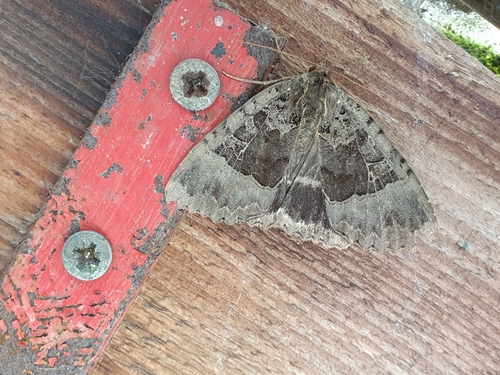
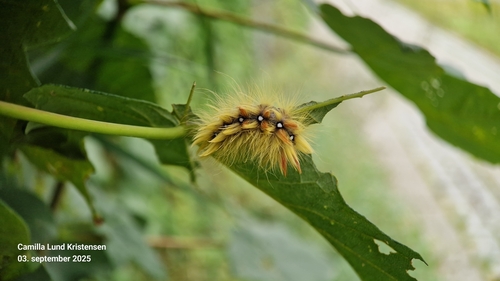
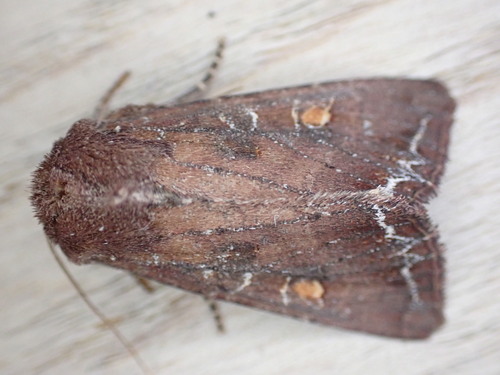
Small Square-Spot

Small Square-Spot

Diarsia rubi

Daily sighting probability <5% · Rare
at Manchester

In 3 days ~10% in a week ~30%

9 Verified sightings at Manchester
54 In all 2 parks From 2019 to 2026
September Best month
☀️ Diurnal When it's spotted

About the Small Square-Spot

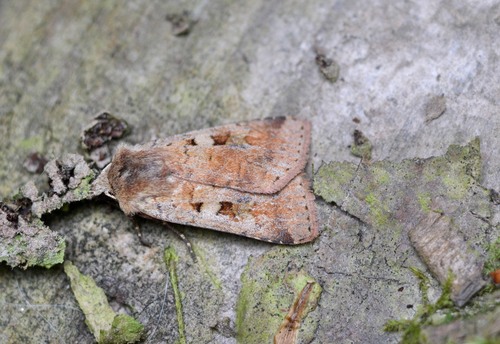
The small square-spot (Diarsia rubi) is a moth of the family Noctuidae. The species was first described by Karl Friedrich Vieweg in 1790. It is found in Europe apart from the far south-east then east through the Caucasus, Transcaucasia, Central Asia, Siberia, the Russian Far East and Kamchatka.

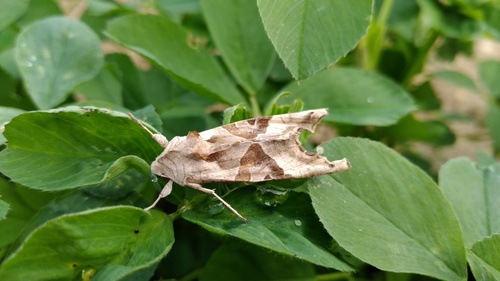
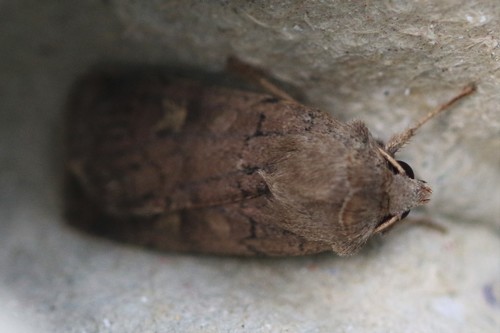
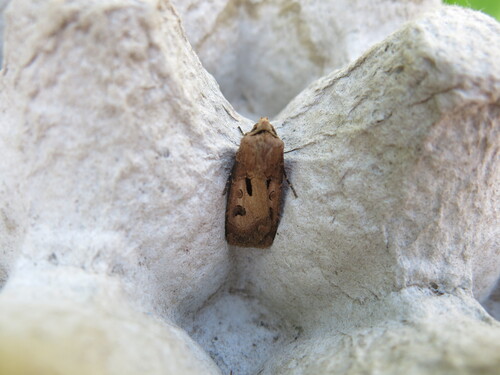
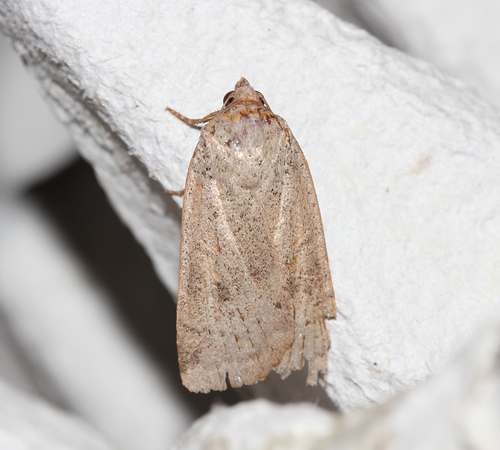
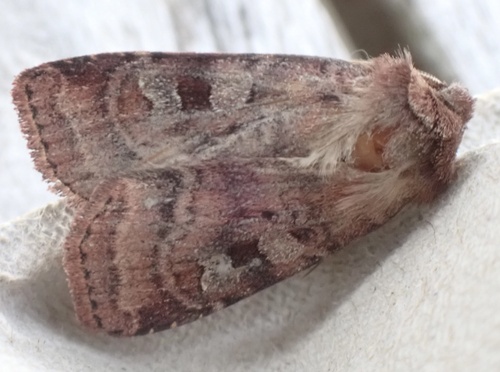
This is a quite a small species (wingspan 30–38 mm) with dull greyish-pink forewings, varying to red brown, marked with a pale angular mark which gives the species its common name. Forewing with the crosslines and shades olive; the cell brown; reniform with whitish outline; claviform with a dark speck at its end; marginal area dark. The hindwings are pale luteous grey with a pink fringe.

Two broods are produced each year with the adults flying in May and June and again in August and September. Moths of the second brood are usually smaller and darker than those of the first. The species flies at night and is attracted to light and sugar. It will also visit flowers such as heather and ragwort.

The larva feeds on a variety of plants: Recorded food plants include raspberry, Vaccinium and willow. The species overwinters as a larva. Diarsia rubi... Wikipedia →
Global Distribution

Parks Where Found

# Park Country Daily sighting probability
1 Wadden Sea National Park 🇩🇪 Germany
~10%
2 Cairngorms National Park 🇬🇧 United Kingdom
~10%

Cities Where Found

# City Country Daily sighting probability
1 Manchester 🇬🇧 United Kingdom
<5%
2 Liverpool 🇬🇧 United Kingdom
<5%
3 London 🇬🇧 United Kingdom
<5%
4 Birmingham 🇬🇧 United Kingdom
<5%

Before you go

What are the chances of seeing a Small Square-Spot in Manchester?

Rare

Under 5% of wildlife watchers report a Small Square-Spot sighting in Manchester on a given day, based on 9 verified sightings from GBIF citizen-science data. It is the 320th most-seen of the 458 insects we can rate there. Over three days the chance rises to about 10%, and over a week to about 30%, if each day is a fresh chance.

When is the best time to see a Small Square-Spot in Manchester?

June and August–September

In those months about 10% of wildlife watchers report a Small Square-Spot in Manchester on a given day, against under 5% in July and October–May, the lowest months.

What time of day is best to see a Small Square-Spot?

Between 6 and 9 am

Across all the parks we cover, that three-hour window holds the most Small Square-Spot sightings with a recorded time, and about 8 in 10 of them come between 6 am and 6 pm: it is a daytime animal.

Is Manchester the best place to see a Small Square-Spot?

Yes

Of the 4 cities where we can rate Small Square-Spot sightings, Manchester has the highest daily chance: under 5%. Next come Liverpool (United Kingdom, under 5%) and London (United Kingdom, under 5%).

Where does the Small Square-Spot sighting chance come from?

GBIF citizen-science records

It is estimated from how often the Small Square-Spot is recorded against all the insects logged in Manchester (9 verified sightings), calibrated against known sighting rates. Figures are rounded to the nearest 10% because citizen-science data supports honest approximations, not decimals, and months with records from fewer than five people show "—". How it works.

← Back to Manchester