Twin-Spot Centurion Fly

Twin-Spot Centurion Fly

Sargus bipunctatus

Daily sighting probability ~10% · With luck
at Manchester

In 3 days ~20% in a week ~30%

11 Verified sightings at Manchester
5 In 1 park From 2019 to 2026
September Best month
☀️ Diurnal When it's spotted

About the Twin-Spot Centurion Fly

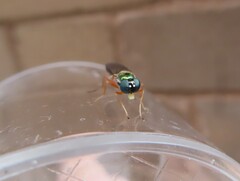
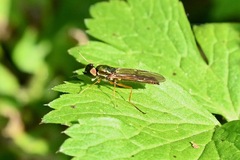
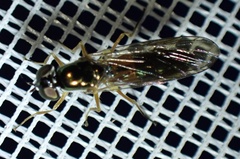
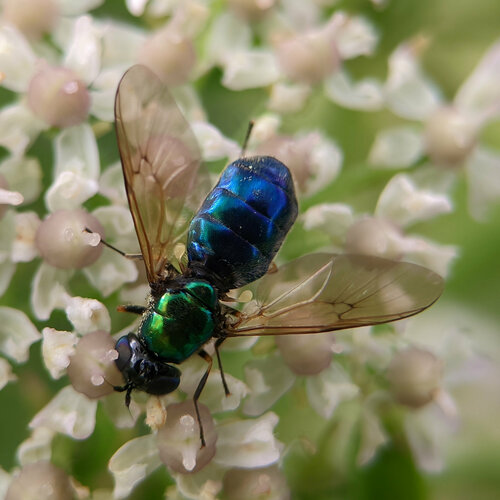
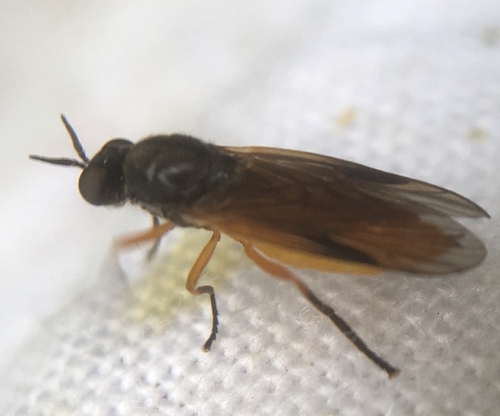
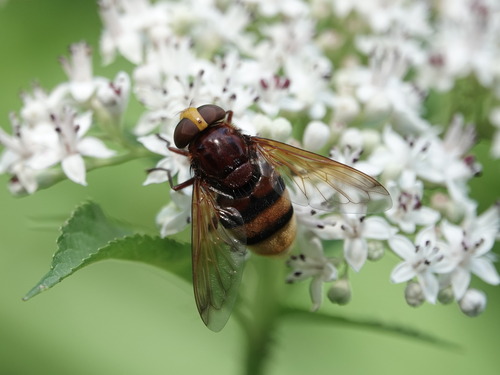
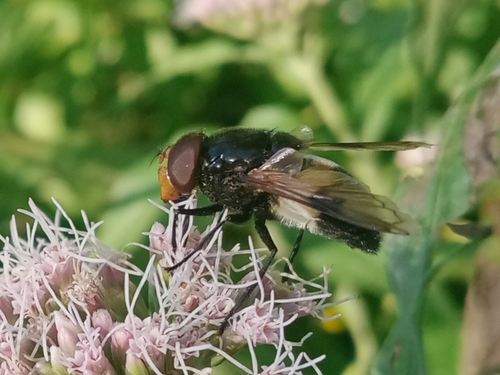
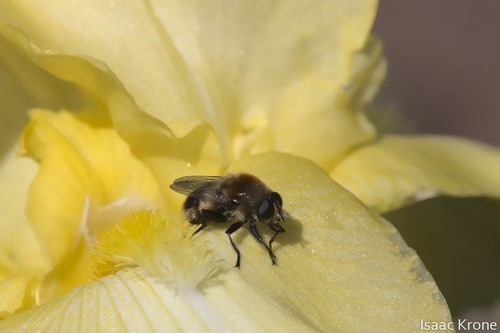
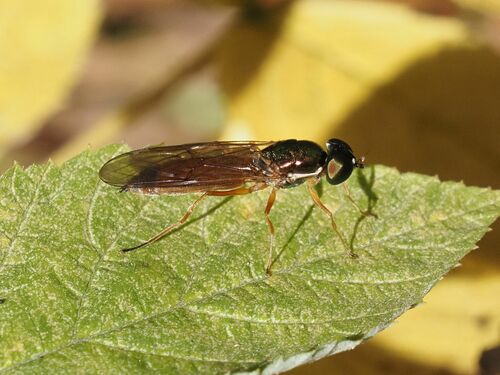
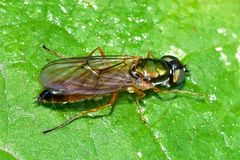
Sargus bipunctatus, the twin-spot centurion, is a European species of soldier fly. Body length 10 to 14 mm. Frons less broad than in Sargus cuprarius. The mesonotum is metallic green; the abdomen brown, with a violet metallic tinge. Females have a broader build than the slender males with the base of the abdomen extensively reddish and a blackish tip bearing blue reflections. Wings slightly yellow. Red legs, tarsi brown at the apex.

Found in open and wooded habitats, sunbathing on foliage in sheltered spots. The flight period is from July to November. Females lay eggs on fresh dung, manure or in close by soil where the larvae develop. The larvae have been reared from cow dung, compost, rotting vegetation and decaying fungi. Larvae have been found in egg pods of locusts (Dociostaurus maroccanus Shnb.).

Sargus bipunctatus can be found in the Trans-Caucasus Central belt and south of Western Europe. Media related to Sargus bipunctatus at Wikimedia Commons Images representing Sargus bipunctatus at Bold Wikipedia →
Global Distribution

Parks Where Found

# Park Country Daily sighting probability
1 Cévennes National Park 🇫🇷 France
<5%

More parks will be added in future updates.

Cities Where Found

# City Country Daily sighting probability
1 Berlin 🇩🇪 Germany
~10%
2 London 🇬🇧 United Kingdom
~10%
3 Birmingham 🇬🇧 United Kingdom
~10%
4 Hamburg 🇩🇪 Germany
~10%
5 Warsaw 🇵🇱 Poland
~10%
6 Brussels 🇧🇪 Belgium
~10%
7 Liverpool 🇬🇧 United Kingdom
~10%
8 Portland 🇺🇸 United States
~10%
9 Manchester 🇬🇧 United Kingdom
~10%
10 Kyiv 🇺🇦 Ukraine
<5%

Before you go

What are the chances of seeing a Twin-Spot Centurion Fly in Manchester?

With luck

About 10% of wildlife watchers report a Twin-Spot Centurion Fly sighting in Manchester on a given day, based on 11 verified sightings from GBIF citizen-science data. It is the 263rd most-seen of the 458 insects we can rate there. Over three days the chance rises to about 20%, and over a week to about 30%, if each day is a fresh chance.

When is the best time to see a Twin-Spot Centurion Fly in Manchester?

September

In that month about 20% of wildlife watchers report a Twin-Spot Centurion Fly in Manchester on a given day, against under 5% in October to August, the lowest months.

What time of day is best to see a Twin-Spot Centurion Fly?

Between 8 and 11 am

Across all the parks we cover, that three-hour window holds the most Twin-Spot Centurion Fly sightings with a recorded time, and nearly all of them come between 6 am and 6 pm: it is a daytime animal.

Is Manchester the best place to see a Twin-Spot Centurion Fly?

Among the best

Of the 17 cities where we can rate Twin-Spot Centurion Fly sightings, Manchester ranks 9th at about 10%, level with the leaders once rounded. The best odds are in Berlin (Germany, about 10%), London (United Kingdom, about 10%) and Birmingham (United Kingdom, about 10%).

Where does the Twin-Spot Centurion Fly sighting chance come from?

GBIF citizen-science records

It is estimated from how often the Twin-Spot Centurion Fly is recorded against all the insects logged in Manchester (11 verified sightings), calibrated against known sighting rates. Figures are rounded to the nearest 10% because citizen-science data supports honest approximations, not decimals, and months with records from fewer than five people show "—". How it works.

← Back to Manchester