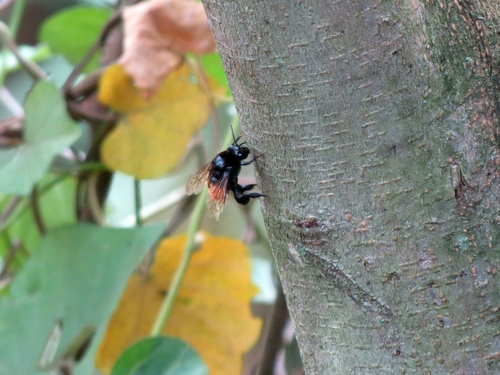
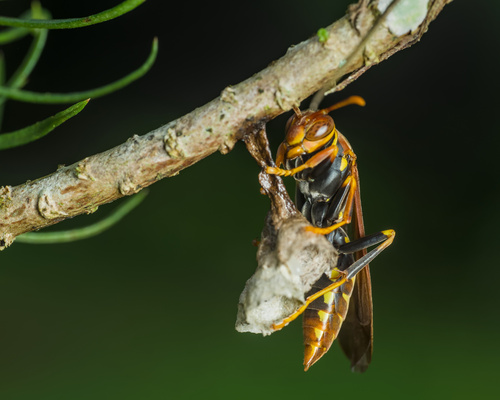
Acromyrmex coronatus
Daily sighting probability ~10% · With luck
at Medellín

In 3 days ~20% in a week ~30%

13 Verified sightings at Medellín
25 In 1 park From 2019 to 2026
June Best month
🌅 Crepuscular When it's spotted

About the Acromyrmex coronatus

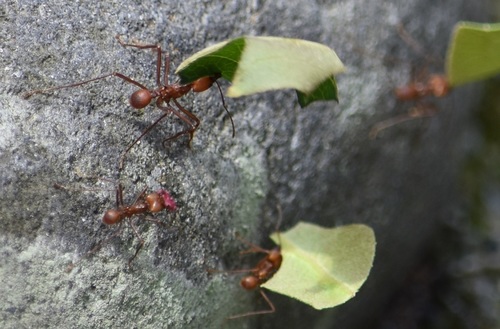
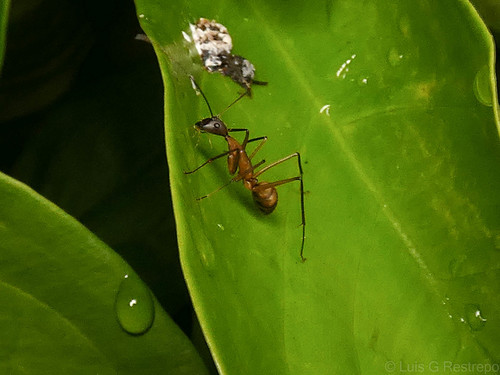
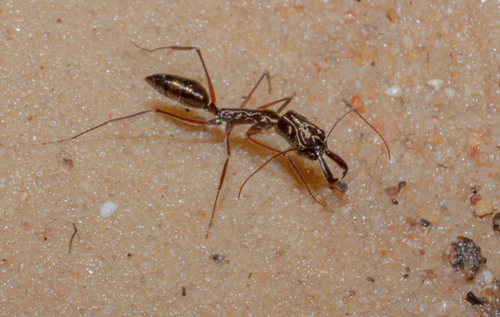
Acromyrmex coronatus is a New World ant of the subfamily Myrmicinae found in the wild naturally from Guatemala to Brazil and Ecuador. Acromyrmex coronatus can be identified by the presence of median pronotal spines being usually present and distinct, occasionally reduced or absent, the head tapering behind eyes, and head width of less than or equal to 1.7 mm.

This montane species is tolerant of cold, wet conditions, and colonies can be found in small clearings and gaps in dense cloud forest. For example, on the north side of Volcan Barva, it has been found at 1100 m elevation, but not at 500 or 2000 m. On the Central Valley side, it has been collected at 1600 m at Zurqui. In the Monteverde area, it occurs in the community area, up to the highest ridges at 1700 m, and down to 800 m in the Penas Blancas Valley.

In Monteverde, it is the main pest in gardens, and enters houses at night to cut bread, cabbage, or fruit that has been left out. The nests are often in or under a piece of dead wood, and often with a superstructure of loose, dead leaf fragments. They do not excavate soil very extensively, if at all. They may be arboreal at times, nesting in low branch junctions of epiphyte-laden trees.

Acromyrmex coronatus foraging is continuous at night, but diurnal foraging only occurs after recent rain. Following a heavy rain, diurnal foraging commences, followed by a gradual cessation over a period of a day or two. Periodic rains during the dry season initiate a short bout of diurnal foraging, but when the rains became more continuous, diurnal foraging becomes continuous. Thus, the lack of diurnal foraging during the dry season is a short-term response to immediate environmental conditions and not a long-term change in colony foraging behavior.

Nuptial flights are common in Monteverde, and the distinctively patterned dealate queens are often seen on the roads. Dealate queens have been observed out cutting leaves, suggesting the queens need to forage themselves to establish a colony. Wikipedia →
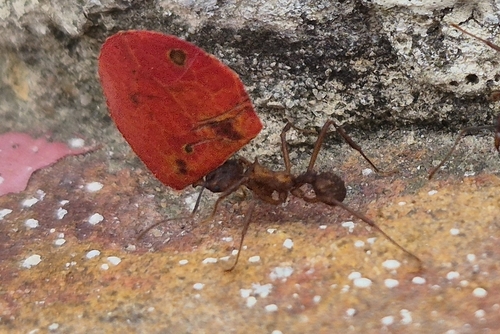
Global Distribution

Parks Where Found

# Park Country Daily sighting probability
1 Monteverde Cloud Forest Reserve 🇨🇷 Costa Rica
~10%

More parks will be added in future updates.

Cities Where Found

# City Country Daily sighting probability
1 Medellín 🇨🇴 Colombia
~10%

Before you go

What are the chances of seeing an Acromyrmex coronatus in Medellín?

With luck

About 10% of wildlife watchers report an Acromyrmex coronatus sighting in Medellín on a given day, based on 13 verified sightings from GBIF citizen-science data. It is the 72nd most-seen of the 175 insects we can rate there. Over three days the chance rises to about 20%, and over a week to about 30%, if each day is a fresh chance.

When is the best time to see an Acromyrmex coronatus in Medellín?

April–June and September–November

In those months about 10% of wildlife watchers report an Acromyrmex coronatus in Medellín on a given day, against under 5% in July–August and December–March, the lowest months.

What time of day is best to see an Acromyrmex coronatus?

Between 7 and 10 am

Across all the parks we cover, that three-hour window holds the most Acromyrmex coronatus sightings with a recorded time, and about 6 in 10 of them come between 6 am and 6 pm: it is most active around dawn and dusk.

Where else can you see an Acromyrmex coronatus?

Only Medellín, in our data

Medellín is the only city on Wallace's Line with enough records to rate Acromyrmex coronatus sightings: about 10% of wildlife watchers there report one on a given day.

Where does the Acromyrmex coronatus sighting chance come from?

GBIF citizen-science records

It is estimated from how often the Acromyrmex coronatus is recorded against all the insects logged in Medellín (13 verified sightings), calibrated against known sighting rates. Figures are rounded to the nearest 10% because citizen-science data supports honest approximations, not decimals, and months with records from fewer than five people show "—". How it works.

← Back to Medellín