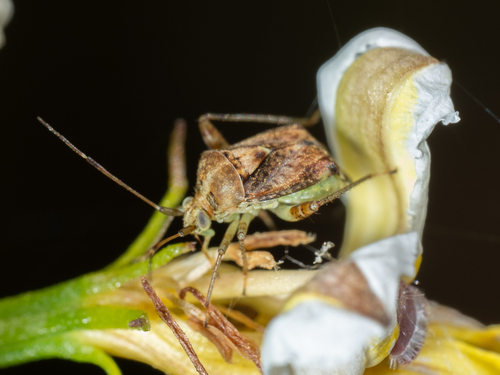
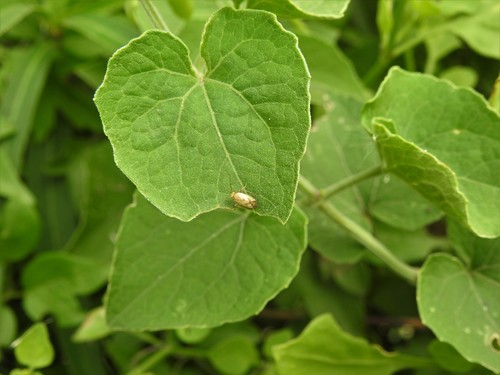
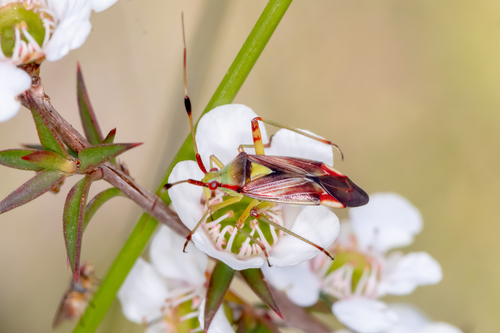
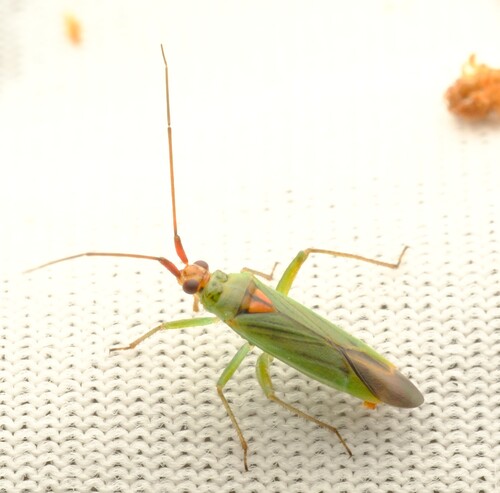
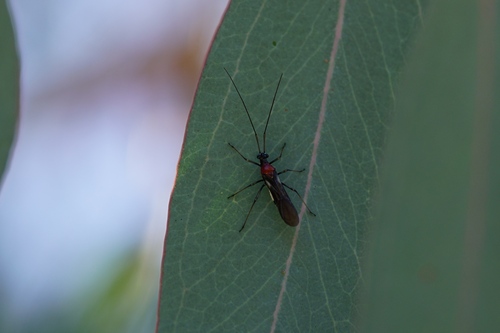
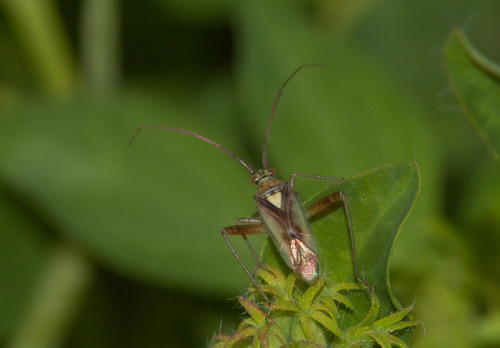
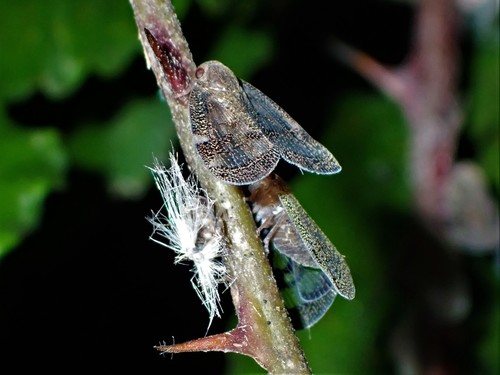
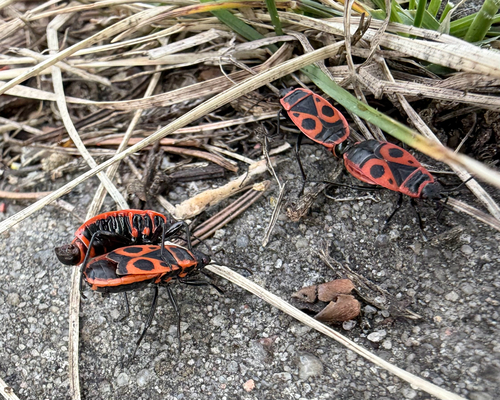
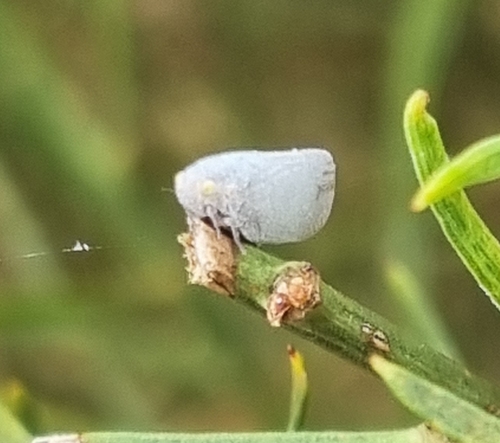
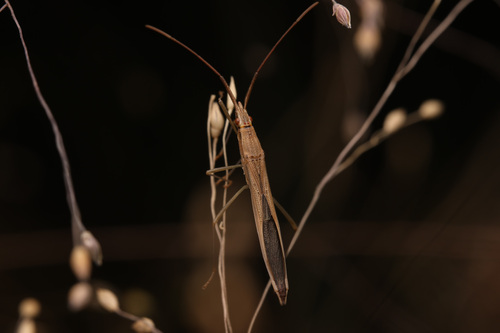
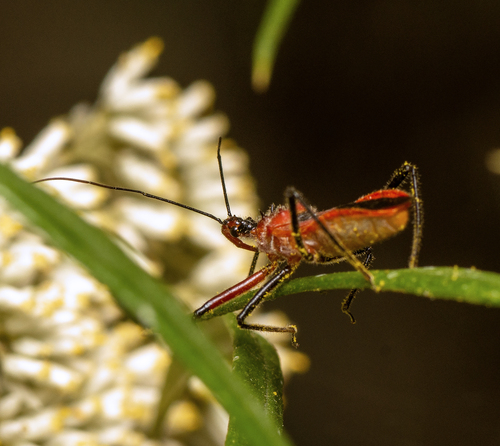
Creontiades dilutus

Creontiades dilutus

Creontiades dilutus

Daily sighting probability <5% · Rare
at Melbourne

In 3 days ~10% in a week ~30%

59 Verified sightings at Melbourne
6 In 1 park From 2019 to 2026
February Best month
🌅 Crepuscular When it's spotted

About the Creontiades dilutus

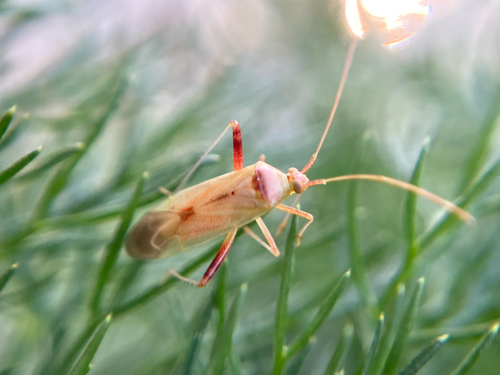
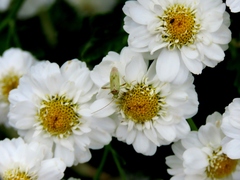
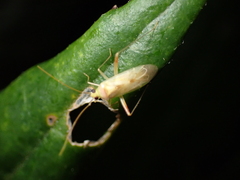
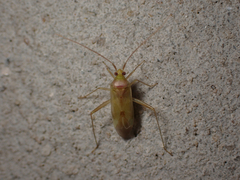
Creontiades dilutus, commonly known as the green mirid, is a member of the bug family Miridae (the largest bug family with over 10,000 species). This insect is considered a "generalist" feeding on over 100 plant species, and is also a major economic pest on several important agricultural crops.

The green mirid is endemic to Australia, and found throughout the continent including in Tasmania. This insect is found throughout the hot and arid interior of the continent (see figure below) and is particularly abundant in these regions during southern hemisphere winter (especially if there has been higher than average winter rain). In summer months the interior of the country is very hot and dry and there are very few plants available for green mirids to feed on, a few individuals do persist in this region during summer months but not many. In the Eastern cropping regions the winter months are too cold to support growth and development of green mirids, some do survive through the winter in these regions, but again in very low numbers. In the summer conditions in the Eastern cropping regions are ideal for mirid growth and development and large populations van build up rapidly... Wikipedia →

Global Distribution

Parks Where Found

# Park Country Daily sighting probability
1 Blue Mountains National Park 🇦🇺 Australia
<5%

More parks will be added in future updates.

Cities Where Found

# City Country Daily sighting probability
1 Melbourne 🇦🇺 Australia
<5%
2 Brisbane 🇦🇺 Australia
<5%
3 Sydney 🇦🇺 Australia
<5%

Before you go

What are the chances of seeing a Creontiades dilutus in Melbourne?

Rare

Under 5% of wildlife watchers report a Creontiades dilutus sighting in Melbourne on a given day, based on 59 verified sightings from GBIF citizen-science data. It is the 220th most-seen of the 875 insects we can rate there. Over three days the chance rises to about 10%, and over a week to about 30%, if each day is a fresh chance.

When is the best time to see a Creontiades dilutus in Melbourne?

January–March and September–October

In those months about 10% of wildlife watchers report a Creontiades dilutus in Melbourne on a given day, against under 5% in April–August and November–December, the lowest months.

What time of day is best to see a Creontiades dilutus?

Between 10 am and 1 pm

Across all the parks we cover, that three-hour window holds the most Creontiades dilutus sightings with a recorded time, and about half of them come between 6 am and 6 pm: it is most active around dawn and dusk.

Is Melbourne the best place to see a Creontiades dilutus?

Yes

Of the 3 cities where we can rate Creontiades dilutus sightings, Melbourne has the highest daily chance: under 5%. Next come Brisbane (Australia, under 5%) and Sydney (Australia, under 5%).

Where does the Creontiades dilutus sighting chance come from?

GBIF citizen-science records

It is estimated from how often the Creontiades dilutus is recorded against all the insects logged in Melbourne (59 verified sightings), calibrated against known sighting rates. Figures are rounded to the nearest 10% because citizen-science data supports honest approximations, not decimals, and months with records from fewer than five people show "—". How it works.

← Back to Melbourne