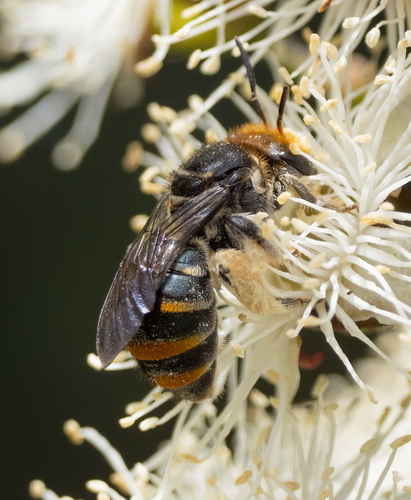
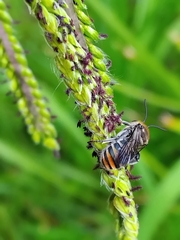
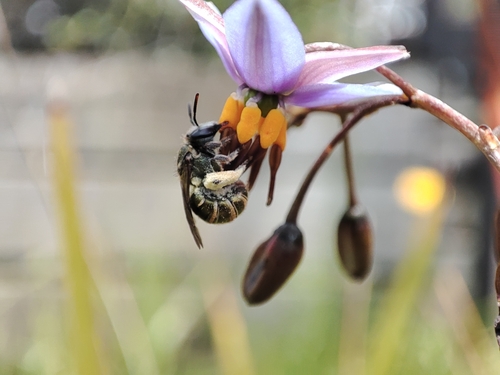
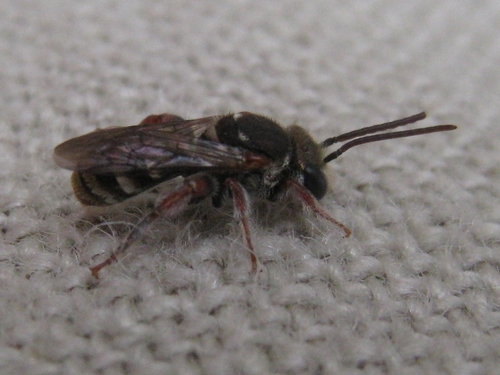
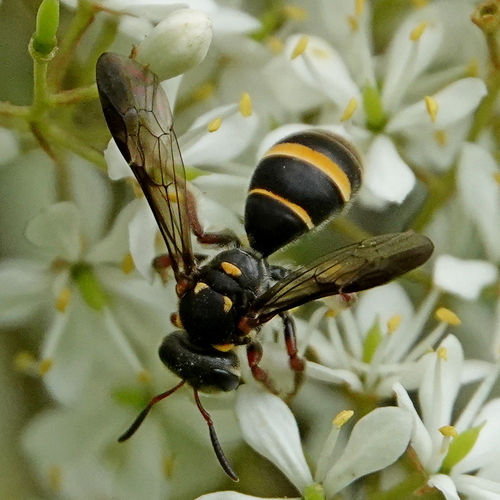
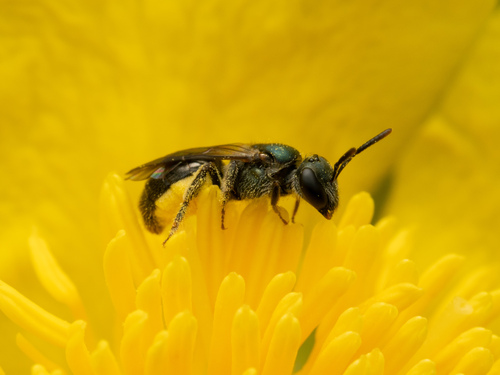
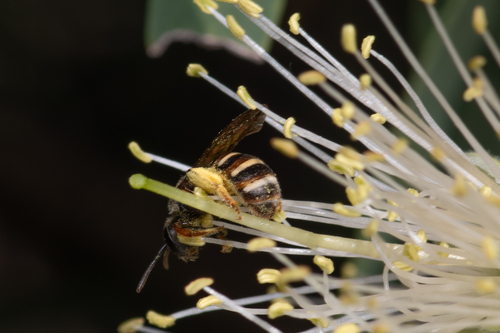
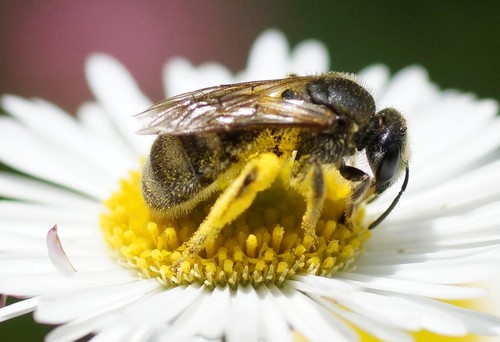
Green-And-Gold Nomia Bee

Green-And-Gold Nomia Bee

Lipotriches australica

Daily sighting probability <5% · Rare
at Melbourne

In 3 days ~10% in a week ~30%

91 Verified sightings at Melbourne
21 In all 2 parks From 2019 to 2026
January Best month
☀️ Diurnal When it's spotted

About the Green-And-Gold Nomia Bee

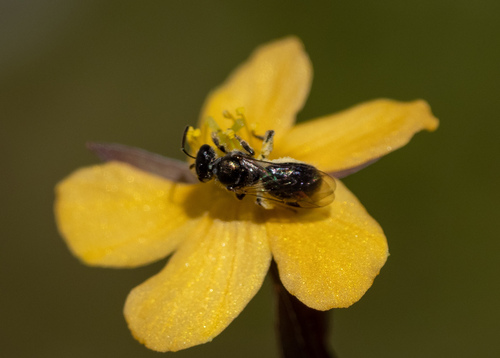
Lipotriches australica, commonly known as the green and gold nomia, is a species of bee in the family Halictidae. It was described by Frederick Smith in 1875, and is widely distributed across mainland Australia. It is approximately the size of a European honeybee, and it is a buzz pollinator. When conditions are optimal, the females can nest in dense aggregations with tens of thousands of nests per hectare. Males are often seen clustered together in roosting aggregations. This was one of four species featured in a set of native bee postage stamps, which were available from Australia Post in 2019.

This species was described in 1875 by Frederick Smith, who named it Nomia australica. In the 21st century it was moved to the genus Lipotriches by Professor Charles Michener, and it lies within the subgenus Austronomia. It is commonly known as the green and gold nomia in reference to the metallic blue-green shine on the abdomen and bands of golden hair.

Lipotriches australica is approximately 10mm long, which is around the size of a European honeybee. The head and thorax are black, and there is a patch of short, white hair at the rear of the thorax. The abdomen... Wikipedia →

Global Distribution

Parks Where Found

# Park Country Daily sighting probability
1 Lamington National Park 🇦🇺 Australia
~10%
2 Blue Mountains National Park 🇦🇺 Australia
<5%

Cities Where Found

# City Country Daily sighting probability
1 Sydney 🇦🇺 Australia
~10%
2 Brisbane 🇦🇺 Australia
<5%
3 Melbourne 🇦🇺 Australia
<5%

Before you go

What are the chances of seeing a Green-And-Gold Nomia Bee in Melbourne?

Rare

Under 5% of wildlife watchers report a Green-And-Gold Nomia Bee sighting in Melbourne on a given day, based on 91 verified sightings from GBIF citizen-science data. It is the 198th most-seen of the 875 insects we can rate there. Over three days the chance rises to about 10%, and over a week to about 30%, if each day is a fresh chance.

When is the best time to see a Green-And-Gold Nomia Bee in Melbourne?

November to February

In those months about 10% of wildlife watchers report a Green-And-Gold Nomia Bee in Melbourne on a given day, against under 5% in March to October, the lowest months.

What time of day is best to see a Green-And-Gold Nomia Bee?

Between noon and 3 pm

Across all the parks we cover, that three-hour window holds the most Green-And-Gold Nomia Bee sightings with a recorded time, and nearly all of them come between 6 am and 6 pm: it is a daytime animal.

Is Melbourne the best place to see a Green-And-Gold Nomia Bee?

3rd of 3

Of the 3 cities where we can rate Green-And-Gold Nomia Bee sightings, Melbourne ranks 3rd at under 5%. The best odds are in Sydney (Australia, about 10%) and Brisbane (Australia, under 5%).

Where does the Green-And-Gold Nomia Bee sighting chance come from?

GBIF citizen-science records

It is estimated from how often the Green-And-Gold Nomia Bee is recorded against all the insects logged in Melbourne (91 verified sightings), calibrated against known sighting rates. Figures are rounded to the nearest 10% because citizen-science data supports honest approximations, not decimals, and months with records from fewer than five people show "—". How it works.

← Back to Melbourne