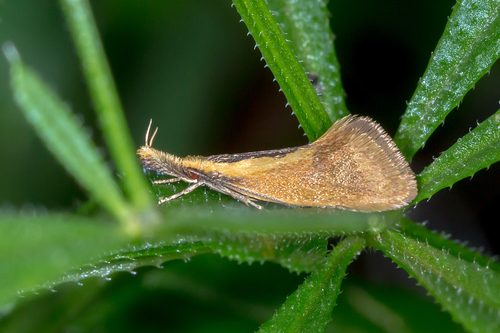
Ruddy Streak

Ruddy Streak

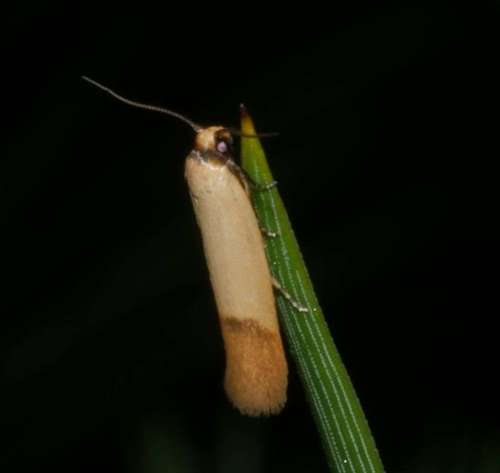
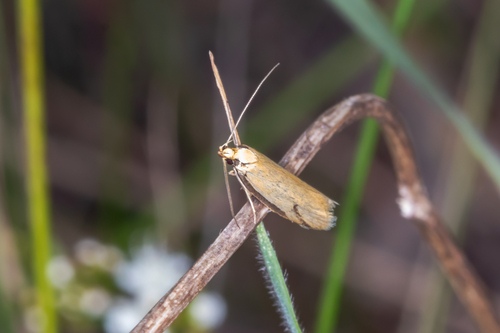
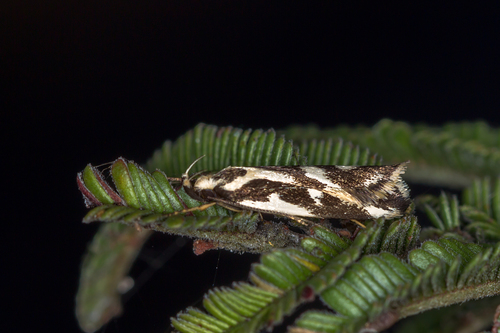
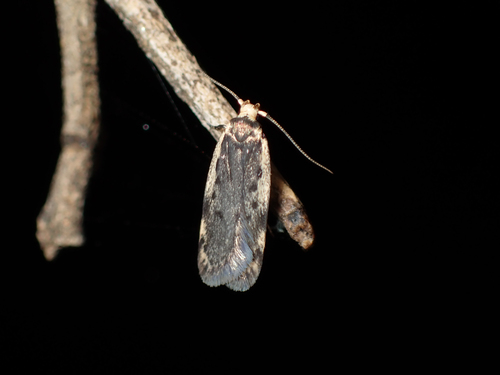
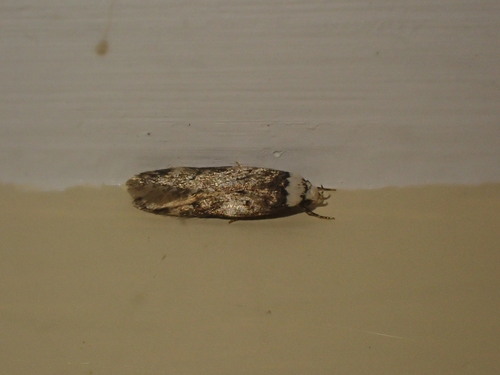
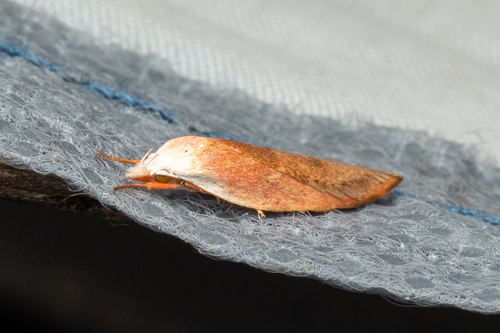
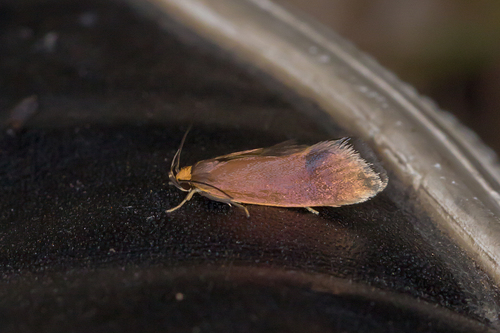
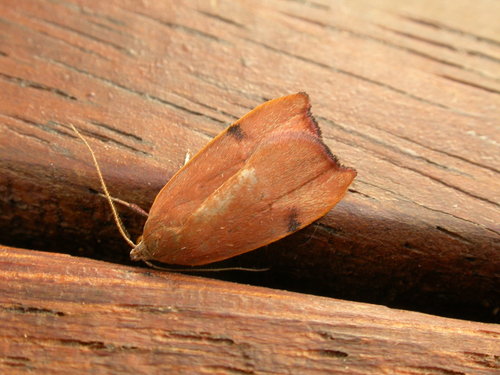
Tachystola acroxantha

Daily sighting probability <5% · Rare
at Melbourne

In 3 days ~10% in a week ~30%

50 Verified sightings at Melbourne
36 In all 2 parks From 2019 to 2026
May Best month
🌙 Nocturnal When it's spotted

About the Ruddy Streak

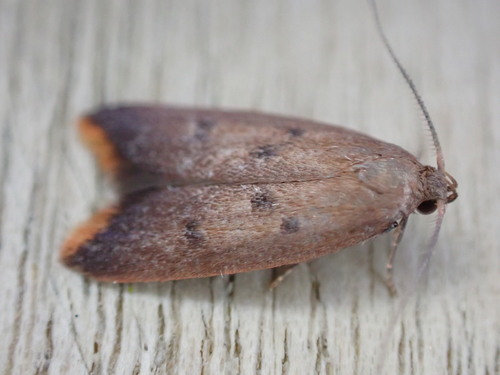
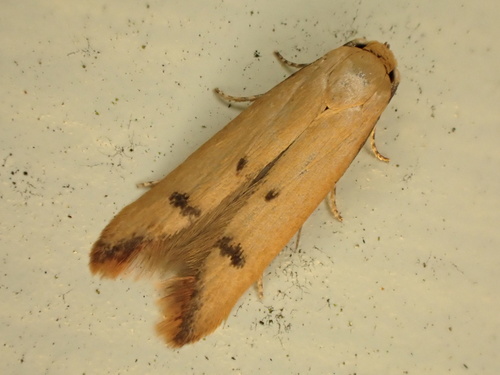
Tachystola acroxantha is a moth of the family Oecophoridae. It is native to Australia, but is an invasive species in New Zealand and Europe, probably imported with Australian plants. The wingspan is 13–15 mm. In Britain the moth flies from late-April to September, possibly in two extended generations or in a succession of broods. It comes to light and has been found in gardens, heath and in a flour mill.

Egg Undescribed. Larvae Length 11–14 mm. The body is a translucent greyish white to creamy white with the gut showing as a darker dorsal line, which gives a larva the appearance of being grey. Its head is brown with darker mandibles.

In Australia the larvae have been found between flat spun, fallen Eucalyptus leaves, on the ground or on fallen branches, favouring moist leaves. In Great Britain, Alexander Allen obtained eggs from a captured female and saw the larvae initially feeding gregariously in a silken web and as they grew they fed alone. Some ate withered leaves, but all the larvae preferred fresh leaves. The first wild larvae found in Great Britain was in the garden of the Natural History Museum, London (BMNH) in March 1998. They were in loose silken tubes... Wikipedia →
Global Distribution

Parks Where Found

# Park Country Daily sighting probability
1 Rakiura National Park 🇳🇿 New Zealand
~20%
2 Blue Mountains National Park 🇦🇺 Australia
~10%

Cities Where Found

# City Country Daily sighting probability
1 Liverpool 🇬🇧 United Kingdom
~40%
2 London 🇬🇧 United Kingdom
~20%
3 Birmingham 🇬🇧 United Kingdom
~10%
4 Auckland 🇳🇿 New Zealand
~10%
5 Manchester 🇬🇧 United Kingdom
~10%
6 Leeds 🇬🇧 United Kingdom
~10%
7 Melbourne 🇦🇺 Australia
<5%

Before you go

What are the chances of seeing a Ruddy Streak in Melbourne?

Rare

Under 5% of wildlife watchers report a Ruddy Streak sighting in Melbourne on a given day, based on 50 verified sightings from GBIF citizen-science data. It is the 247th most-seen of the 875 insects we can rate there. Over three days the chance rises to about 10%, and over a week to about 30%, if each day is a fresh chance.

When is the best time to see a Ruddy Streak in Melbourne?

January, May and September–October

In those months about 10% of wildlife watchers report a Ruddy Streak in Melbourne on a given day, against under 5% in February–April, June–August and November–December, the lowest months.

What time of day is best to see a Ruddy Streak?

Between 9 pm and midnight

Across all the parks we cover, that three-hour window holds the most Ruddy Streak sightings with a recorded time, and about 7 in 10 of them come between 6 pm and 6 am: it is mostly seen at night.

Is Melbourne the best place to see a Ruddy Streak?

7th of 7

Of the 7 cities where we can rate Ruddy Streak sightings, Melbourne ranks 7th at under 5%. The best odds are in Liverpool (United Kingdom, about 40%), London (United Kingdom, about 20%) and Birmingham (United Kingdom, about 10%).

Where does the Ruddy Streak sighting chance come from?

GBIF citizen-science records

It is estimated from how often the Ruddy Streak is recorded against all the insects logged in Melbourne (50 verified sightings), calibrated against known sighting rates. Figures are rounded to the nearest 10% because citizen-science data supports honest approximations, not decimals, and months with records from fewer than five people show "—". How it works.

← Back to Melbourne