Mexican Lancehead Rattlesnake

Mexican Lancehead Rattlesnake

Crotalus polystictus

Silhouette: Bill Bouton (source photo) & T. Michael Keesey (vectorization) · PhyloPic

LCLeast ConcernNTVUENCR Endemic
Daily sighting probability <5% · Rare
at Mexico City

In 3 days ~10% in a week ~30%

34 Verified sightings at Mexico City
October Best month
☀️ Diurnal When it's spotted

About the Mexican Lancehead Rattlesnake

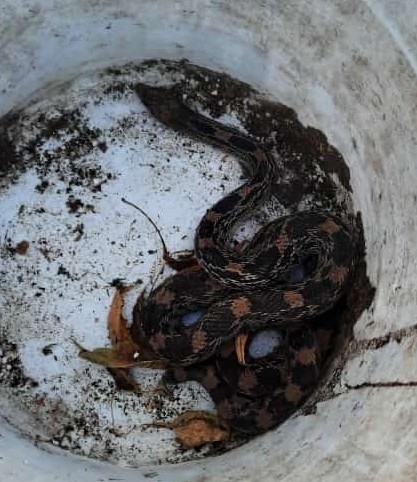
The Mexican lance-headed rattlesnake or lance-headed rattlesnake (Crotalus polystictus) is a venomous pit viper species found in central Mexico. No subspecies is currently recognized. Adults usually grow to a total length of 60 to 70 cm (24 to 28 in), although exceptionally large specimens may be as much as 100 cm (39 in) long.

The species is found on the plateau of central Mexico from southern Zacatecas and northeastern Colima east to east-central Veracruz. It occurs at elevations between 1,450 and 2,600 m (4,760 and 8,530 ft). The type locality given is "Table Land, Mexico", although a restriction to "Tupátaro, Guanajuanto, Mexico" was proposed by H.M. Smith and Taylor (1950).

This species is classified as Least Concern on the IUCN Red List of Threatened Species (v3.1, 2001). Species are listed as such due to their wide distribution, presumed large population, or because they are unlikely to be declining fast enough to qualify for listing in a more threatened category. The population trend was down when assessed in 2007.

Cope, E.D. 1865. Third contribution to the HERPETOLOGY... Wikipedia →

Sounds

Recording0:10

Mexico · 2021

© daniie · iNaturalist · CC BY-NC 4.0

Global Distribution

Parks Where Found

# Park Country Daily sighting probability

More parks will be added in future updates.

Cities Where Found

# City Country Daily sighting probability
1 Mexico City 🇲🇽 México
<5%

Zoos & Centres Where Found

# Zoo / Centre Country
1 National Zoological Park 🇺🇸 United States In captivity
2 Los Angeles Zoo 🇺🇸 United States In captivity
3 Saint Louis Zoo 🇺🇸 United States In captivity
4 Fort Worth Zoo 🇺🇸 United States In captivity
5 San Antonio Zoo 🇺🇸 United States In captivity
6 Zoo Atlanta 🇺🇸 United States In captivity
7 Buffalo Zoo 🇺🇸 United States In captivity
8 Chattanooga Zoo at Warner Park 🇺🇸 United States In captivity
9 Reino Animal 🇲🇽 Mexico In captivity

Before you go

What are the chances of seeing a Mexican Lancehead Rattlesnake in Mexico City?

Rare

Under 5% of wildlife watchers report a Mexican Lancehead Rattlesnake sighting in Mexico City on a given day, based on 34 verified sightings from GBIF citizen-science data. It is the 20th most-seen of the 37 reptiles we can rate there. Over three days the chance rises to about 10%, and over a week to about 30%, if each day is a fresh chance.

When is the best time to see a Mexican Lancehead Rattlesnake in Mexico City?

January, April and September–November

In those months about 10% of wildlife watchers report a Mexican Lancehead Rattlesnake in Mexico City on a given day, against under 5% in February–March, May–August and December, the lowest months.

What time of day is best to see a Mexican Lancehead Rattlesnake?

Between 10 am and 1 pm

Across all the parks we cover, that three-hour window holds the most Mexican Lancehead Rattlesnake sightings with a recorded time, and about 8 in 10 of them come between 6 am and 6 pm: it is a daytime animal.

Where else can you see a Mexican Lancehead Rattlesnake?

Only Mexico City, in our data

Mexico City is the only city on Wallace's Line with enough records to rate Mexican Lancehead Rattlesnake sightings: under 5% of wildlife watchers there report one on a given day.

Which relatives of the Mexican Lancehead Rattlesnake live in Mexico City?

Same genus: Crotalus

The closest relatives of the Mexican Lancehead Rattlesnake that you can see in Mexico City (genus Crotalus, Rattlesnakes) are Western Black-tailed Rattlesnake (about 10%) and Mexican Pygmy Rattlesnake (about 10%), with each one's daily chance of a sighting.

Where does the Mexican Lancehead Rattlesnake sighting chance come from?

GBIF citizen-science records

It is estimated from how often the Mexican Lancehead Rattlesnake is recorded against all the reptiles logged in Mexico City (34 verified sightings), calibrated against known sighting rates. Figures are rounded to the nearest 10% because citizen-science data supports honest approximations, not decimals, and months with records from fewer than five people show "—". How it works.

← Back to Mexico City