Mexican Pygmy Rattlesnake

Mexican Pygmy Rattlesnake

Crotalus ravus

LCLeast ConcernNTVUENCR
Daily sighting probability ~10% · With luck
at Mexico City

In 3 days ~20% in a week ~40%

57 Verified sightings at Mexico City
August Best month
☀️ Diurnal When it's spotted

About the Mexican Pygmy Rattlesnake

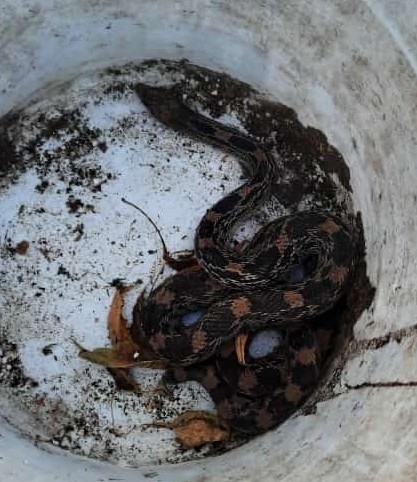
Crotalus ravus, commonly known as the Mexican pigmy rattlesnake or Mexican pygmy rattlesnake, is a venomous pit viper species, found only in Mexico. Three subspecies are currently recognized. A study using mitochondrial DNA strongly suggests that C. ravus is part of a species complex including Crotalus triseriatus, Crotalus pusillus, Crotalus aquilus, and Crotalus lepidus. This study also confirmed strong genetic differentiation among the three subspecies aligning with geographic barriers. A follow-up study using seven nuclear markers places S. ravus basal to all other members of the species complex.

Adults of this species usually grow to a length of 40–65 centimetres (16–26 in), but may reach more than 70 cm (28 in). They are moderately stout in build. The distinguishing characteristics for the nominate subspecies C. r. ravus include parietal scales that are highly variable in shape and particularly large, less than 3 prefoveals, 21 midbody dorsal scales, 2–4 tail bands and a relatively large rattle.

Found only in Mexico in the mountains in the center and south of the country, west of the Isthmus of Tehuantepec. Its... Wikipedia →

Global Distribution

Parks Where Found

# Park Country Daily sighting probability

More parks will be added in future updates.

Cities Where Found

# City Country Daily sighting probability
1 Mexico City 🇲🇽 México
~10%

Zoos & Centres Where Found

# Zoo / Centre Country
1 Zoológico del Altiplano 🇲🇽 Mexico In captivity

Before you go

What are the chances of seeing a Mexican Pygmy Rattlesnake in Mexico City?

With luck

About 10% of wildlife watchers report a Mexican Pygmy Rattlesnake sighting in Mexico City on a given day, based on 57 verified sightings from GBIF citizen-science data. It is the 16th most-seen of the 37 reptiles we can rate there. Over three days the chance rises to about 20%, and over a week to about 40%, if each day is a fresh chance.

When is the best time to see a Mexican Pygmy Rattlesnake in Mexico City?

February, April and June–November

In those months about 10% of wildlife watchers report a Mexican Pygmy Rattlesnake in Mexico City on a given day, against under 5% in March, May and December–January, the lowest months.

What time of day is best to see a Mexican Pygmy Rattlesnake?

Between 10 am and 1 pm

Across all the parks we cover, that three-hour window holds the most Mexican Pygmy Rattlesnake sightings with a recorded time, and about 9 in 10 of them come between 6 am and 6 pm: it is a daytime animal.

Where else can you see a Mexican Pygmy Rattlesnake?

Only Mexico City, in our data

Mexico City is the only city on Wallace's Line with enough records to rate Mexican Pygmy Rattlesnake sightings: about 10% of wildlife watchers there report one on a given day.

Where does the Mexican Pygmy Rattlesnake sighting chance come from?

GBIF citizen-science records

It is estimated from how often the Mexican Pygmy Rattlesnake is recorded against all the reptiles logged in Mexico City (57 verified sightings), calibrated against known sighting rates. Figures are rounded to the nearest 10% because citizen-science data supports honest approximations, not decimals, and months with records from fewer than five people show "—". How it works.

← Back to Mexico City