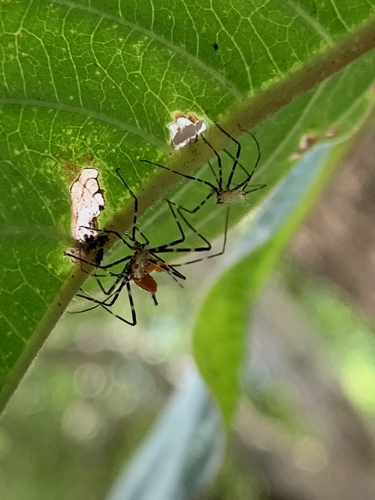
Thorn Treehopper

Thorn Treehopper

Umbonia crassicornis

Daily sighting probability <5% · Rare
at Mexico City

In 3 days ~10% in a week ~20%

8 Verified sightings at Mexico City
12 In all 2 parks From 2019 to 2026
February Best month
☀️ Diurnal When it's spotted

About the Thorn Treehopper

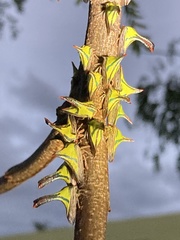
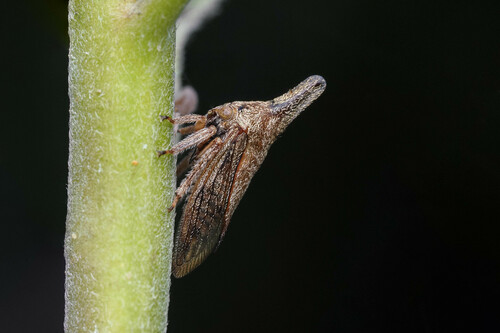
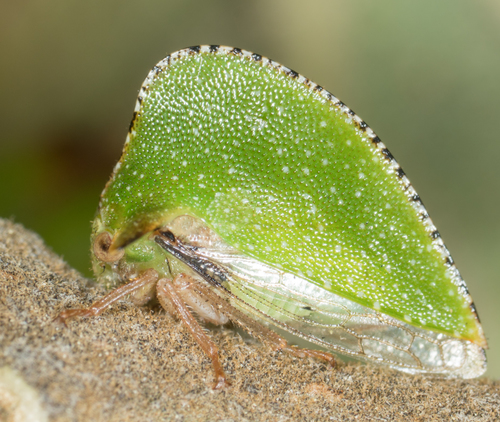
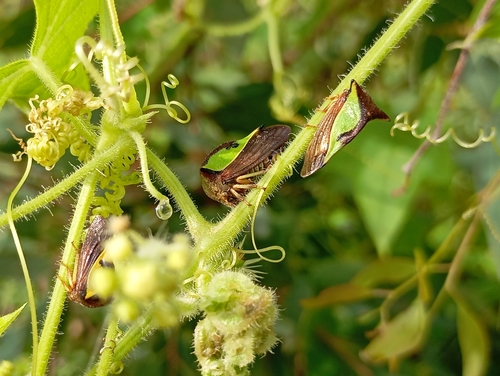
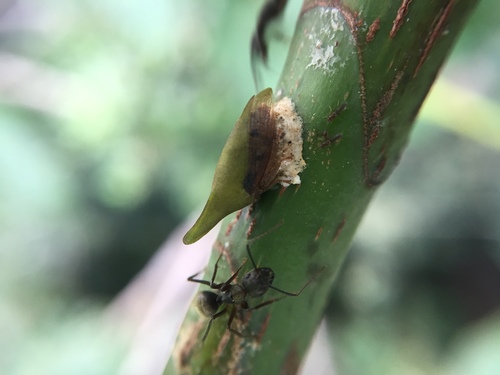
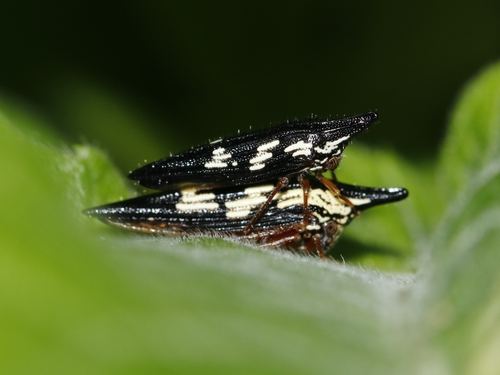
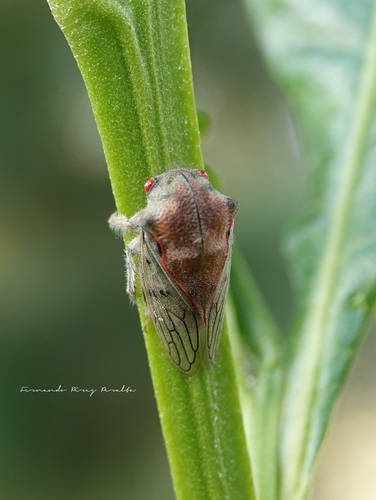
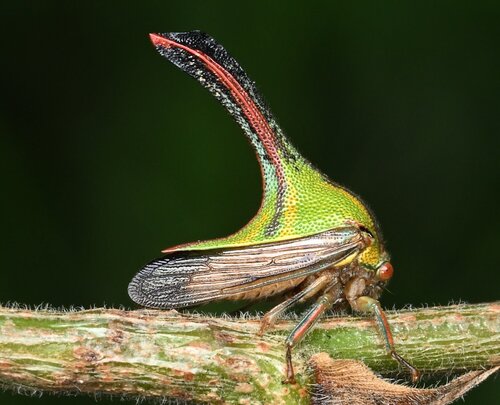
Umbonia crassicornis, commonly known as the thorn bug, is a widespread member of the insect family Membracidae, and an occasional pest of ornamentals and fruit trees in southern Florida. The body length of the adult is approximately 10 millimetres (0.39 in). This is a variable species as to size, color and structure, particularly the pronotal horn of males (which is more angled posteriorly than the females' and often somewhat expanded apically). This tall, essentially perpendicular thornlike pronotum discourages birds and other predators from eating it, if only by mistakenly confusing it with a thorn. Typically, the adult is green or yellow with reddish lines and brownish markings.

The species is restricted to warmer climates where temperatures stay, on average, above zero. This limits the species to the tropical regions of Northern South America to Mexico and Florida. Any range of temperature below 0 degrees is fatal resulting in a 10-90 percent decrease in the population as temperature decreases. Its preferred hosts are ornamental and fruit trees of subtropical regions feeding on sap inside the plants.

Female Umbonia crassicornis often deposit... Wikipedia →
Global Distribution

Parks Where Found

# Park Country Daily sighting probability
1 Everglades National Park 🇺🇸 United States
<5%
2 La Amistad International Park (Panama) 🇵🇦 Panama
<5%

Cities Where Found

# City Country Daily sighting probability
1 Cali 🇨🇴 Colombia
~20%
2 Caracas 🇻🇪 Venezuela
~10%
3 Guadalajara 🇲🇽 México
~10%
4 Medellín 🇨🇴 Colombia
~10%
5 Miami 🇺🇸 United States
~10%
6 San José 🇨🇷 Costa Rica
<5%
7 Philadelphia 🇺🇸 United States
<5%
8 Mexico City 🇲🇽 México
<5%

Before you go

What are the chances of seeing a Thorn Treehopper in Mexico City?

Rare

Under 5% of wildlife watchers report a Thorn Treehopper sighting in Mexico City on a given day, based on 8 verified sightings from GBIF citizen-science data. It is the 413th most-seen of the 557 insects we can rate there. Over three days the chance rises to about 10%, and over a week to about 20%, if each day is a fresh chance.

When is the best time to see a Thorn Treehopper in Mexico City?

Any time of year

In every month with enough records, under 5% of wildlife watchers report a Thorn Treehopper in Mexico City on a given day, so our monthly data shows no clear season.

What time of day is best to see a Thorn Treehopper?

Between 11 am and 2 pm

Across all the parks we cover, that three-hour window holds the most Thorn Treehopper sightings with a recorded time, and nearly all of them come between 6 am and 6 pm: it is a daytime animal.

Is Mexico City the best place to see a Thorn Treehopper?

8th of 8

Of the 8 cities where we can rate Thorn Treehopper sightings, Mexico City ranks 8th at under 5%. The best odds are in Cali (Colombia, about 20%), Caracas (Venezuela, about 10%) and Guadalajara (México, about 10%).

Which relatives of the Thorn Treehopper live in Mexico City?

Same family: Membracidae

The closest relatives of the Thorn Treehopper that you can see in Mexico City (family Membracidae, Typical Treehoppers) are Mexican Treehopper (about 20%) and Enchenopa quadricolor (about 10%), with each one's daily chance of a sighting.

Where does the Thorn Treehopper sighting chance come from?

GBIF citizen-science records

It is estimated from how often the Thorn Treehopper is recorded against all the insects logged in Mexico City (8 verified sightings), calibrated against known sighting rates. Figures are rounded to the nearest 10% because citizen-science data supports honest approximations, not decimals, and months with records from fewer than five people show "—". How it works.

← Back to Mexico City