

Black Vine Weevil

Black Vine Weevil

Otiorhynchus sulcatus

Daily sighting probability ~10% · With luck
at Minsk

In 3 days ~20% in a week ~30%

7 Verified sightings at Minsk
66 In all 6 parks From 2019 to 2026
October Best month
☀️🌙 Day & Night When it's spotted

About the Black Vine Weevil

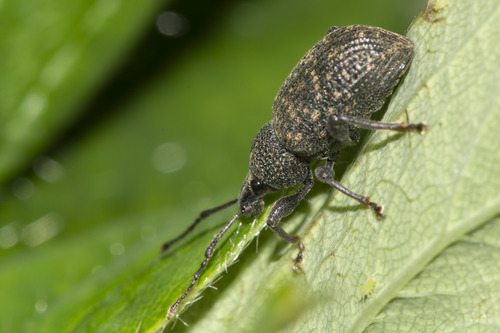
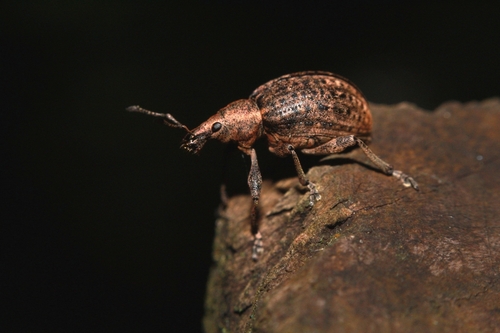
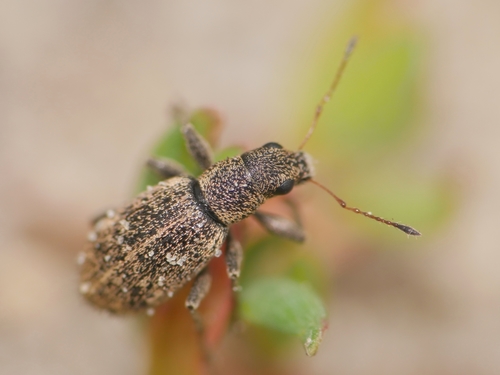
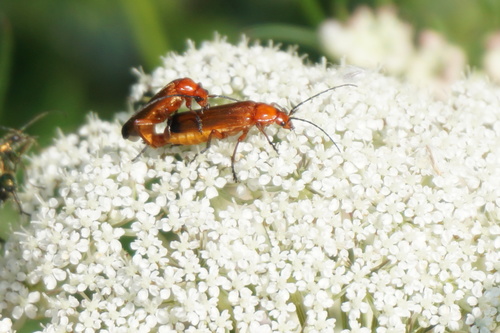
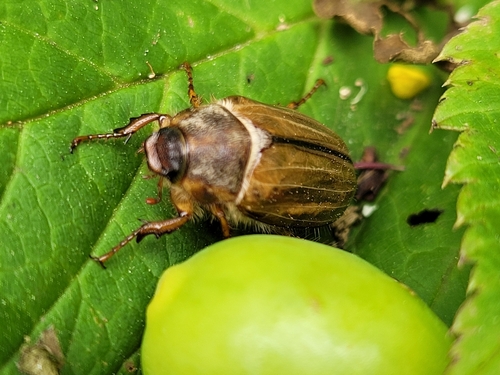
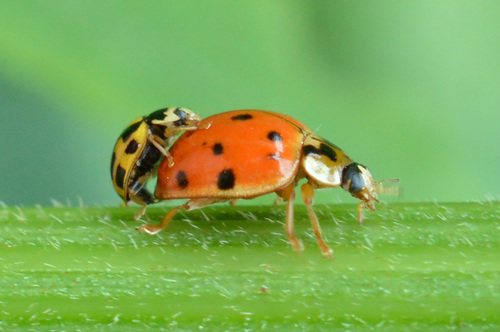
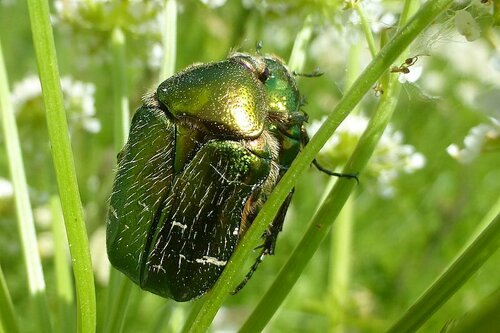
The black vine weevil (Otiorhynchus sulcatus) is an insect native to Europe but common in North America as well. It is a pest of many garden plants. The adult weevil is matte black with fused wing covers, and is unable to fly. It feeds at night on the outer edges of leaves, causing the leaves to have a notched margin. Broadleaved evergreen plants such as Camellia, Rhododendron, Euonymus and Bergenia are particularly prone to damage, although a wide range of different garden plants are susceptible to attack.

Female weevils have the ability to reproduce parthenogenetically with fertilisation of eggs required to produce males, though no males have been observed. This form of parthenogenesis is known as thelytoky. Grubs grow up to 1 cm in length, have a slightly curved, legless body and are creamy white in colour with a tan-brown head. They live below the soil surface, and feed on roots and cambium at the base of trunks. They mostly cause damage to herbaceous plants, particularly those growing in containers, where root growth is restricted. Severe infestations can result in complete root destruction and hence plant death.

Their host plant genera include... Wikipedia →

Global Distribution

Parks Where Found

# Park Country Daily sighting probability
1 Egmont National Park 🇳🇿 New Zealand
~10%
2 Snowdonia National Park 🇬🇧 United Kingdom
~10%
3 Great Bear Rainforest 🇨🇦 Canada
~10%
4 Acadia National Park 🇺🇸 United States
~10%
5 Wadden Sea National Park 🇩🇪 Germany
~10%
6 Bavarian Forest National Park 🇩🇪 Germany
~10%

Cities Where Found

# City Country Daily sighting probability
1 Manchester 🇬🇧 United Kingdom
~20%
2 Liverpool 🇬🇧 United Kingdom
~10%
3 Copenhagen 🇩🇰 Denmark
~10%
4 Birmingham 🇬🇧 United Kingdom
~10%
5 Rotterdam [The Hague] 🇳🇱 Netherlands
~10%
6 Amsterdam 🇳🇱 Netherlands
~10%
7 Portland 🇺🇸 United States
~10%
8 Helsinki 🇫🇮 Finland
~10%
9 Warsaw 🇵🇱 Poland
~10%
10 London 🇬🇧 United Kingdom
~10%

Before you go

What are the chances of seeing a Black Vine Weevil in Minsk?

With luck

About 10% of wildlife watchers report a Black Vine Weevil sighting in Minsk on a given day, based on 7 verified sightings from GBIF citizen-science data. It is the 116th most-seen of the 196 insects we can rate there. Over three days the chance rises to about 20%, and over a week to about 30%, if each day is a fresh chance.

When is the best time to see a Black Vine Weevil in Minsk?

October

In that month about 20% of wildlife watchers report a Black Vine Weevil in Minsk on a given day, against under 5% in November to July, the lowest months.

What time of day is best to see a Black Vine Weevil?

Between 8 and 11 pm

Across all the parks we cover, that three-hour window holds the most Black Vine Weevil sightings with a recorded time, and about half of them come between 6 am and 6 pm: it is seen both by day and at night.

Is Minsk the best place to see a Black Vine Weevil?

30th of 44

Of the 44 cities where we can rate Black Vine Weevil sightings, Minsk ranks 30th at about 10%. The best odds are in Manchester (United Kingdom, about 20%), Liverpool (United Kingdom, about 10%) and Copenhagen (Denmark, about 10%).

Which relatives of the Black Vine Weevil live in Minsk?

Same family: Curculionidae

The closest relatives of the Black Vine Weevil that you can see in Minsk (family Curculionidae, True Weevils) are Chequered Weevil (about 10%) and Polydrusus inustus (about 10%), with each one's daily chance of a sighting.

Where does the Black Vine Weevil sighting chance come from?

GBIF citizen-science records

It is estimated from how often the Black Vine Weevil is recorded against all the insects logged in Minsk (7 verified sightings), calibrated against known sighting rates. Figures are rounded to the nearest 10% because citizen-science data supports honest approximations, not decimals, and months with records from fewer than five people show "—". How it works.

← Back to Minsk