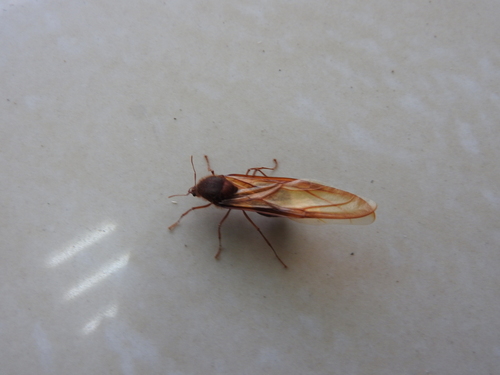
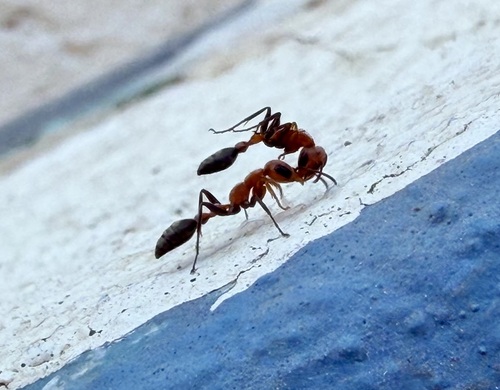
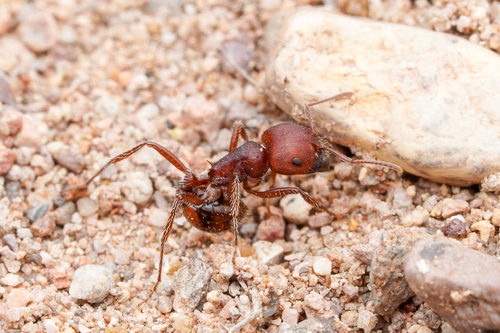
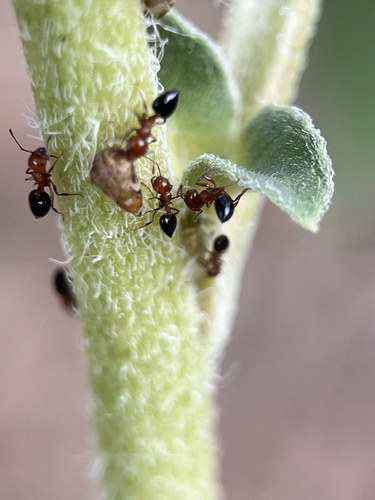
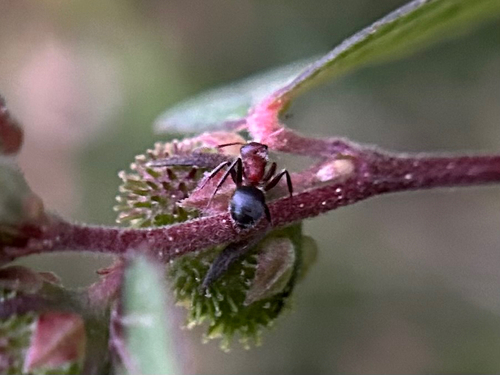
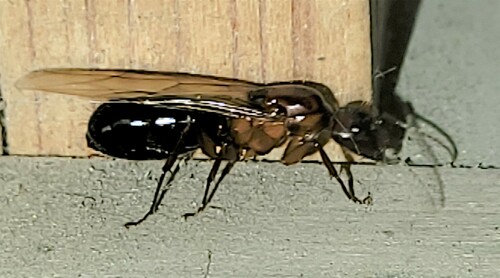
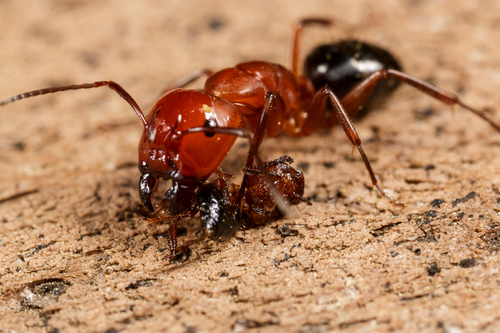
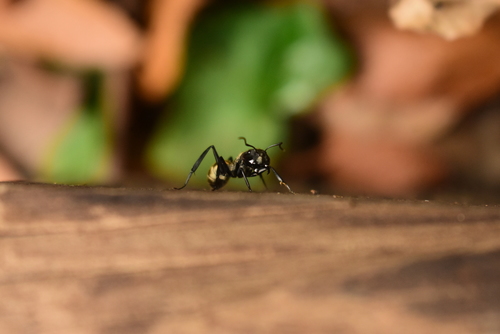
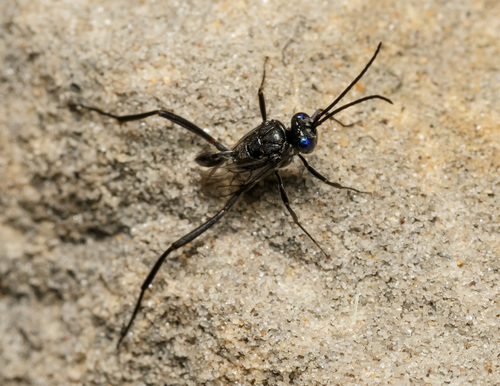
Tropical Fire Ant

Tropical Fire Ant

Solenopsis geminata

Daily sighting probability <5% · Rare
at Monterrey

In 3 days ~10% in a week ~20%

7 Verified sightings at Monterrey
36 In all 4 parks From 2019 to 2026
October Best month
☀️🌙 Day & Night When it's spotted

About the Tropical Fire Ant

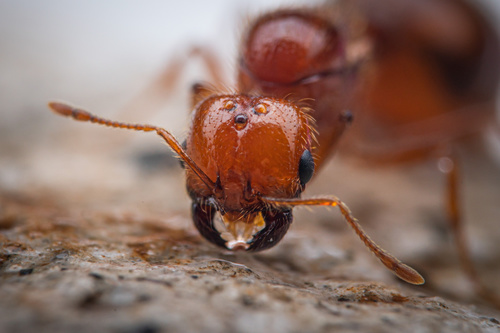
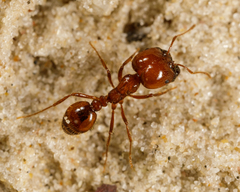
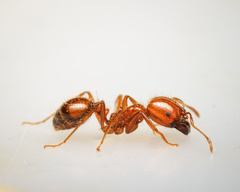
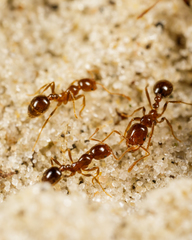
Solenopsis geminata or tropical fire ant is a species of fire ants, described by Fabricius in 1804, in the tribe Solenopsidini; it was originally placed in the Atta genus. This species has a pan-tropical distribution. Solenopsis geminata is native to Northern, Central and South America, including the Caribbean islands, but has since spread throughout the tropics by human means. It is an invasive species with a world-wide distribution even greater than that of other invasive fire ant species such as Solenopsis invicta (red imported fire ant).

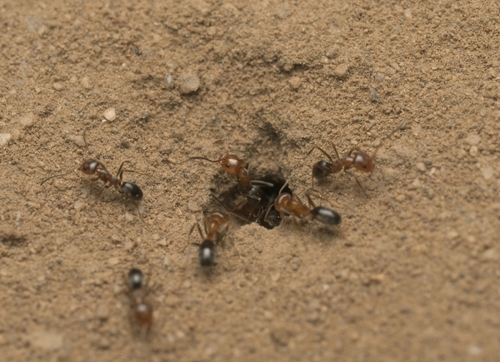
S. geminata build their nests primarily in the soil in open, sunny areas. The nests are formed, some as craters or mounds, up to 2 feet wide and 12 inches tall with multiple entrance holes up to some 20 per nest. The number of mounds varies greatly, from 10 to 80 per acre in native habitats to up to 1000 or even 1500 mounds per acre in areas where they are introduced.

The colonies can either be monogyne, containing a single queen, or polygyne, containing many reproductive queens. They are known to hybridize with other closely related fire ant species. Queens may start a new colony following a... Wikipedia →

Global Distribution

Parks Where Found

# Park Country Daily sighting probability
1 Padre Island National Seashore 🇺🇸 United States
~10%
2 Braulio Carrillo National Park 🇨🇷 Costa Rica
~10%
3 Galápagos Islands 🇪🇨 Ecuador
~10%
4 Everglades National Park 🇺🇸 United States
<5%

Cities Where Found

# City Country Daily sighting probability
1 Davao City 🇵🇭 Philippines
~30%
2 Hyderabad 🇮🇳 India
~30%
3 Kanpur 🇮🇳 India
~20%
4 Ho Chi Minh City 🇻🇳 Vietnam
~20%
5 Prayagraj 🇮🇳 India
~20%
6 Coimbatore 🇮🇳 India
~20%
7 Manila 🇵🇭 Philippines
~20%
8 Ponnani 🇮🇳 India
~20%
9 Chennai 🇮🇳 India
~20%
10 Denpasar 🇮🇩 Indonesia
~10%

Before you go

What are the chances of seeing a Tropical Fire Ant in Monterrey?

Rare

Under 5% of wildlife watchers report a Tropical Fire Ant sighting in Monterrey on a given day, based on 7 verified sightings from GBIF citizen-science data. It is the 305th most-seen of the 413 insects we can rate there. Over three days the chance rises to about 10%, and over a week to about 20%, if each day is a fresh chance.

When is the best time to see a Tropical Fire Ant in Monterrey?

September and October

In those months about 10% of wildlife watchers report a Tropical Fire Ant in Monterrey on a given day, against under 5% in November to August, the lowest months. Those are among Monterrey's wettest months, with about 130 mm of rain a month against 20 mm in February.

What time of day is best to see a Tropical Fire Ant?

Between 8 and 11 am

Across all the parks we cover, that three-hour window holds the most Tropical Fire Ant sightings with a recorded time, and about 6 in 10 of them come between 6 am and 6 pm: it is seen both by day and at night.

Is Monterrey the best place to see a Tropical Fire Ant?

21st of 24

Of the 24 cities where we can rate Tropical Fire Ant sightings, Monterrey ranks 21st at under 5%. The best odds are in Davao City (Philippines, about 30%), Hyderabad (India, about 30%) and Kanpur (India, about 20%).

Where does the Tropical Fire Ant sighting chance come from?

GBIF citizen-science records

It is estimated from how often the Tropical Fire Ant is recorded against all the insects logged in Monterrey (7 verified sightings), calibrated against known sighting rates. Figures are rounded to the nearest 10% because citizen-science data supports honest approximations, not decimals, and months with records from fewer than five people show "—". How it works.

← Back to Monterrey