About the Giant Mayfly
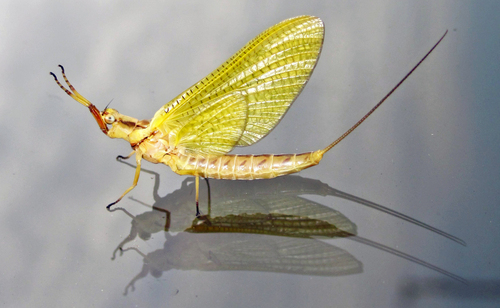
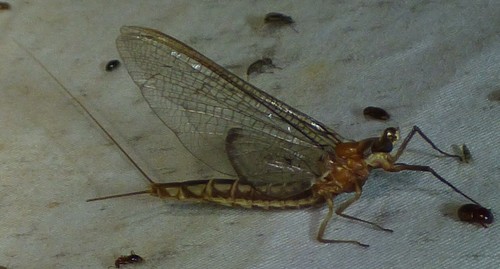
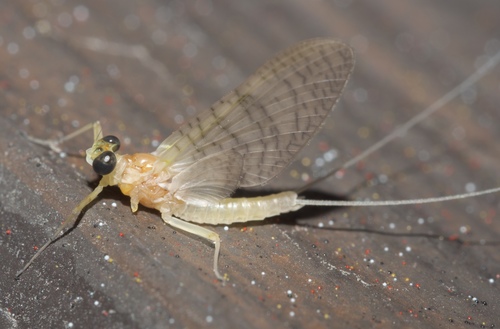
Hexagenia limbata, the giant mayfly, is a species of mayfly in the family Ephemeridae. It is native to North America where it is distributed widely near lakes and slow-moving rivers. The larvae, known as nymphs, are aquatic and burrow in mud and the adult insects have brief lives. They are often referred to as fish flies around the Great Lakes as they tend to cause the areas around water to smell like rotten fish.
It's also called the golden mayfly, big Michigan mayfly and great leadwing drake. The mature adult stage of Hexagenia limbata can be as much as 27 mm (1.1 in) long. The females tend to be slightly larger than the males but have smaller eyes. The forewings are long and membranous while the hind wings are much smaller and have dark margins. The tip of the abdomen bears two long cerci or tails. When the insect is at rest, the wings are folded vertically above the back. The color and body markings are somewhat variable but this insect is usually some shade of yellow, pale brown or white.
Hexagenia limbata is the most widely distributed mayfly in North America. It is known from most of Canada and all the states in the United States... Wikipedia →