Red-Belted Bumble Bee

Red-Belted Bumble Bee

Bombus rufocinctus

Daily sighting probability ~10% · With luck
at Montreal

In 3 days ~40% in a week ~70%

502 Verified sightings at Montreal
135 In all 4 parks From 2019 to 2026
August Best month
☀️ Diurnal When it's spotted

About the Red-Belted Bumble Bee

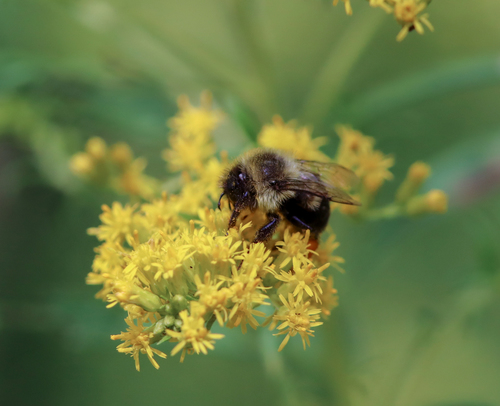
Bombus rufocinctus is a species of bumblebee known commonly as the "red-belted bumblebee". It is native to North America where it has a wide distribution across Canada and the western, midwestern, and northeastern United States. It may occur in Mexico.

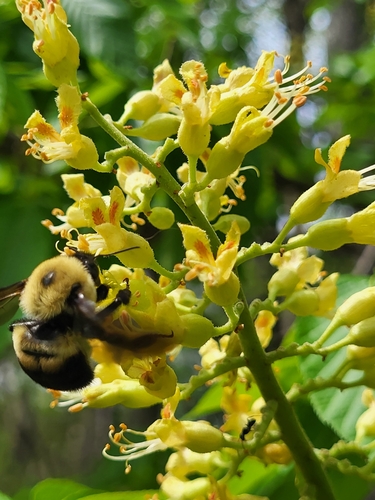
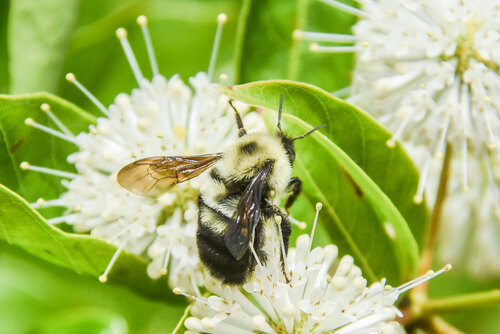
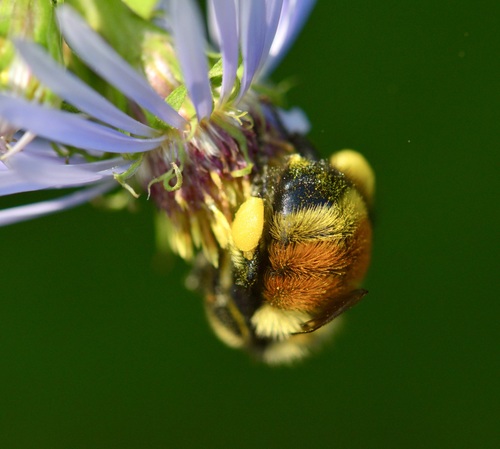
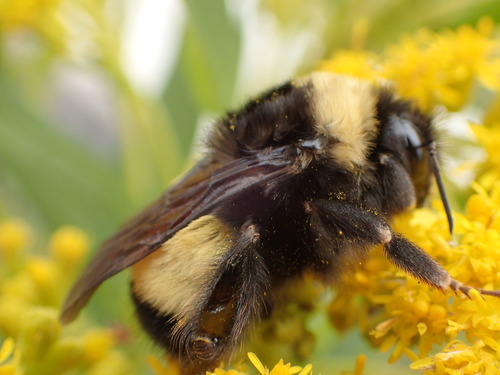
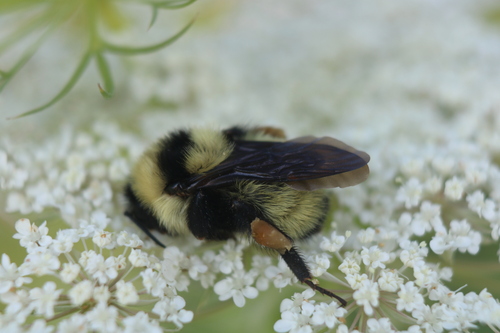
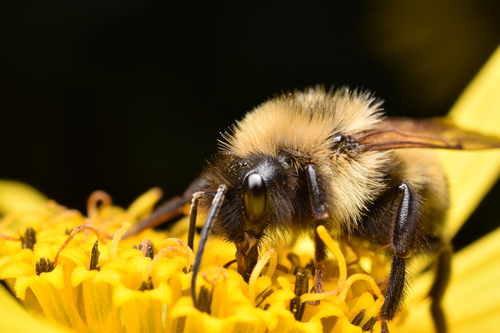
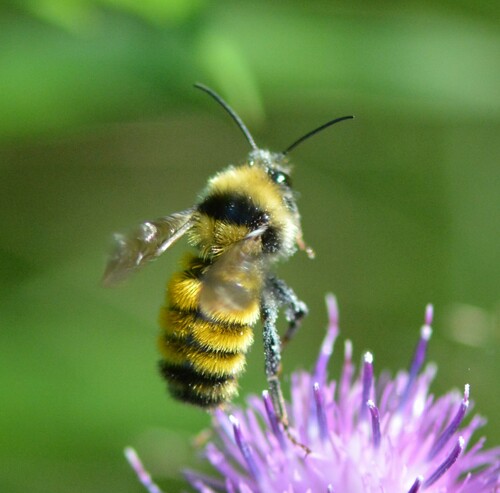
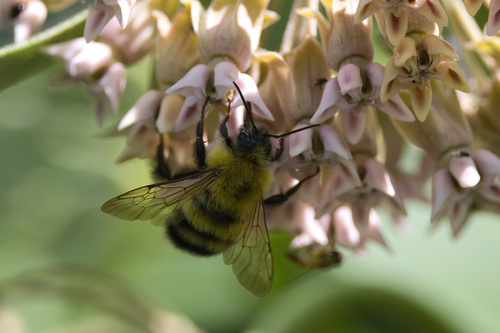
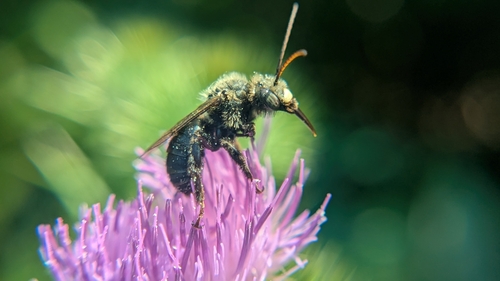
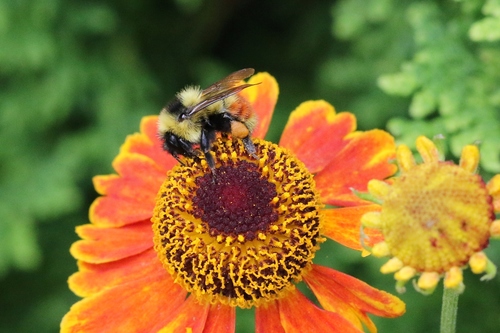
The queen is 1.6 to 1.8 centimeters long and just under a centimeter wide at the abdomen. It is black with scattered gray and yellowish hairs on the head. The abdomen has many bright yellow hairs and areas of reddish hairs. The worker is 1.1 to 1.2 centimeters long and half a centimeter wide at the abdomen. It is similar to the queen but it may have longer hairs. The male is 1.2 to 1.3 centimeters long and half a centimeter wide at the abdomen. It is mostly black with more yellow on the head and abdomen. This species displays four genetically controlled color polymorphisms: the second and third abdominal terga may have red or black hairs, and the fourth and fifth may be either yellow or black.

This small, short-tongued bee lives in and around wooded areas and it can be found in urban parks and gardens. It feeds on several kinds of plants, including chicories, snakeroots, strawberries, gumweeds, sunflowers, goldenrods, clovers, vetches, and goldeneyes. It usually nests on or above ground level. Wikipedia →
Global Distribution

Parks Where Found

# Park Country Daily sighting probability
1 Grand Teton National Park 🇺🇸 United States
~10%
2 Yellowstone National Park 🇺🇸 United States
~10%
3 Rocky Mountain National Park 🇺🇸 United States
~10%
4 Glacier National Park 🇺🇸 United States
~10%

Cities Where Found

# City Country Daily sighting probability
1 Minneapolis [Saint Paul] 🇺🇸 United States
~30%
2 Calgary 🇨🇦 Canada
~20%
3 Toronto 🇨🇦 Canada
~20%
4 Edmonton 🇨🇦 Canada
~20%
5 Montreal 🇨🇦 Canada
~10%
6 Vancouver 🇨🇦 Canada
<5%
7 San Francisco 🇺🇸 United States
<5%
8 Chicago 🇺🇸 United States
<5%

Before you go

What are the chances of seeing a Red-Belted Bumble Bee in Montreal?

With luck

About 10% of wildlife watchers report a Red-Belted Bumble Bee sighting in Montreal on a given day, based on 502 verified sightings from GBIF citizen-science data. It is the 18th most-seen of the 926 insects we can rate there. Over three days the chance rises to about 40%, and over a week to about 70%, if each day is a fresh chance.

When is the best time to see a Red-Belted Bumble Bee in Montreal?

August

In that month about 30% of wildlife watchers report a Red-Belted Bumble Bee in Montreal on a given day, against under 5% in November to March, the lowest months.

What time of day is best to see a Red-Belted Bumble Bee?

Between 1 and 4 pm

Across all the parks we cover, that three-hour window holds the most Red-Belted Bumble Bee sightings with a recorded time, and about 9 in 10 of them come between 6 am and 6 pm: it is a daytime animal.

Is Montreal the best place to see a Red-Belted Bumble Bee?

5th of 8

Of the 8 cities where we can rate Red-Belted Bumble Bee sightings, Montreal ranks 5th at about 10%. The best odds are in Minneapolis [Saint Paul] (United States, about 30%), Calgary (Canada, about 20%) and Toronto (Canada, about 20%).

Where does the Red-Belted Bumble Bee sighting chance come from?

GBIF citizen-science records

It is estimated from how often the Red-Belted Bumble Bee is recorded against all the insects logged in Montreal (502 verified sightings), calibrated against known sighting rates. Figures are rounded to the nearest 10% because citizen-science data supports honest approximations, not decimals, and months with records from fewer than five people show "—". How it works.

← Back to Montreal