Crotalaria Pod Borer

Crotalaria Pod Borer

Argina astrea

Daily sighting probability <5% · Rare
at Mumbai

In 3 days ~10% in a week ~30%

9 Verified sightings at Mumbai
80 In all 2 parks From 2019 to 2026
June Best month
🌙 Nocturnal When it's spotted

About the Crotalaria Pod Borer

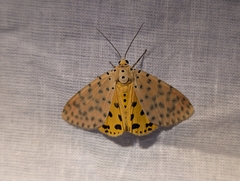
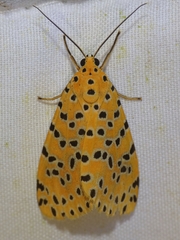
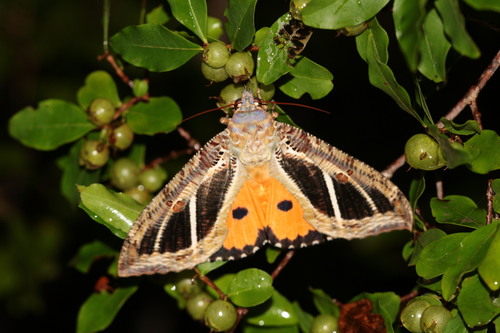
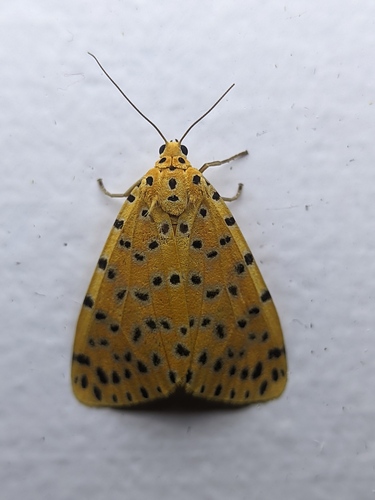
Argina astrea, the crotalaria podborer, is a moth of the family Erebidae. The species was first described by Dru Drury in 1773. It is found in eastern Africa, southern Asia of India, Sri Lanka, Maldives and Indo-Australia, including the Pacific Islands and Australia.

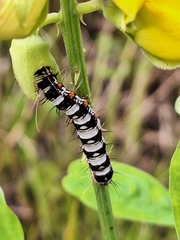
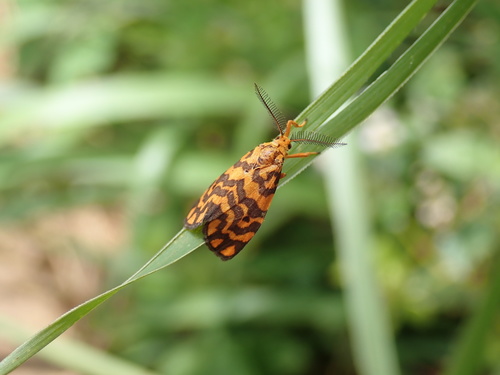
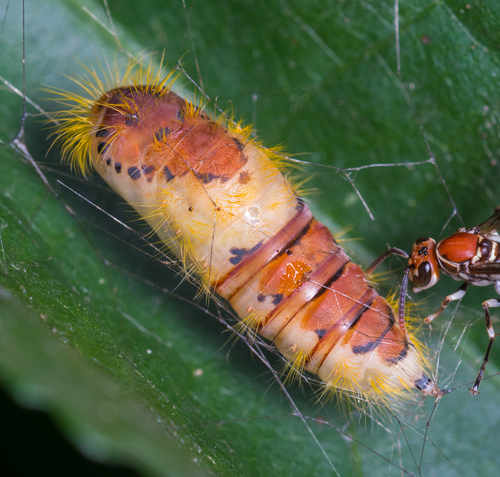
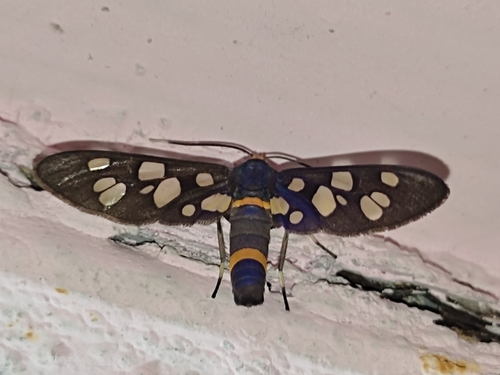
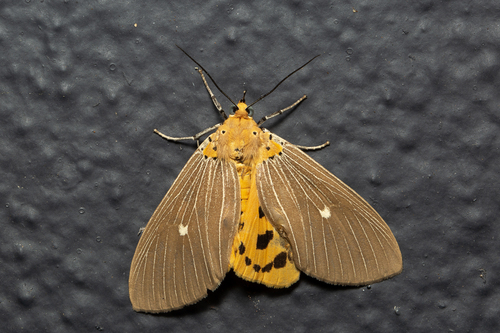
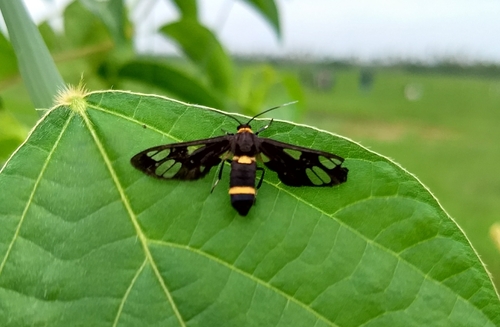
The wingspan is about 40 mm. The species is extremely variable in wing pattern as well as ground colour. It differs from Mangina argus in the head, thorax and forewing being orange yellowish or whitish. The abdomen and hindwings are bright orange. Markings and spots are similar to its neighbor species. The head of the caterpillar is reddish brown when fully grown. Its body is black with white intersegmental rings that contain broken black transverse lines. Spiracles are in orange patches.

The larvae feed on Crotalaria species. The species prefers secondary habitats ranging from the lowlands to the montane region. Argina astrea astrea (China (Yunnan, Hong Kong, Zhejiang, Guangdong), Taiwan, Bangladesh, India, Sri Lanka, Nepal, Myanmar, Philippines, Japan (Ryukyu), Indochina, Indonesia, New Guinea, Australia, Oceania, eastern Africa, Ghana, Madagascar, Seychelles)

Argina astrea... Wikipedia →
Global Distribution

Parks Where Found

# Park Country Daily sighting probability
1 Kanha National Park 🇮🇳 India
~40%
2 Daintree National Park 🇦🇺 Australia
~20%

Cities Where Found

# City Country Daily sighting probability
1 Kolkata 🇮🇳 India
~10%
2 Pune 🇮🇳 India
<5%
3 Mumbai 🇮🇳 India
<5%
4 Kochi 🇮🇳 India
<5%
5 Chennai 🇮🇳 India
<5%

Before you go

What are the chances of seeing a Crotalaria Pod Borer in Mumbai?

Rare

Under 5% of wildlife watchers report a Crotalaria Pod Borer sighting in Mumbai on a given day, based on 9 verified sightings from GBIF citizen-science data. It is the 243rd most-seen of the 362 insects we can rate there. Over three days the chance rises to about 10%, and over a week to about 30%, if each day is a fresh chance.

When is the best time to see a Crotalaria Pod Borer in Mumbai?

June, October and December–February

In those months about 10% of wildlife watchers report a Crotalaria Pod Borer in Mumbai on a given day, against under 5% in March–May, July–September and November, the lowest months.

What time of day is best to see a Crotalaria Pod Borer?

Between 10 pm and 1 am

Across all the parks we cover, that three-hour window holds the most Crotalaria Pod Borer sightings with a recorded time, and about 9 in 10 of them come between 6 pm and 6 am: it is mostly seen at night.

Is Mumbai the best place to see a Crotalaria Pod Borer?

3rd of 5

Of the 5 cities where we can rate Crotalaria Pod Borer sightings, Mumbai ranks 3rd at under 5%. The best odds are in Kolkata (India, about 10%) and Pune (India, under 5%).

Which relatives of the Crotalaria Pod Borer live in Mumbai?

Same family: Erebidae

The closest relatives of the Crotalaria Pod Borer that you can see in Mumbai (family Erebidae, Underwing, Tiger, Tussock, and Allied Moths) are Footman Moth (about 10%), Banyan Tussock Moth (about 10%) and Seven-Spotted Handmaiden Moth (about 10%), with each one's daily chance of a sighting.

Where does the Crotalaria Pod Borer sighting chance come from?

GBIF citizen-science records

It is estimated from how often the Crotalaria Pod Borer is recorded against all the insects logged in Mumbai (9 verified sightings), calibrated against known sighting rates. Figures are rounded to the nearest 10% because citizen-science data supports honest approximations, not decimals, and months with records from fewer than five people show "—". How it works.

← Back to Mumbai