Asian Longhorned Beetle

Asian Longhorned Beetle

Anoplophora glabripennis

Daily sighting probability ~10% · With luck
at Nagoya

In 3 days ~40% in a week ~70%

10 Verified sightings at Nagoya
July Best month
☀️ Diurnal When it's spotted

About the Asian Longhorned Beetle

The Asian long-horned beetle (Anoplophora glabripennis), also known as the starry sky, sky beetle, or ALB, is native to the Korean Peninsula, northern and southern China, and disputably in northern Japan. This species has now been accidentally introduced into the eastern United States, where it was first discovered in 1996, as well as Canada, and several countries in Europe, including Austria, France, Germany, Italy and UK.

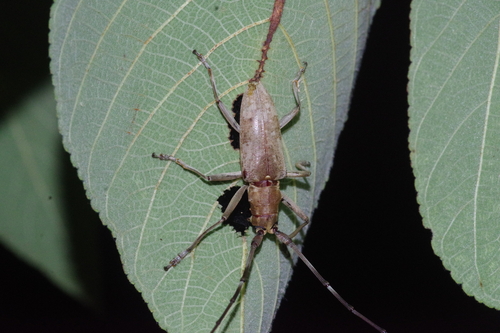
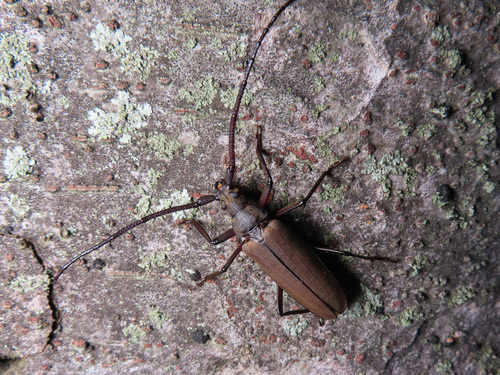
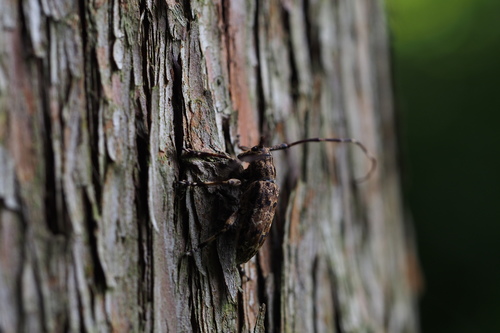
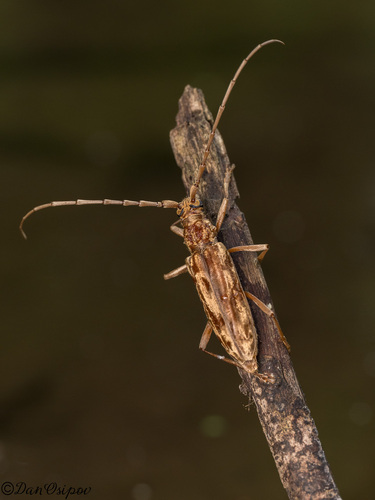
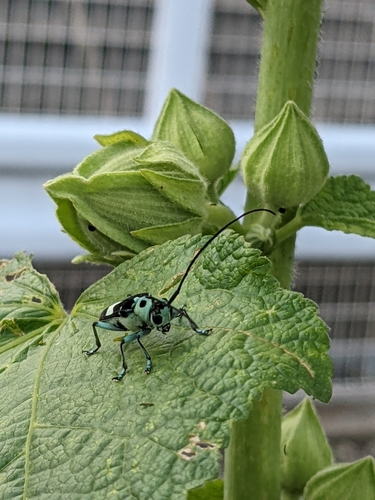
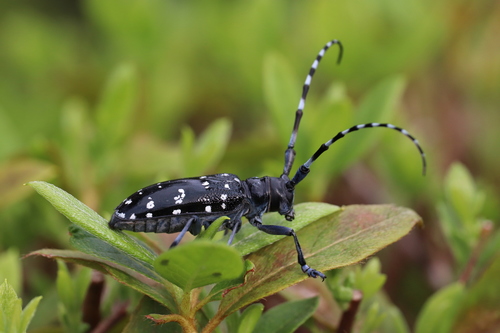
Common names for Anoplophora glabripennis in Asia are the starry sky beetle, basicosta white-spotted longicorn beetle, or smooth shoulder-longicorn, and it is called the Asian long-horned beetle (ALB) in North America. Adults are very large insects with bodies ranging from 1.7 to 3.9 cm (0.67 to 1.54 in) in length and antennae which can be as long as 4 cm (1.6 in) or 1.5–2 times longer than the body of the insect. They are shiny black with about 20 white spots on each wing cover and long antennae conspicuously banded black and white. These beetles can fly, but generally only for short distances, which is a common limitation for Cerambycidae of their size and weight. The upper sections of the legs of the adults are whitish-blue. A. glabripennis... Wikipedia →

Global Distribution

Parks Where Found

# Park Country Daily sighting probability

More parks will be added in future updates.

Cities Where Found

# City Country Daily sighting probability
1 Nagoya 🇯🇵 Japan
~10%
2 Kunming 🇨🇳 China
~10%
3 Beijing 🇨🇳 China
~10%
4 Shanghai 🇨🇳 China
<5%

Before you go

What are the chances of seeing an Asian Longhorned Beetle in Nagoya?

With luck

About 10% of wildlife watchers report an Asian Longhorned Beetle sighting in Nagoya on a given day, based on 10 verified sightings from GBIF citizen-science data. It is the 96th most-seen of the 195 insects we can rate there. Over three days the chance rises to about 40%, and over a week to about 70%, if each day is a fresh chance.

When is the best time to see an Asian Longhorned Beetle in Nagoya?

July

In that month about 30% of wildlife watchers report an Asian Longhorned Beetle in Nagoya on a given day, against under 5% in September to May, the lowest months. That is one of Nagoya's wettest months, with about 230 mm of rain against 75 mm in January.

What time of day is best to see an Asian Longhorned Beetle?

Between 4 and 7 pm

Across all the parks we cover, that three-hour window holds the most Asian Longhorned Beetle sightings with a recorded time, and about 8 in 10 of them come between 6 am and 6 pm: it is a daytime animal.

Is Nagoya the best place to see an Asian Longhorned Beetle?

Yes

Of the 4 cities where we can rate Asian Longhorned Beetle sightings, Nagoya has the highest daily chance: about 10%. Next come Kunming (China, about 10%) and Beijing (China, about 10%).

Where does the Asian Longhorned Beetle sighting chance come from?

GBIF citizen-science records

It is estimated from how often the Asian Longhorned Beetle is recorded against all the insects logged in Nagoya (10 verified sightings), calibrated against known sighting rates. Figures are rounded to the nearest 10% because citizen-science data supports honest approximations, not decimals, and months with records from fewer than five people show "—". How it works.

← Back to Nagoya