Indus Valley Bullfrog

Indus Valley Bullfrog

Hoplobatrachus tigerinus

Silhouette: Jose Carlos Arenas-Monroy · PhyloPic

LCLeast ConcernNTVUENCR
Daily sighting probability ~10% · With luck
at New Delhi

In 3 days ~20% in a week ~40%

6 Verified sightings at New Delhi
6 In 1 park From 2019 to 2026
June Best month
☀️ Diurnal When it's spotted

About the Indus Valley Bullfrog

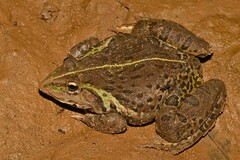
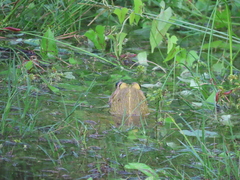
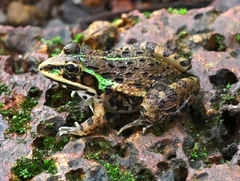
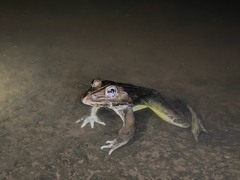
Hoplobatrachus tigerinus, commonly known as the Indian bullfrog, is a large species of fork-tongued frog found in South and Southeast Asia. A relatively large frog, it is normally green in color, although physiological traits vary between populations. Sexual dimorphism exists between males and females. Outside of its native range, H. tigerinus is a rapidly-spreading invasive species. Both adults and tadpoles can severely damage the populations of other frog species. Typically, Indian bullfrogs dwell in wetland environments. Research has been conducted on their ability to control mosquitos.

The Indian bulfrog was first described by François-Marie Daudin in 1802, as Rana tigerina. The type locality was given as "Bengale, India". In 1992, it was transferred to the genus Hoplobatrachus by Alain Dubois, as Hoplobatrachus tigerinus. In addition to various other renditions and misspellings of R. tigerina, other synonyms include Rana picta, Dicroglossus tigrinus, and Euphlyctis tigerina.

The Indian bullfrog is a large species of frog. They can grow to be 170 millimetres (6.7 in), with heads generally longer than they are wide, although older individuals tend... Wikipedia →

Sounds

Distress call0:15

India · 2002

© Olivier SWIFT · XC980950 · CC BY-NC-SA 4.0

Recording0:18

India · 2026

© Agatha Hannah · iNaturalist · CC BY-NC 4.0

Recording0:14

India · 2025

© anilny · iNaturalist · CC BY-NC 4.0

Global Distribution

Parks Where Found

# Park Country Daily sighting probability
1 Nagarhole National Park 🇮🇳 India
~30%

More parks will be added in future updates.

Cities Where Found

# City Country Daily sighting probability
1 Ponnani 🇮🇳 India
~40%
2 Vasai-Virar 🇮🇳 India
~40%
3 Lucknow 🇮🇳 India
~30%
4 Dhaka 🇧🇩 Bangladesh
~30%
5 Kochi 🇮🇳 India
~30%
6 Kozhikode 🇮🇳 India
~30%
7 Dehradun 🇮🇳 India
~30%
8 Kollam 🇮🇳 India
~20%
9 Pune 🇮🇳 India
~20%
10 Mumbai 🇮🇳 India
~10%

Before you go

What are the chances of seeing an Indus Valley Bullfrog in New Delhi?

With luck

About 10% of wildlife watchers report an Indus Valley Bullfrog sighting in New Delhi on a given day, based on 6 verified sightings from GBIF citizen-science data. Over three days the chance rises to about 20%, and over a week to about 40%, if each day is a fresh chance.

When is the best time to see an Indus Valley Bullfrog in New Delhi?

April to July

In those months about 10% of wildlife watchers report an Indus Valley Bullfrog in New Delhi on a given day, against under 5% in August to March, the lowest months.

What time of day is best to see an Indus Valley Bullfrog?

Between 3 and 6 pm

Across all the parks we cover, that three-hour window holds the most Indus Valley Bullfrog sightings with a recorded time, and about 8 in 10 of them come between 6 am and 6 pm: it is a daytime animal.

Is New Delhi the best place to see an Indus Valley Bullfrog?

13th of 13

Of the 13 cities where we can rate Indus Valley Bullfrog sightings, New Delhi ranks 13th at about 10%. The best odds are in Ponnani (India, about 40%), Vasai-Virar (India, about 40%) and Lucknow (India, about 30%).

Where does the Indus Valley Bullfrog sighting chance come from?

GBIF citizen-science records

It is estimated from how often the Indus Valley Bullfrog is recorded against all the amphibians logged in New Delhi (6 verified sightings), calibrated against known sighting rates. Figures are rounded to the nearest 10% because citizen-science data supports honest approximations, not decimals, and months with records from fewer than five people show "—". How it works.

← Back to New Delhi