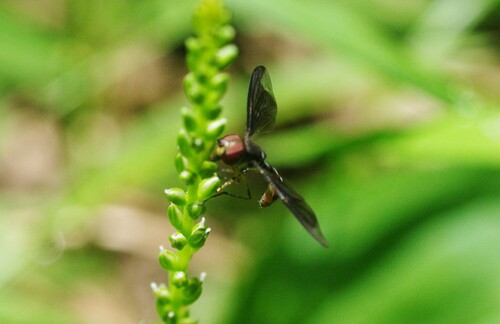
Black-Horned Smoothtail

Black-Horned Smoothtail

Epistrophe grossulariae

Daily sighting probability <5% · Rare
at New York City

In 3 days ~10%

6 Verified sightings at New York City
120 In all 4 parks From 2019 to 2026
October Best month
☀️ Diurnal When it's spotted

About the Black-Horned Smoothtail

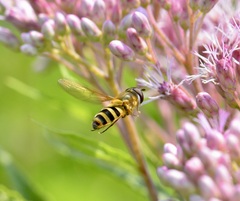
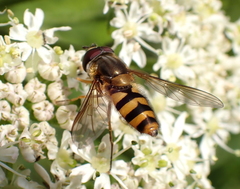
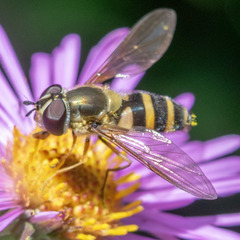
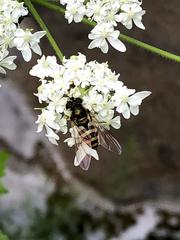
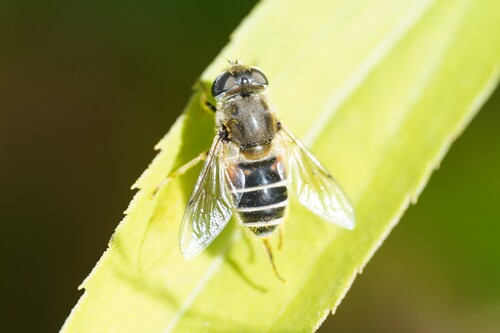
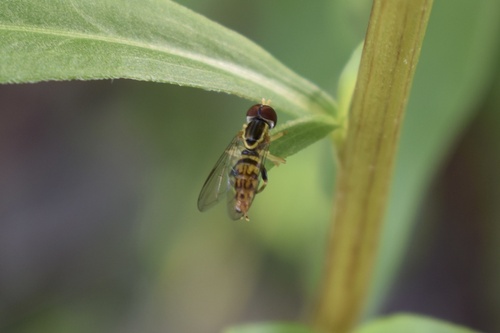
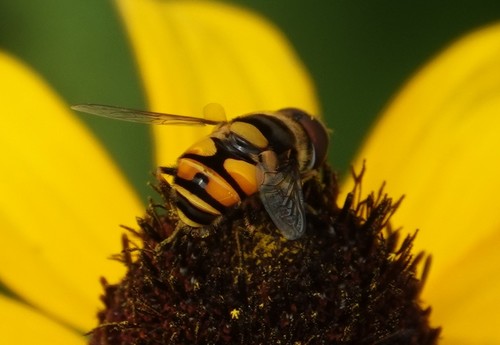
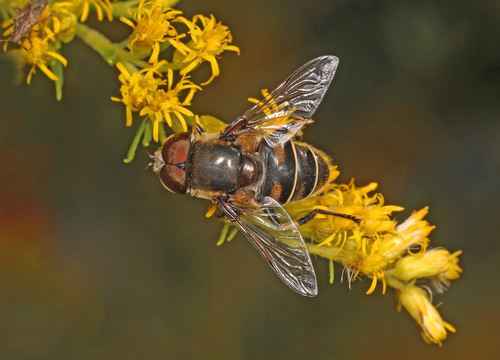
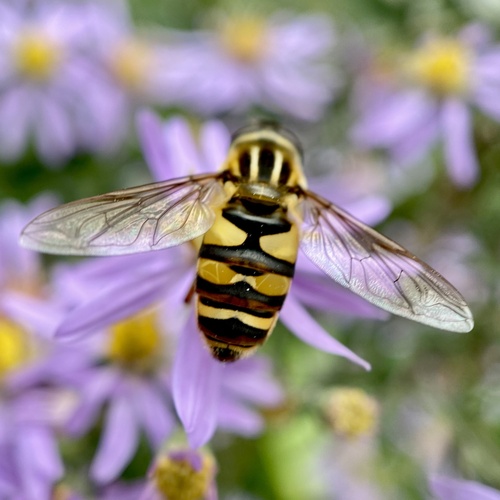
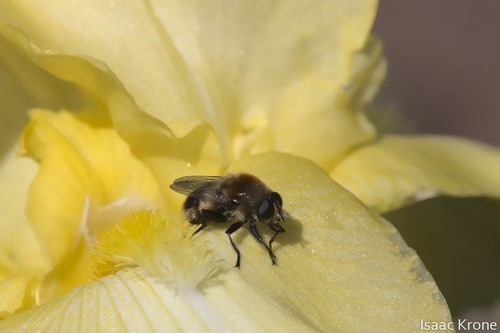
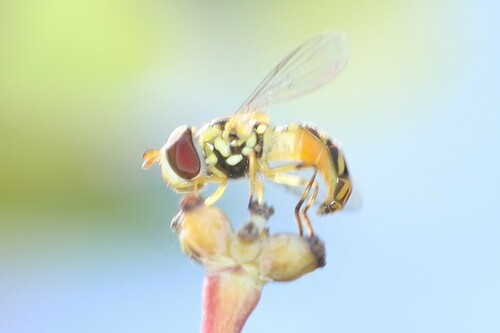
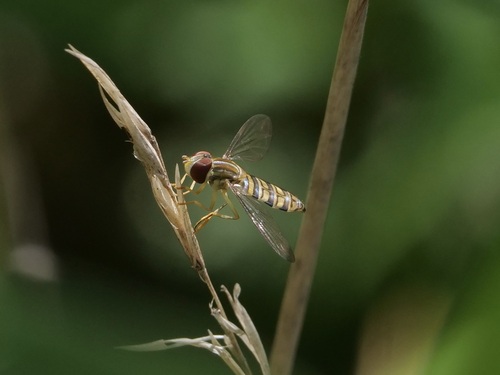
Epistrophe grossulariae is a Holarctic species of hoverfly. External images For terms see Morphology of Diptera Wing length 9-12·25 mm. Thorax dull greenish. Tergite 4 with entire yellow band. At least anterior femora dark at base, sometimes hind also. Frons black above lunule and at least half black-haired. Female has a bronzy-green area on upper part of frons. Yellow bands on tergites 3 and 4 straight. Tergite 5 with black band.

Male genitalia are figured by Hippa (1968). The larva is illustrated by Rotheray (1993) Palaearctic and Nearctic Fennoscandia South to Spain, Italy and Yugoslavia. Ireland eastwards through Turkey Russia to Kamchatka. In North America from Alaska to Quebec and South to California.

Habitat is deciduous woodland, particularly along rivers and streams, Salix swamp woodland, alpine grassland. Found in clearings, tracksides and beside streams. Flowers visited include white umbellifers, Centaurea, Cirsium, Filipendula, Geranium, Knautia, Rhododendron, Rubus, Sambucus nigra, Succisa,

Valeriana. The flight period is end June to September. The larva feeds on aphids. Wikipedia →
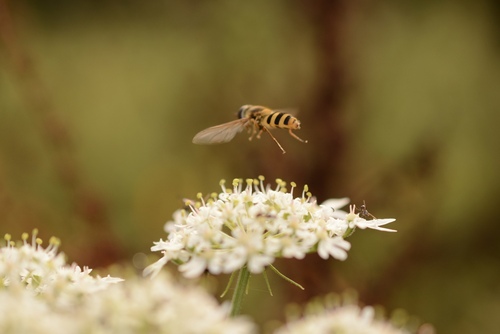
Global Distribution

Parks Where Found

# Park Country Daily sighting probability
1 Shenandoah National Park 🇺🇸 United States
~10%
2 Great Smoky Mountains National Park 🇺🇸 United States
~10%
3 Cairngorms National Park 🇬🇧 United Kingdom
~10%
4 Acadia National Park 🇺🇸 United States
<5%

Cities Where Found

# City Country Daily sighting probability
1 Manchester 🇬🇧 United Kingdom
~10%
2 Birmingham 🇬🇧 United Kingdom
~10%
3 Leeds 🇬🇧 United Kingdom
~10%
4 Liverpool 🇬🇧 United Kingdom
~10%
5 Edmonton 🇨🇦 Canada
<5%
6 London 🇬🇧 United Kingdom
<5%
7 Boston 🇺🇸 United States
<5%
8 Moscow 🇷🇺 Russia
<5%
9 Montreal 🇨🇦 Canada
<5%
10 Vancouver 🇨🇦 Canada
<5%

Before you go

What are the chances of seeing a Black-Horned Smoothtail in New York City?

Rare

Under 5% of wildlife watchers report a Black-Horned Smoothtail sighting in New York City on a given day, based on 6 verified sightings from GBIF citizen-science data. It is the 1363rd most-seen of the 1623 insects we can rate there. Over three days the chance rises to about 10%, if each day is a fresh chance.

When is the best time to see a Black-Horned Smoothtail in New York City?

Any time of year

In every month with enough records, under 5% of wildlife watchers report a Black-Horned Smoothtail in New York City on a given day, so our monthly data shows no clear season.

What time of day is best to see a Black-Horned Smoothtail?

Between 11 am and 2 pm

Across all the parks we cover, that three-hour window holds the most Black-Horned Smoothtail sightings with a recorded time, and nearly all of them come between 6 am and 6 pm: it is a daytime animal.

Is New York City the best place to see a Black-Horned Smoothtail?

11th of 11

Of the 11 cities where we can rate Black-Horned Smoothtail sightings, New York City ranks 11th at under 5%. The best odds are in Manchester (United Kingdom, about 10%), Birmingham (United Kingdom, about 10%) and Leeds (United Kingdom, about 10%).

Which relatives of the Black-Horned Smoothtail live in New York City?

Same family: Syrphidae

The closest relatives of the Black-Horned Smoothtail that you can see in New York City (family Syrphidae, Hover Flies) are Eurasian Drone Fly (about 20%), Margined Calligrapher (about 10%) and Eastern Calligrapher (about 10%), with each one's daily chance of a sighting.

Where does the Black-Horned Smoothtail sighting chance come from?

GBIF citizen-science records

It is estimated from how often the Black-Horned Smoothtail is recorded against all the insects logged in New York City (6 verified sightings), calibrated against known sighting rates. Figures are rounded to the nearest 10% because citizen-science data supports honest approximations, not decimals, and months with records from fewer than five people show "—". How it works.

← Back to New York City