Catalpa Sphinx

Catalpa Sphinx

Ceratomia catalpae

Daily sighting probability <5% · Rare
at New York City

In 3 days ~10%

7 Verified sightings at New York City
14 In 1 park From 2019 to 2026
June Best month
☀️🌙 Day & Night When it's spotted

About the Catalpa Sphinx

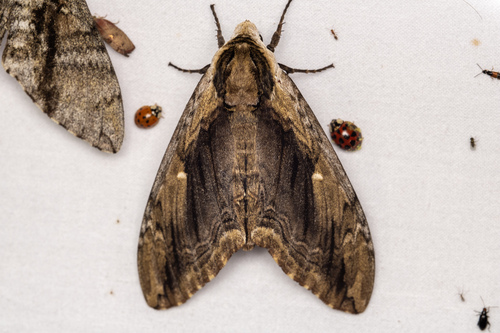
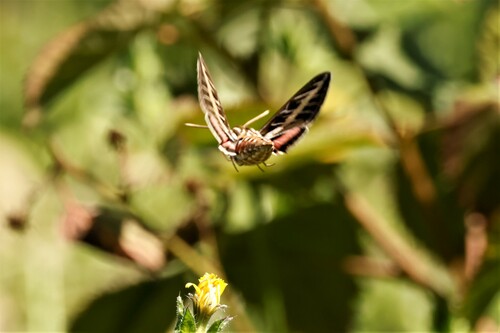
Ceratomia catalpae, the catalpa sphinx, is a hawk moth of the family Sphingidae. The species was first described by Jean Baptiste Boisduval in 1875. Other common names are the Catawba worm, or Catalpa sphinx. Ceratomia catalpae is a native of southeastern North America and can be located on catalpa trees that grow within this region. It can be found from Maine, west to Iowa, and south to the Gulf States.

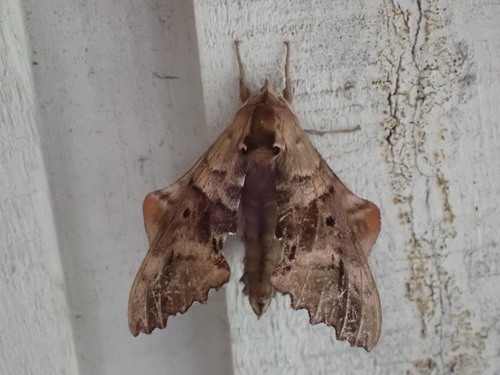
From oviposition of the eggs to pupation, about four weeks will pass. Where multiple broods occur, pupae will eclose in two weeks, or when conditions are suitable. Adult C. catalpae do not reflect the wonderful colors of their larvae. They are a dull brown color lacking the show-off appearance of its larval stages.

Translucent, milky-white, green, or yellowish eggs are oval, being about 0.5 mm in diameter. Eggs are deposited in masses of 100-1000 eggs on the undersurface of leaves, while smaller masses are deposited onto branches on the catalpa tree. Eggs incubate and hatch five to seven days after oviposition.

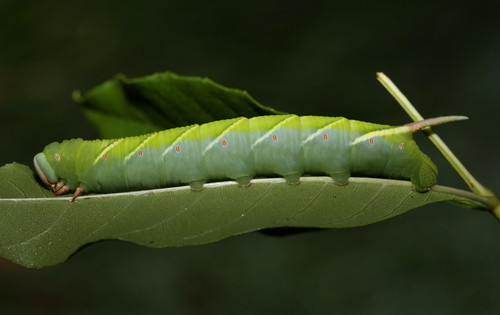
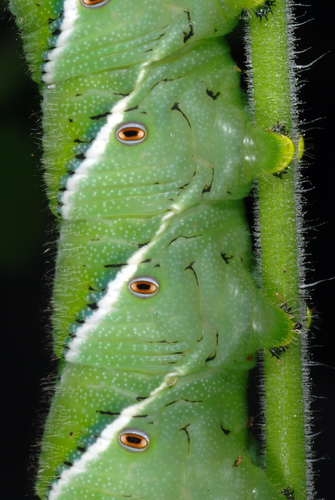
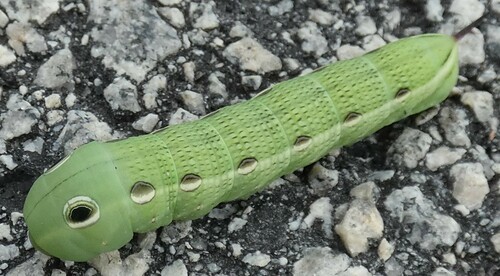
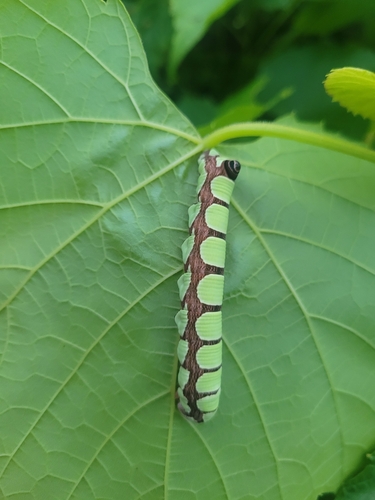
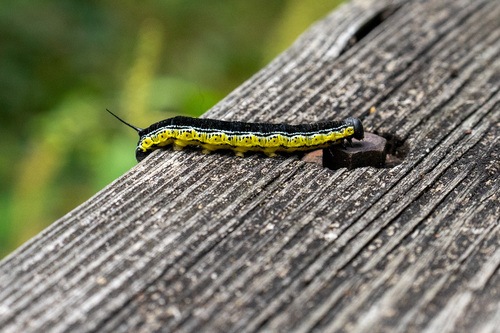
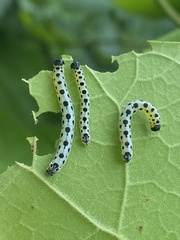
The larval stage of C. catalpae is known as the catalpa, catawba worm, and toppy worm. When first hatching, the larvae are... Wikipedia →
Global Distribution

Parks Where Found

# Park Country Daily sighting probability
1 Shenandoah National Park 🇺🇸 United States
~10%

More parks will be added in future updates.

Cities Where Found

# City Country Daily sighting probability
1 Baltimore 🇺🇸 United States
~10%
2 Washington 🇺🇸 United States
~10%
3 Detroit 🇺🇸 United States
<5%
4 Philadelphia 🇺🇸 United States
<5%
5 Dallas 🇺🇸 United States
<5%
6 New York City 🇺🇸 United States
<5%

Before you go

What are the chances of seeing a Catalpa Sphinx in New York City?

Rare

Under 5% of wildlife watchers report a Catalpa Sphinx sighting in New York City on a given day, based on 7 verified sightings from GBIF citizen-science data. It is the 1254th most-seen of the 1623 insects we can rate there. Over three days the chance rises to about 10%, if each day is a fresh chance.

When is the best time to see a Catalpa Sphinx in New York City?

Any time of year

In every month with enough records, under 5% of wildlife watchers report a Catalpa Sphinx in New York City on a given day, so our monthly data shows no clear season.

What time of day is best to see a Catalpa Sphinx?

Between 11 am and 2 pm

Across all the parks we cover, that three-hour window holds the most Catalpa Sphinx sightings with a recorded time, and about half of them come between 6 am and 6 pm: it is seen both by day and at night.

Is New York City the best place to see a Catalpa Sphinx?

6th of 6

Of the 6 cities where we can rate Catalpa Sphinx sightings, New York City ranks 6th at under 5%. The best odds are in Baltimore (United States, about 10%), Washington (United States, about 10%) and Detroit (United States, under 5%).

Where does the Catalpa Sphinx sighting chance come from?

GBIF citizen-science records

It is estimated from how often the Catalpa Sphinx is recorded against all the insects logged in New York City (7 verified sightings), calibrated against known sighting rates. Figures are rounded to the nearest 10% because citizen-science data supports honest approximations, not decimals, and months with records from fewer than five people show "—". How it works.

← Back to New York City