Abbott's Sphinx

Abbott's Sphinx

Sphecodina abbottii

Daily sighting probability <5% · Rare
at New York City

In 3 days ~10% in a week ~20%

16 Verified sightings at New York City
29 In all 2 parks From 2019 to 2026
June Best month
☀️ Diurnal When it's spotted

About the Abbott's Sphinx

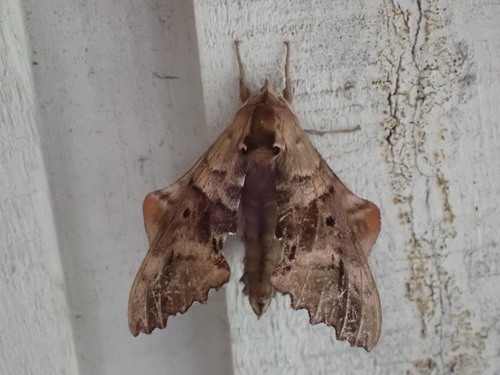
Sphecodina abbottii, or Abbott's sphinx, is a moth of the family Sphingidae. The species was first described by William Swainson in 1821. It lives in central and eastern North America, but is not known to be present in most of Florida.

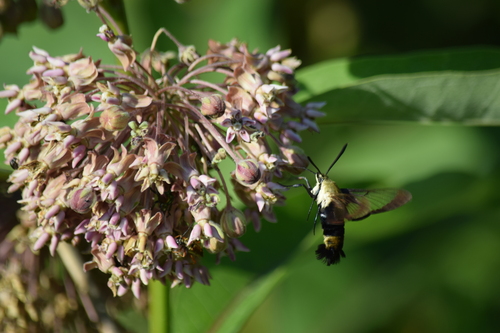
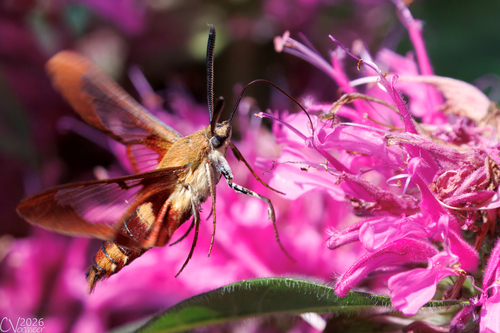
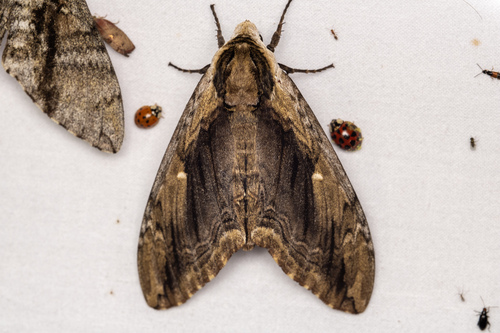
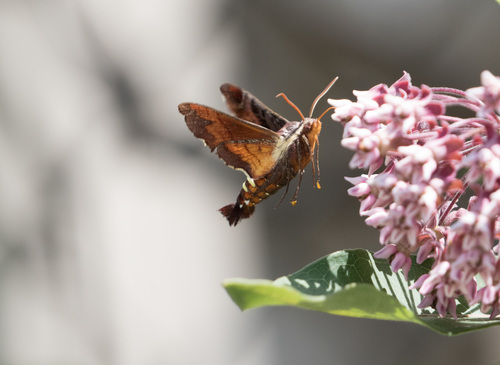
Adults fly in May and June in the north, but have several generations in the south. Larvae feed on grapes (Vitis), Parthenocissus quinquefolia and Ampelopsis. The underwings have a strong yellow band and in flight, the moth buzzes, appearing like a bee. The forewings are violet grey when fresh and have a "barklike pattern of swirling black lines" according to David Beadle and Seabrooke Leckie. At rest, they raise their abdomens and are well camouflaged on tree bark, looking like a broken branch.

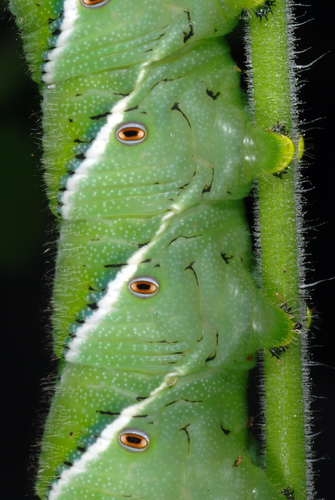
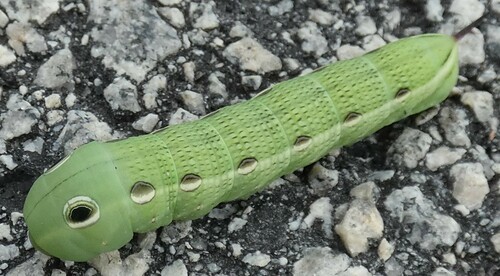
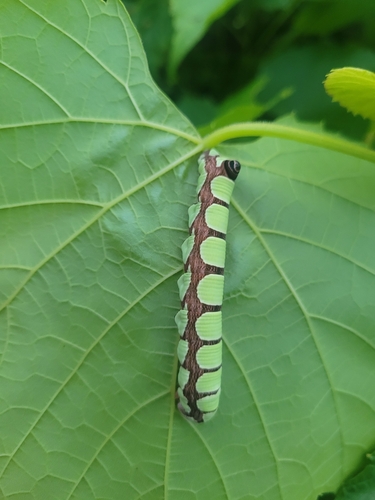
Early instars are a pale greenish white, with at first a horn, but later a brown knob near the hind end. Final instars (75 mm in length) come in two patterns: one has brown bands such that there are ten large pale green spots on the back and an eyespot on the rear. This form may mimic grapes. Others are completely brown, with a wood-grain patterning, and with the rear eyespot. In the final instar the knob looks... Wikipedia →
Global Distribution

Parks Where Found

# Park Country Daily sighting probability
1 Great Smoky Mountains National Park 🇺🇸 United States
~10%
2 Shenandoah National Park 🇺🇸 United States
<5%

Cities Where Found

# City Country Daily sighting probability
1 Montreal 🇨🇦 Canada
<5%
2 Toronto 🇨🇦 Canada
<5%
3 Boston 🇺🇸 United States
<5%
4 Minneapolis [Saint Paul] 🇺🇸 United States
<5%
5 Chicago 🇺🇸 United States
<5%
6 Washington 🇺🇸 United States
<5%
7 New York City 🇺🇸 United States
<5%

Before you go

What are the chances of seeing an Abbott's Sphinx in New York City?

Rare

Under 5% of wildlife watchers report an Abbott's Sphinx sighting in New York City on a given day, based on 16 verified sightings from GBIF citizen-science data. It is the 804th most-seen of the 1623 insects we can rate there. Over three days the chance rises to about 10%, and over a week to about 20%, if each day is a fresh chance.

When is the best time to see an Abbott's Sphinx in New York City?

Any time of year

In every month with enough records, under 5% of wildlife watchers report an Abbott's Sphinx in New York City on a given day, so our monthly data shows no clear season.

What time of day is best to see an Abbott's Sphinx?

Between 11 am and 2 pm

Across all the parks we cover, that three-hour window holds the most Abbott's Sphinx sightings with a recorded time, and about 8 in 10 of them come between 6 am and 6 pm: it is a daytime animal.

Is New York City the best place to see an Abbott's Sphinx?

Among the best

Of the 7 cities where we can rate Abbott's Sphinx sightings, New York City ranks 7th at under 5%, level with the leaders once rounded. The best odds are in Montreal (Canada, under 5%), Toronto (Canada, under 5%) and Boston (United States, under 5%).

Where does the Abbott's Sphinx sighting chance come from?

GBIF citizen-science records

It is estimated from how often the Abbott's Sphinx is recorded against all the insects logged in New York City (16 verified sightings), calibrated against known sighting rates. Figures are rounded to the nearest 10% because citizen-science data supports honest approximations, not decimals, and months with records from fewer than five people show "—". How it works.

← Back to New York City