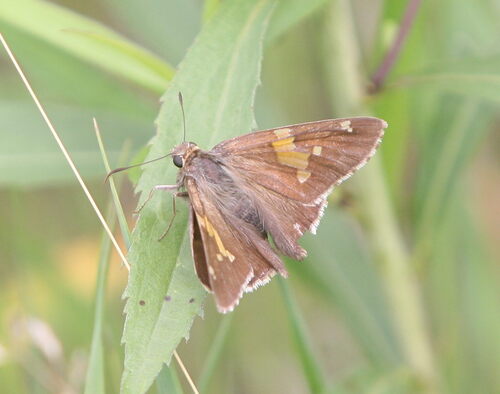
About the Orange-Tipped Oakworm Moth
Anisota senatoria, the orangestriped oakworm, also known as the orange-tipped oakworm, is a Nearctic moth of the family Saturniidae and subfamily Ceratocampinae. It is one of the more common Saturniids, reaching pest status occasionally in the northern parts of its range. As they are late-season feeders, however, they do little lasting damage to their hosts (most of the has been stored already). It is very similar to A. finlaysoni in southern Ontario and A. peigleri in the southern US. The species was first described by James Edward Smith in 1797.
The species lives in eastern North America, from the edge of the Great Plains to the east coast and from southern Ontario to central Georgia, Alabama and eastern Texas. They are found in northern Florida, but are more common in the north.
There is only one brood a year. Eggs are laid on the underside of leaves in large clusters. They take one to two weeks to hatch. Larvae are gregarious in the early instars and often do not disperse much in the late instars. The fifth instar is black with yellow-orange stripes on its side, and prominent spiny horns on the second segment of the thorax, about... Wikipedia →