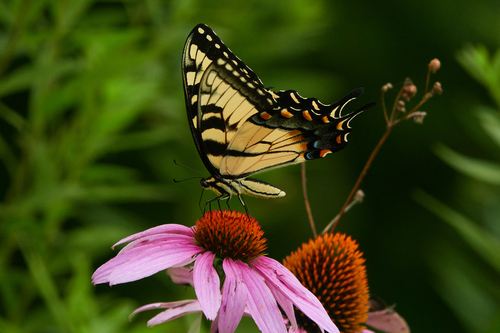
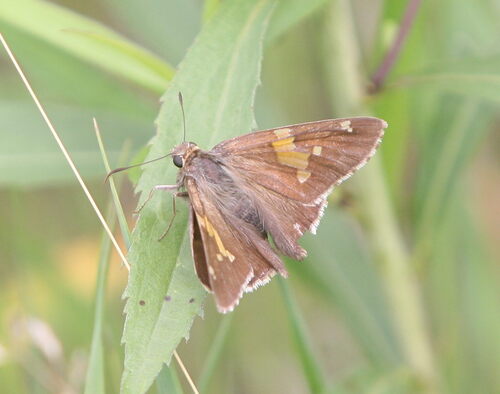
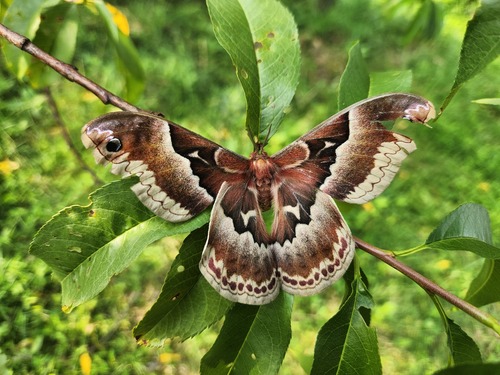
Promethea Silkmoth

Promethea Silkmoth

Callosamia promethea

Daily sighting probability <5% · Rare
at New York City

In 3 days ~10% in a week ~20%

15 Verified sightings at New York City
44 In all 3 parks From 2019 to 2026
March Best month
☀️ Diurnal When it's spotted

About the Promethea Silkmoth

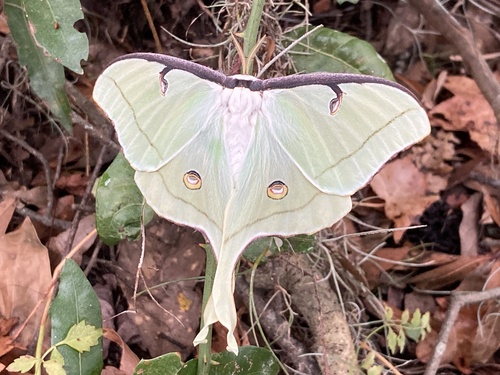
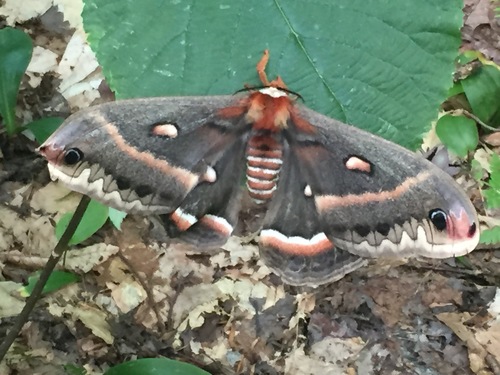
Callosamia promethea, commonly known as the promethea silkmoth, is a member of the family Saturniidae, which contains approximately 2,300 species. It is also known as the spicebush silkmoth, which refers to one of the promethea silkmoth's common host plants, spicebush (Lindera benzoin). C. promethea is classified as a silk moth, which stems from its ability to produce silk, which it does in the formation of its cocoon. C. promethea lives in forests in the eastern U.S. and does not damage the trees on which it lives. The species was first described by Dru Drury in 1773.

Callosamia promethea hatches from its eggs and feeds on its host plants before pupating while hanging from trees during the winter. It then emerges and mates during a specific time of day. The females utilize pheromones to attract males for mating, with both sexes mating multiple times. They are the only moth in their family where the sexes are not active at the same time of day, with males being diurnal and females being nocturnal. They only overlap in activity for a few hours in the early evening. The males use mimicry of the poisonous pipevine swallowtail butterfly as a form of protection from predators. Wikipedia →
Global Distribution

Parks Where Found

# Park Country Daily sighting probability
1 Shenandoah National Park 🇺🇸 United States
~10%
2 Great Smoky Mountains National Park 🇺🇸 United States
~10%
3 Point Pelee National Park 🇨🇦 Canada
~10%

Cities Where Found

# City Country Daily sighting probability
1 Boston 🇺🇸 United States
~10%
2 Philadelphia 🇺🇸 United States
<5%
3 New York City 🇺🇸 United States
<5%
4 Chicago 🇺🇸 United States
<5%
5 Washington 🇺🇸 United States
<5%

Before you go

What are the chances of seeing a Promethea Silkmoth in New York City?

Rare

Under 5% of wildlife watchers report a Promethea Silkmoth sighting in New York City on a given day, based on 15 verified sightings from GBIF citizen-science data. It is the 804th most-seen of the 1623 insects we can rate there. Over three days the chance rises to about 10%, and over a week to about 20%, if each day is a fresh chance.

When is the best time to see a Promethea Silkmoth in New York City?

Any time of year

In every month with enough records, under 5% of wildlife watchers report a Promethea Silkmoth in New York City on a given day, so our monthly data shows no clear season.

What time of day is best to see a Promethea Silkmoth?

Between 3 and 6 pm

Across all the parks we cover, that three-hour window holds the most Promethea Silkmoth sightings with a recorded time, and about 8 in 10 of them come between 6 am and 6 pm: it is a daytime animal.

Is New York City the best place to see a Promethea Silkmoth?

3rd of 5

Of the 5 cities where we can rate Promethea Silkmoth sightings, New York City ranks 3rd at under 5%. The best odds are in Boston (United States, about 10%) and Philadelphia (United States, under 5%).

Where does the Promethea Silkmoth sighting chance come from?

GBIF citizen-science records

It is estimated from how often the Promethea Silkmoth is recorded against all the insects logged in New York City (15 verified sightings), calibrated against known sighting rates. Figures are rounded to the nearest 10% because citizen-science data supports honest approximations, not decimals, and months with records from fewer than five people show "—". How it works.

← Back to New York City