About the Polka-Dot Wasp Moth
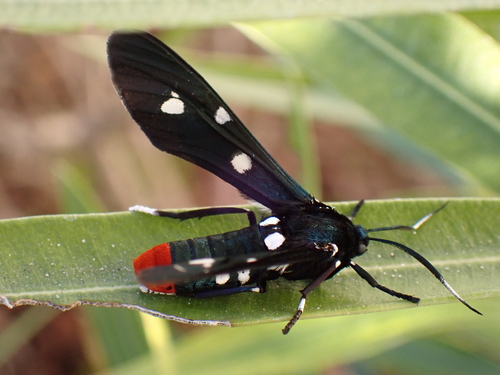
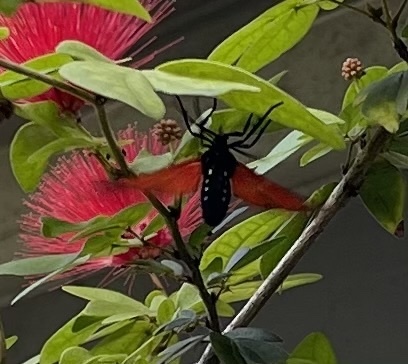
Syntomeida epilais, the polka-dot wasp moth or oleander moth, is a species of moth thought to be native to the Caribbean. Its larvae feed on the oleander plant. Like most wasp moths, these are day fliers. They prefer Neotropic areas, to which they are native. The North American subspecies is S. epilais jucundissima, which is locally common in all areas of Florida, and has been seen as far north as South Carolina, and west to Mississippi and Texas.
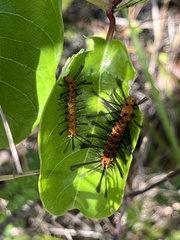
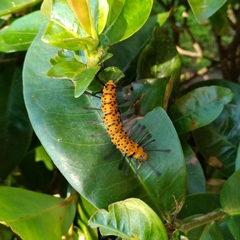
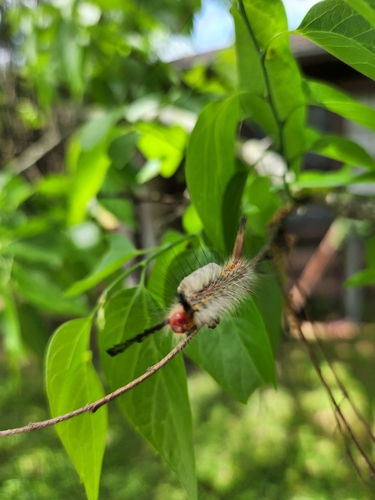
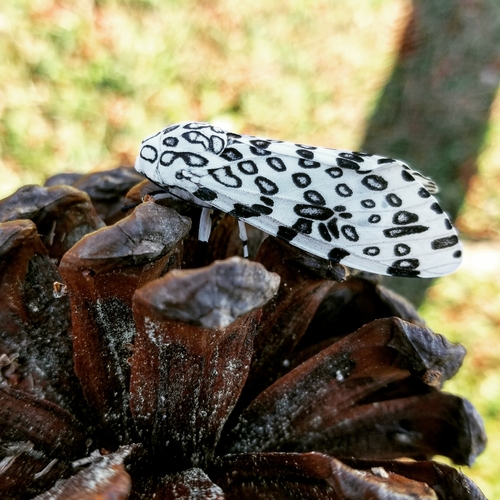
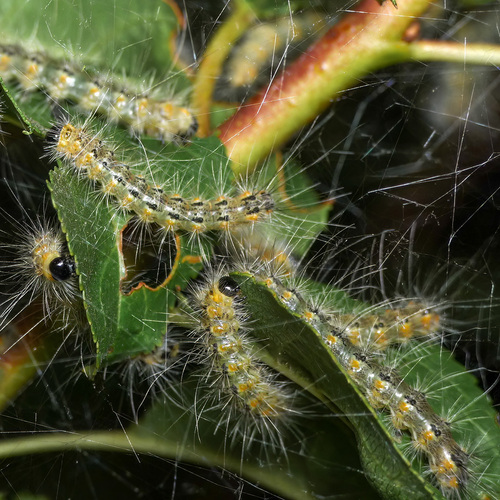
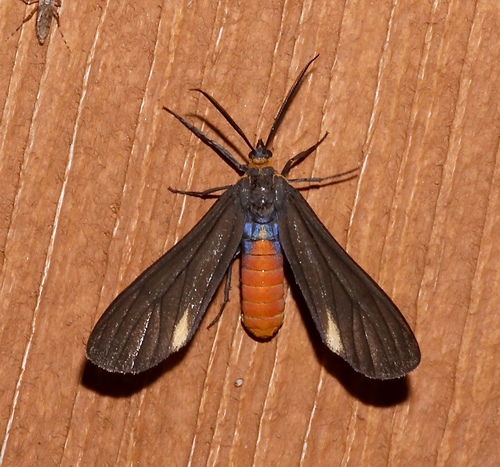
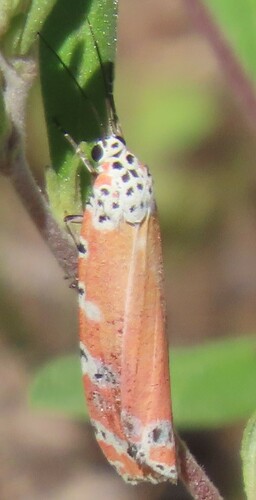
They are dark metallic blue with white polka-dots on the wings and upper abdomen, and the tip of the abdomen is bright red. This mimicry makes it look like a dangerous wasp, while in fact being a harmless moth. The caterpillars are orange or dark orange with long black hairs making the caterpillars look dangerous, but the setae do not inflict any harm.
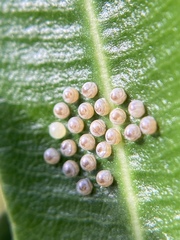
Females contact male polka-dot wasp moths by means of ultrasonic signals. On the branch, the sound travels, and then the male follows the sound to his new mate. When he reaches her, he emits an answering signal. After mating, the females find a plant on which to lay their eggs. Groups of from 12 to 75 eggs are laid on the undersides of the oleander... Wikipedia →