Maiden's Blush

Maiden's Blush

Cyclophora punctaria

Daily sighting probability <5% · Rare
at Paris

In 3 days ~10% in a week ~20%

8 Verified sightings at Paris
28 In all 2 parks From 2019 to 2026
May Best month
🌙 Nocturnal When it's spotted

About the Maiden's Blush

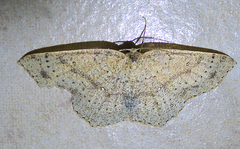
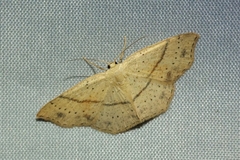
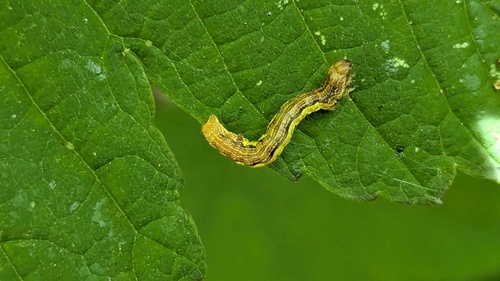
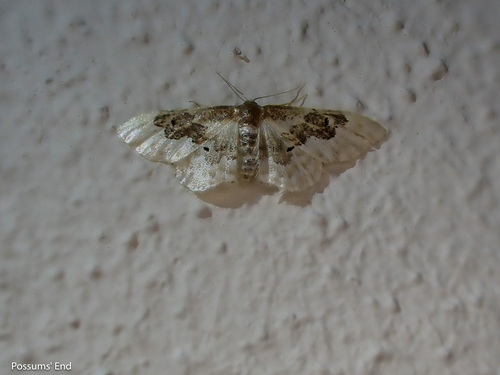
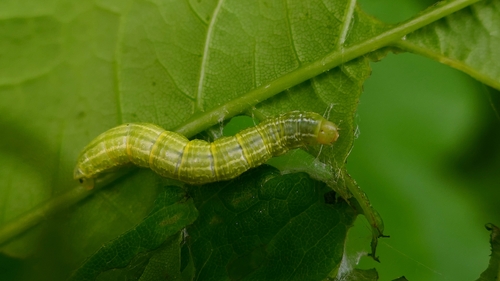
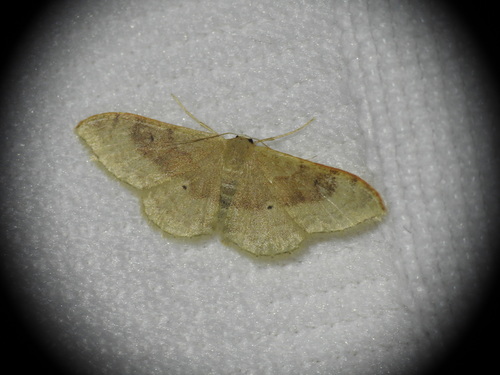
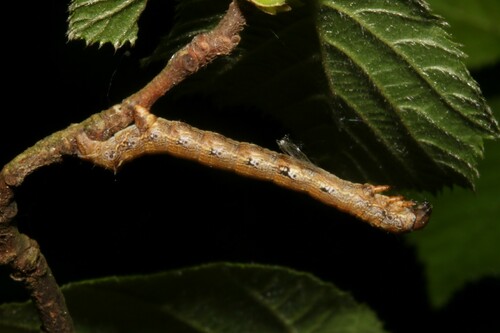
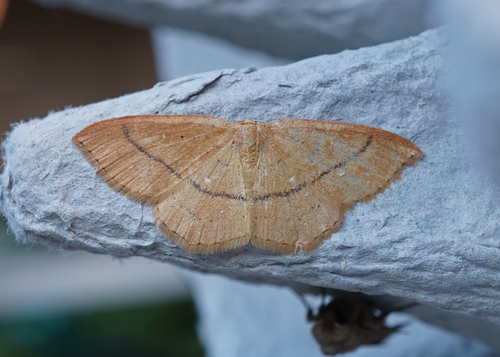
Cyclophora punctaria, the maiden's blush, is a moth of the family Geometridae. The species was first described by Carl Linnaeus in his 1758 10th edition of Systema Naturae. The species is mainly prevalent in Central and Eastern Europe. In the north, its distribution extends to southern Fennoscandia and the British Isles, in the west via France to parts of northern Spain, in the south via Italy, the Balkan Peninsula (with the exception of Greece) to Asia Minor. The eastern border of the distribution is roughly the Ural. In the Caucasus area, the nominate subspecies is replaced by the subspecies C. punctaria fritzae. The range of this subspecies extends as far as Iran.Cyclophora punctaria is found mainly in wooded areas with oak scrub and oak forests. In Central Europe it rises up to 700 metres in the hills, rarely up to 1,200 metres in the Alps, and regularly rises to 1,300 metres in southern Europe.

The wingspan is 13–25 mm for the first generation; the second generation is typically much smaller and reaches only about 22 mm. The forewings have a sand ground colour, or may have reddish or yellowish tints. The pattern is variable. The medium-sized, slightly curved... Wikipedia →

Global Distribution

Parks Where Found

# Park Country Daily sighting probability
1 Bavarian Forest National Park 🇩🇪 Germany
~10%
2 Pyrénées National Park 🇫🇷 France
<5%

Cities Where Found

# City Country Daily sighting probability
1 Kharkiv 🇺🇦 Ukraine
~10%
2 London 🇬🇧 United Kingdom
~10%
3 Porto 🇵🇹 Portugal
~10%
4 Berlin 🇩🇪 Germany
<5%
5 Birmingham 🇬🇧 United Kingdom
<5%
6 Manchester 🇬🇧 United Kingdom
<5%
7 Nizhny Novgorod 🇷🇺 Russia
<5%
8 Kyiv 🇺🇦 Ukraine
<5%
9 Prague 🇨🇿 Czechia
<5%
10 Paris 🇫🇷 France
<5%

Before you go

What are the chances of seeing a Maiden's Blush in Paris?

Rare

Under 5% of wildlife watchers report a Maiden's Blush sighting in Paris on a given day, based on 8 verified sightings from GBIF citizen-science data. It is the 633rd most-seen of the 916 insects we can rate there. Over three days the chance rises to about 10%, and over a week to about 20%, if each day is a fresh chance.

When is the best time to see a Maiden's Blush in Paris?

May

In that month about 10% of wildlife watchers report a Maiden's Blush in Paris on a given day, against under 5% in June to April, the lowest months.

What time of day is best to see a Maiden's Blush?

Between 9 pm and midnight

Across all the parks we cover, that three-hour window holds the most Maiden's Blush sightings with a recorded time, and about 8 in 10 of them come between 6 pm and 6 am: it is mostly seen at night.

Is Paris the best place to see a Maiden's Blush?

10th of 12

Of the 12 cities where we can rate Maiden's Blush sightings, Paris ranks 10th at under 5%. The best odds are in Kharkiv (Ukraine, about 10%), London (United Kingdom, about 10%) and Porto (Portugal, about 10%).

Which relatives of the Maiden's Blush live in Paris?

Same family: Geometridae

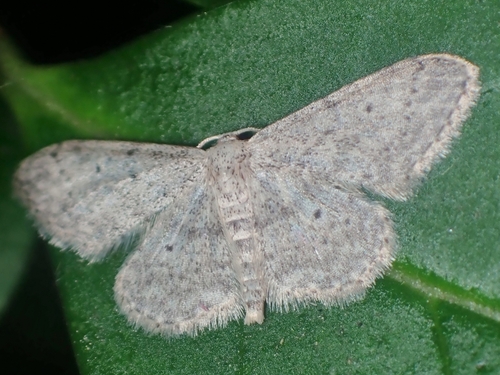
The closest relatives of the Maiden's Blush that you can see in Paris (family Geometridae, Geometer Moths) are Mottled Umber (about 10%), Small Dusty Wave (about 10%) and Double-Striped Pug (about 10%), with each one's daily chance of a sighting.

Where does the Maiden's Blush sighting chance come from?

GBIF citizen-science records

It is estimated from how often the Maiden's Blush is recorded against all the insects logged in Paris (8 verified sightings), calibrated against known sighting rates. Figures are rounded to the nearest 10% because citizen-science data supports honest approximations, not decimals, and months with records from fewer than five people show "—". How it works.
← Back to Paris