Small Ranunculus

Small Ranunculus

Hecatera dysodea

Daily sighting probability <5% · Rare
at Paris

In 3 days ~10% in a week ~20%

10 Verified sightings at Paris
June Best month
🌙 Nocturnal When it's spotted

About the Small Ranunculus

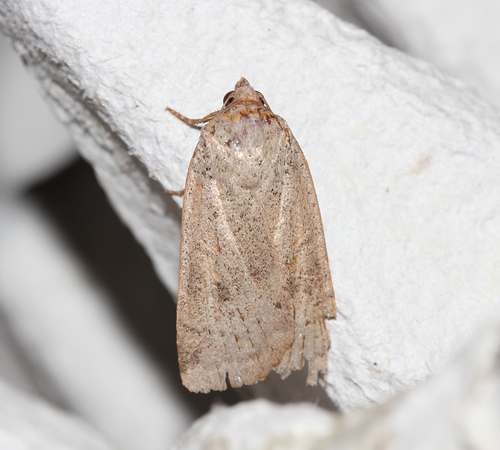
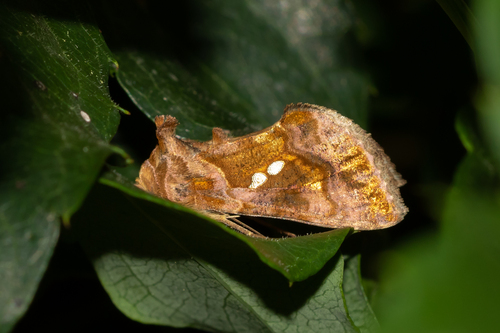
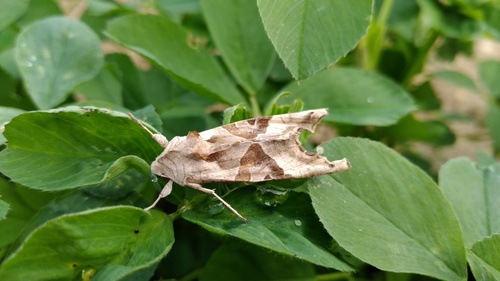
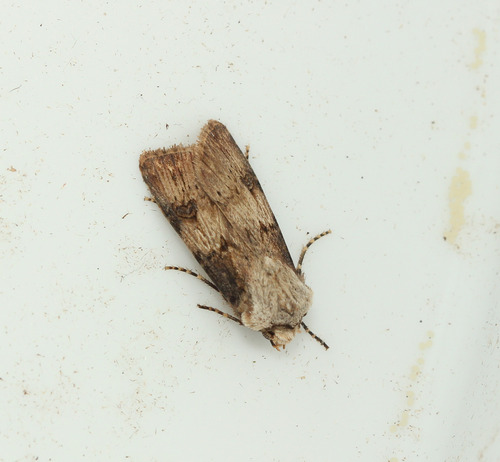
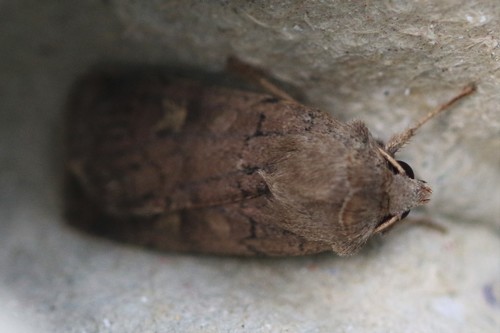
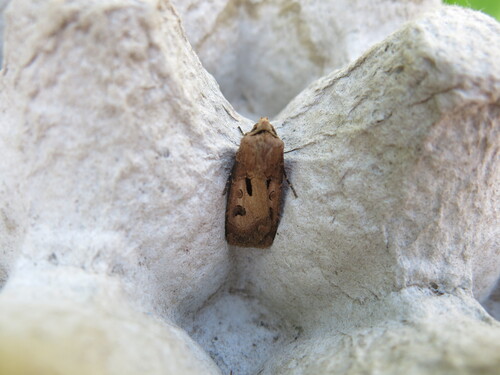
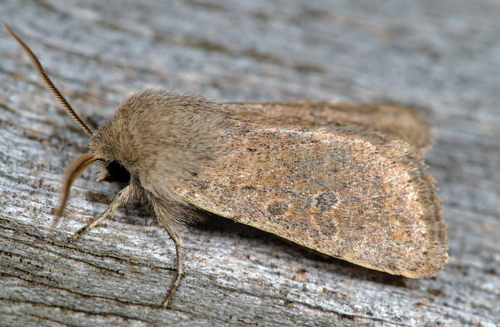
Hecatera dysodea, the small ranunculus, is a moth of the family Noctuidae. It is found in Europe, primarily in Central Europe and Southern Europe. The northern boundary of the distribution is from the Baltic Sea and the southern part of Lithuania, Belarus, south of Moscow to the Urals. North Africa forms the distribution border in the south (from Algeria and Morocco) east they extend to the Middle East, Turkestan and across the Palearctic to Central Asia. It is an introduced species in North America, where it was first found in Utah in 1998 and Oregon in 2005.

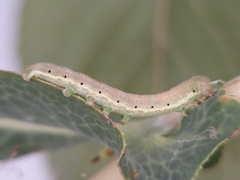
The wingspan is 32–34 mm. The length of the forewings is 14–15 mm. Meyrick describes it thus - Forewings whitish irrorated with grey, median area suffused with grey and partly mixed with orange; subbasal line whitish, edged anteriorly with black mixed with orange; first and second lines whitish, edged internally with blackish; spots outlined with black mixed with orange; subterminal line formed of orange spots, preceded by some black scales. Hindwings pale grey, with darker posterior suffusion. Larva pale dull green, or yellowish freckled with brown; dorsal line pale, dark-edged; lateral dark, indistinct; spiracles black; head ochreous-brown or dull greenish.

Seitz - P. spinaciae Hew. (= dysodea Schiff, flavicincta-minor Esp., chrysozona Bkh., ornata Vill, ranunculina Haw., dysodea of Plate 17). Forewing pale- or greenish-grey, dusted with dark grey; median area darker; all the lines and markings picked out with orange scales; claviform stigma dark; the upper two grey; hindwing

dull grey in male, dark grey in female, with broad dark border, the veins and cellspot dark; caduca H-Sch. (17 ¢) is a pale grey form with very little yellow scaling: in innocens Stg. (17g) the median area is blacker, and the

inner and outer, by comparison, paler, the yellow scaling slight; koechlini Th.-Mg. (= turbida Hofm.) is a darker form with the orange markings strongly developed. Throughout Europe: in Asia Minor, Persia, Syria, Kashmir, Turkestan, and China. — Larva yellow green, freckled with brown; dorsal line pale, darkedged. Wikipedia →

Global Distribution

Parks Where Found

# Park Country Daily sighting probability

More parks will be added in future updates.

Cities Where Found

# City Country Daily sighting probability
1 Kharkiv 🇺🇦 Ukraine
~10%
2 Lyon 🇫🇷 France
~10%
3 Budapest 🇭🇺 Hungary
~10%
4 Birmingham 🇬🇧 United Kingdom
~10%
5 Liverpool 🇬🇧 United Kingdom
~10%
6 Bucharest 🇷🇴 Romania
<5%
7 Portland 🇺🇸 United States
<5%
8 Milan 🇮🇹 Italy
<5%
9 Salt Lake City 🇺🇸 United States
<5%
10 London 🇬🇧 United Kingdom
<5%

Before you go

What are the chances of seeing a Small Ranunculus in Paris?

Rare

Under 5% of wildlife watchers report a Small Ranunculus sighting in Paris on a given day, based on 10 verified sightings from GBIF citizen-science data. It is the 561st most-seen of the 916 insects we can rate there. Over three days the chance rises to about 10%, and over a week to about 20%, if each day is a fresh chance.

When is the best time to see a Small Ranunculus in Paris?

June

In that month about 10% of wildlife watchers report a Small Ranunculus in Paris on a given day, against under 5% in July to May, the lowest months.

What time of day is best to see a Small Ranunculus?

Between 9 pm and midnight

Across all the parks we cover, that three-hour window holds the most Small Ranunculus sightings with a recorded time, and about 8 in 10 of them come between 6 pm and 6 am: it is mostly seen at night.

Is Paris the best place to see a Small Ranunculus?

15th of 19

Of the 19 cities where we can rate Small Ranunculus sightings, Paris ranks 15th at under 5%. The best odds are in Kharkiv (Ukraine, about 10%), Lyon (France, about 10%) and Budapest (Hungary, about 10%).

Which relatives of the Small Ranunculus live in Paris?

Same family: Noctuidae

The closest relatives of the Small Ranunculus that you can see in Paris (family Noctuidae, Cutworm Moths and Allies) are Large Yellow Underwing (about 10%), Silver Υ (about 10%) and Knot Grass Moth (about 10%), with each one's daily chance of a sighting.

Where does the Small Ranunculus sighting chance come from?

GBIF citizen-science records

It is estimated from how often the Small Ranunculus is recorded against all the insects logged in Paris (10 verified sightings), calibrated against known sighting rates. Figures are rounded to the nearest 10% because citizen-science data supports honest approximations, not decimals, and months with records from fewer than five people show "—". How it works.

← Back to Paris