
Black-headed Monitor

Black-headed Monitor

Varanus tristis

Silhouette: Steven Traver · PhyloPic

LCLeast ConcernNTVUENCR
Daily sighting probability <5% · Rare
at Perth

In 3 days ~10% in a week ~30%

9 Verified sightings at Perth
25 In all 2 parks From 2019 to 2026
November Best month
☀️ Diurnal When it's spotted

About the Black-headed Monitor

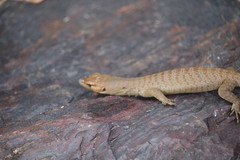
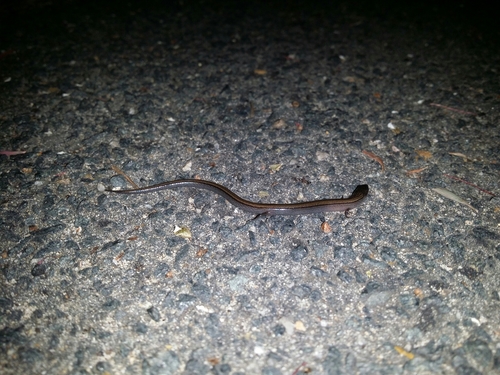
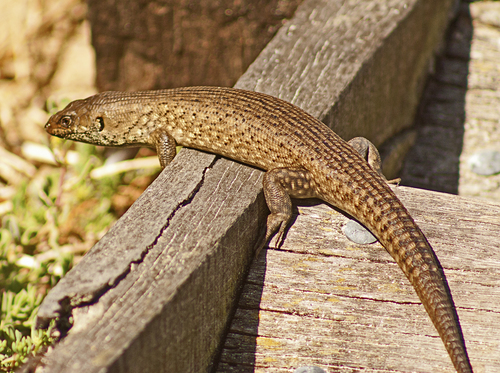
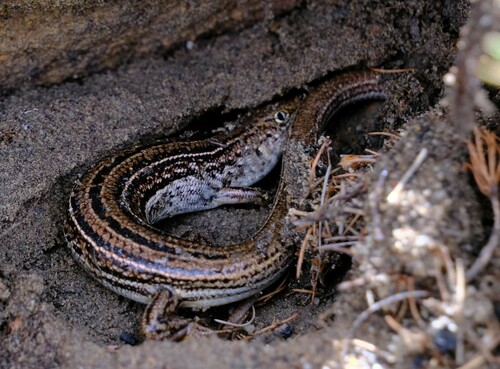
The black-headed monitor or black-tailed monitor (Varanus tristis) is a relatively small species of monitor lizards native to Australia. It is occasionally also called the mournful monitor, freckled monitor (Varanus tristis orientalis) or the racehorse monitor, a name it shares with the Gould's monitor due to their exceptional speed. It is placed in the subgenus Odatria.

Its specific name, tristis, means "sad", in reference to the completely black colouration of V. t. tristis populations around Perth. This is the most widespread monitor species in Australia, occurring throughout the mainland and even on some northern islands such as Magnetic Island. The two subspecies are sympatric in some areas such as the east coast of Queensland. This arboreal monitor lizard is usually found near rivers in forests, scrublands, woodlands, but also inhabits deserts. It takes shelter in tight spaces such as loose bark, tree hollows, and rocky crevices. Wikipedia →

Global Distribution

Parks Where Found

# Park Country Daily sighting probability
1 Uluru-Kata Tjuta National Park 🇦🇺 Australia
~20%
2 Kakadu National Park 🇦🇺 Australia
~20%

Cities Where Found

# City Country Daily sighting probability
1 Perth 🇦🇺 Australia
<5%

Zoos & Centres Where Found

# Zoo / Centre Country
1 National Zoo & Aquarium 🇦🇺 Australia In captivity
2 Fort Wayne Children's Zoo 🇺🇸 United States In captivity

Closest Relatives at Perth

No species of the same family or order lives in Perth, so these are its closest relatives here: other reptiles.

Before you go

What are the chances of seeing a Black-headed Monitor in Perth?

Rare

Under 5% of wildlife watchers report a Black-headed Monitor sighting in Perth on a given day, based on 9 verified sightings from GBIF citizen-science data. It is the 19th most-seen of the 23 reptiles we can rate there. Over three days the chance rises to about 10%, and over a week to about 30%, if each day is a fresh chance.

When is the best time to see a Black-headed Monitor in Perth?

February–March and October–December

In those months about 10% of wildlife watchers report a Black-headed Monitor in Perth on a given day, against under 5% in January and April–September, the lowest months. Those are among Perth's driest months, with about 20 mm of rain a month against 130 mm in July.

What time of day is best to see a Black-headed Monitor?

Between 1 and 4 pm

Across all the parks we cover, that three-hour window holds the most Black-headed Monitor sightings with a recorded time, and about 9 in 10 of them come between 6 am and 6 pm: it is a daytime animal.

Where else can you see a Black-headed Monitor?

Only Perth, in our data

Perth is the only city on Wallace's Line with enough records to rate Black-headed Monitor sightings: under 5% of wildlife watchers there report one on a given day.

Where does the Black-headed Monitor sighting chance come from?

GBIF citizen-science records

It is estimated from how often the Black-headed Monitor is recorded against all the reptiles logged in Perth (9 verified sightings), calibrated against known sighting rates. Figures are rounded to the nearest 10% because citizen-science data supports honest approximations, not decimals, and months with records from fewer than five people show "—". How it works.

← Back to Perth