Eastern Subterranean Termite

Eastern Subterranean Termite

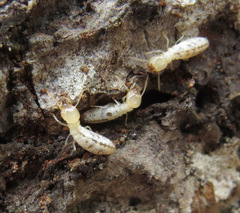
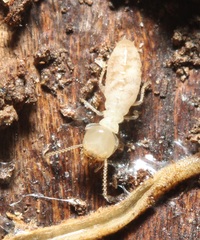
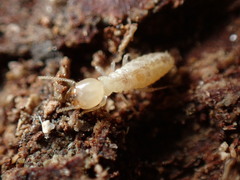
Reticulitermes flavipes

Daily sighting probability <5% · Rare
at Philadelphia

In 3 days ~10% in a week ~20%

8 Verified sightings at Philadelphia
7 In 1 park From 2019 to 2026
May Best month
☀️ Diurnal When it's spotted

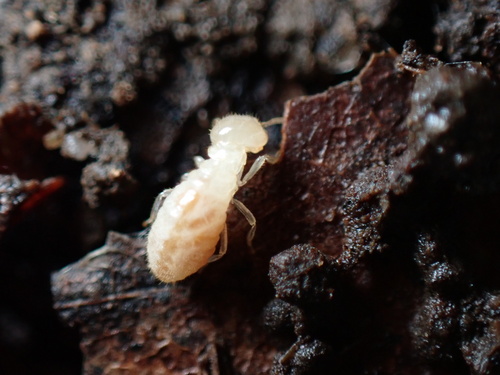
About the Eastern Subterranean Termite

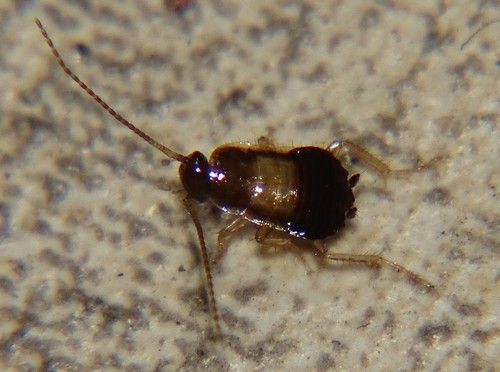
Reticulitermes flavipes, the eastern subterranean termite, is the most common termite found in North America. These termites are the most economically important wood destroying insects in the United States and are classified as pests. They feed on cellulose material such as the structural wood in buildings, wooden fixtures, paper, books, and cotton. A mature colony can range from 20,000 workers to as high as 5 million workers and the primary queen of the colony lays 5,000 to 10,000 eggs per year to add to this total.

The eastern subterranean termite (R. flavipes) is the most widely distributed Reticulitermes species. It occurs throughout the eastern United States, including Texas, and can be found as far north as southern Ontario. In 2006, R. flavipes was also recorded in Oregon, on the West coast of the United States.

Reticulitermes santonensis in France is now understood to be a synonym of R. flavipes. The species is now believed to originate in the southeastern United States and to be exotic or invasive in southern Canada, Europe (France, Germany, Italy, the Netherlands), South America (Uruguay, Chile), and the Bahamas.

Eastern subterranean termites... Wikipedia →
Global Distribution

Parks Where Found

# Park Country Daily sighting probability
1 Great Smoky Mountains National Park 🇺🇸 United States
<5%

More parks will be added in future updates.

Cities Where Found

# City Country Daily sighting probability
1 New York City 🇺🇸 United States
<5%
2 Boston 🇺🇸 United States
<5%
3 Philadelphia 🇺🇸 United States
<5%
4 Washington 🇺🇸 United States
<5%
5 Buenos Aires 🇦🇷 Argentina
<5%
6 Austin 🇺🇸 United States
<5%
7 Dallas 🇺🇸 United States
<5%

Before you go

What are the chances of seeing an Eastern Subterranean Termite in Philadelphia?

Rare

Under 5% of wildlife watchers report an Eastern Subterranean Termite sighting in Philadelphia on a given day, based on 8 verified sightings from GBIF citizen-science data. It is the 471st most-seen of the 632 insects we can rate there. Over three days the chance rises to about 10%, and over a week to about 20%, if each day is a fresh chance.

When is the best time to see an Eastern Subterranean Termite in Philadelphia?

May

In that month about 10% of wildlife watchers report an Eastern Subterranean Termite in Philadelphia on a given day, against under 5% in June to April, the lowest months.

What time of day is best to see an Eastern Subterranean Termite?

Between 10 am and 1 pm

Across all the parks we cover, that three-hour window holds the most Eastern Subterranean Termite sightings with a recorded time, and nearly all of them come between 6 am and 6 pm: it is a daytime animal.

Is Philadelphia the best place to see an Eastern Subterranean Termite?

Among the best

Of the 7 cities where we can rate Eastern Subterranean Termite sightings, Philadelphia ranks 3rd at under 5%, level with the leaders once rounded. The best odds are in New York City (United States, under 5%) and Boston (United States, under 5%).

Which relatives of the Eastern Subterranean Termite live in Philadelphia?

Same order: Blattodea

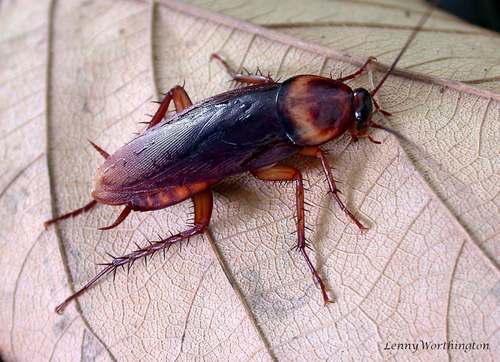
The closest relatives of the Eastern Subterranean Termite that you can see in Philadelphia (order Blattodea, Cockroaches and Termites) are American Cockroach (about 10%) and Oriental Cockroach (about 10%), with each one's daily chance of a sighting.

Where does the Eastern Subterranean Termite sighting chance come from?

GBIF citizen-science records

It is estimated from how often the Eastern Subterranean Termite is recorded against all the insects logged in Philadelphia (8 verified sightings), calibrated against known sighting rates. Figures are rounded to the nearest 10% because citizen-science data supports honest approximations, not decimals, and months with records from fewer than five people show "—". How it works.

← Back to Philadelphia