European Corn Borer Moth

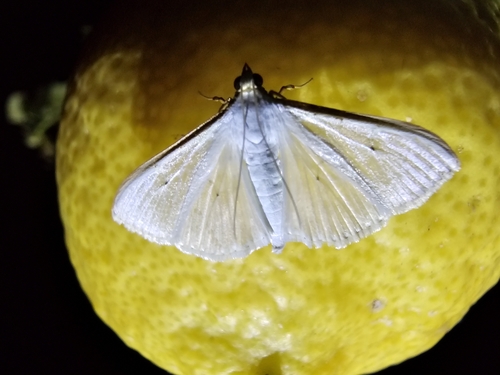
European Corn Borer Moth

Ostrinia nubilalis

Daily sighting probability <5% · Rare
at Porto

In 3 days ~10% in a week ~30%

13 Verified sightings at Porto
38 In all 2 parks From 2019 to 2026
September Best month
☀️🌙 Day & Night When it's spotted

About the European Corn Borer Moth

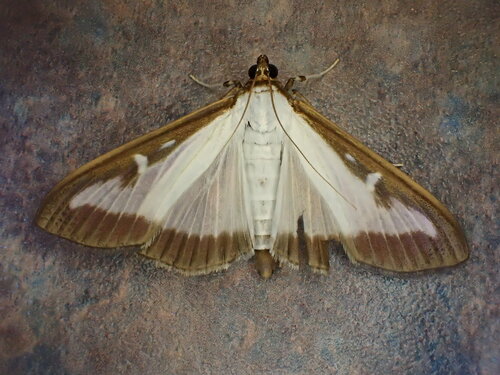
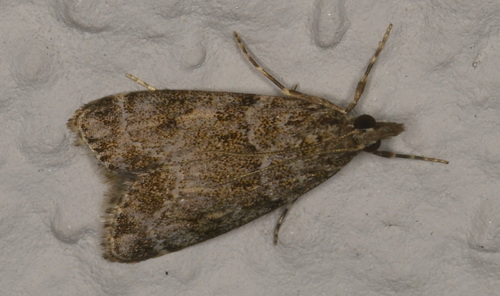
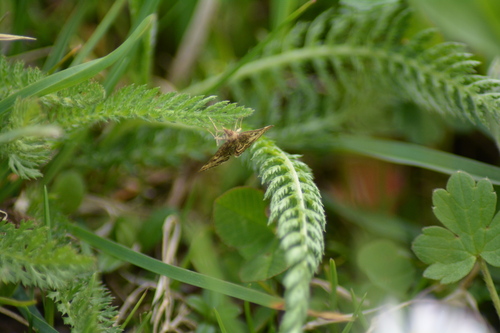
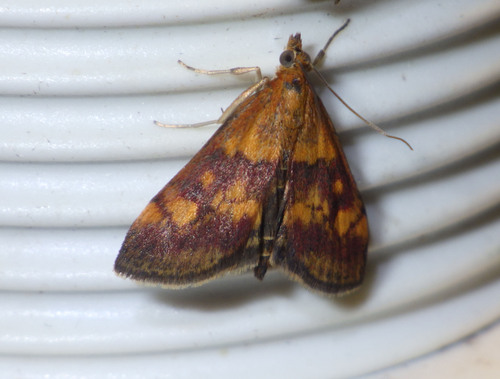
The European corn borer (Ostrinia nubilalis), also known as the European corn worm or European high-flyer, is a moth of the family Crambidae. It is a pest of grain, particularly maize (Zea mays). The insect is native to Europe, originally infesting varieties of millet, including broom corn. The European corn borer was first reported in North America in 1917 in Massachusetts, but was probably introduced from Europe several years earlier. Since its initial discovery in the Americas, the insect has spread into Canada and westwards across the United States to the Rocky Mountains.

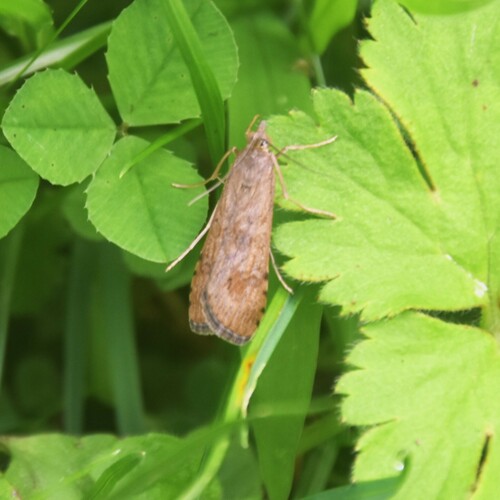
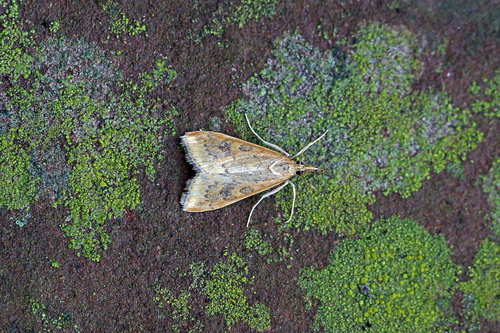
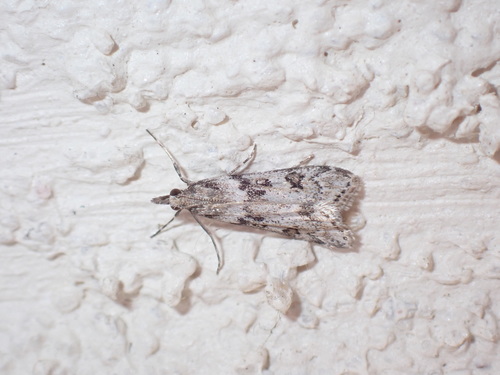
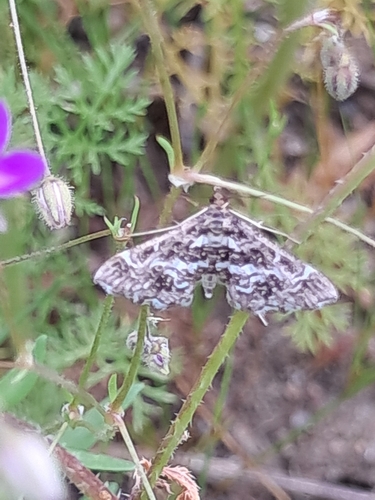
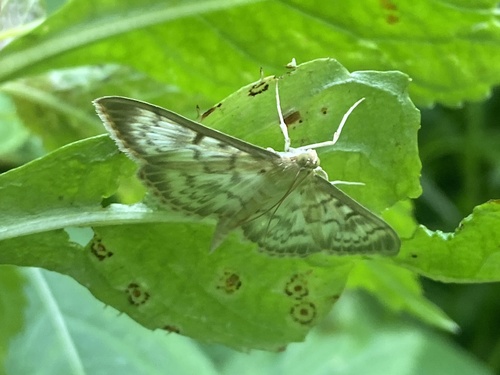
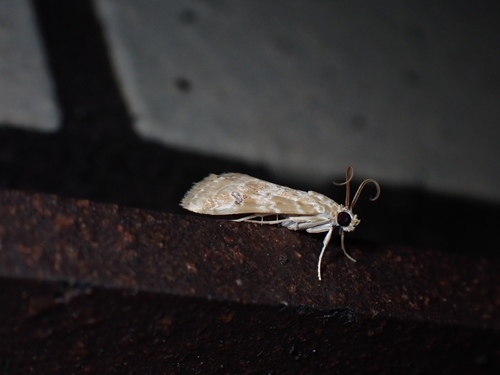
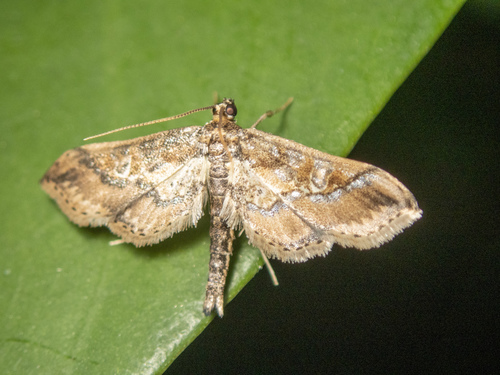
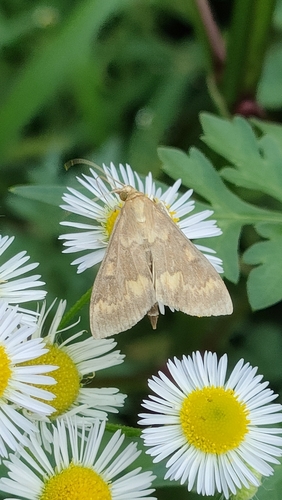
The adult European corn borer is about 25 millimetres (0.98 in) long with a 26–30 millimetres (1.0–1.2 in) wingspan. The female is light yellowish brown with dark, irregular, wavy bands across the wings. The male is slightly smaller and darker.

European corn borer caterpillars damage corn by chewing tunnels through many parts of the plant, leading to a decrease in agricultural yield. The European corn borer is native to Europe and was introduced to North America in the early 20th century. This moth plagues corn crops in France, Spain, Italy, and Poland. In North America, the European corn... Wikipedia →
Global Distribution

Parks Where Found

# Park Country Daily sighting probability
1 Bavarian Forest National Park 🇩🇪 Germany
~10%
2 Wadden Sea National Park 🇩🇪 Germany
~10%

Cities Where Found

# City Country Daily sighting probability
1 Turin 🇮🇹 Italy
~10%
2 Milan 🇮🇹 Italy
~10%
3 Berlin 🇩🇪 Germany
<5%
4 Porto 🇵🇹 Portugal
<5%
5 Vienna 🇦🇹 Austria
<5%
6 London 🇬🇧 United Kingdom
<5%
7 Paris 🇫🇷 France
<5%

Before you go

What are the chances of seeing a European Corn Borer Moth in Porto?

Rare

Under 5% of wildlife watchers report a European Corn Borer Moth sighting in Porto on a given day, based on 13 verified sightings from GBIF citizen-science data. It is the 320th most-seen of the 498 insects we can rate there. Over three days the chance rises to about 10%, and over a week to about 30%, if each day is a fresh chance.

When is the best time to see a European Corn Borer Moth in Porto?

June and August–September

In those months about 10% of wildlife watchers report a European Corn Borer Moth in Porto on a given day, against under 5% in July and October–May, the lowest months. Those are among Porto's driest months, with about 35 mm of rain a month against 140 mm in January.

What time of day is best to see a European Corn Borer Moth?

Between 10 pm and 1 am

Across all the parks we cover, that three-hour window holds the most European Corn Borer Moth sightings with a recorded time, and about 7 in 10 of them come between 6 pm and 6 am: it is seen both by day and at night.

Is Porto the best place to see a European Corn Borer Moth?

4th of 7

Of the 7 cities where we can rate European Corn Borer Moth sightings, Porto ranks 4th at under 5%. The best odds are in Turin (Italy, about 10%), Milan (Italy, about 10%) and Berlin (Germany, under 5%).

Which relatives of the European Corn Borer Moth live in Porto?

Same family: Crambidae

The closest relatives of the European Corn Borer Moth that you can see in Porto (family Crambidae, Crambid Snout Moths) are Jasmine Moth (about 20%), Rush Veneer (about 10%) and Rusty Dot Pearl (about 10%), with each one's daily chance of a sighting.

Where does the European Corn Borer Moth sighting chance come from?

GBIF citizen-science records

It is estimated from how often the European Corn Borer Moth is recorded against all the insects logged in Porto (13 verified sightings), calibrated against known sighting rates. Figures are rounded to the nearest 10% because citizen-science data supports honest approximations, not decimals, and months with records from fewer than five people show "—". How it works.

← Back to Porto