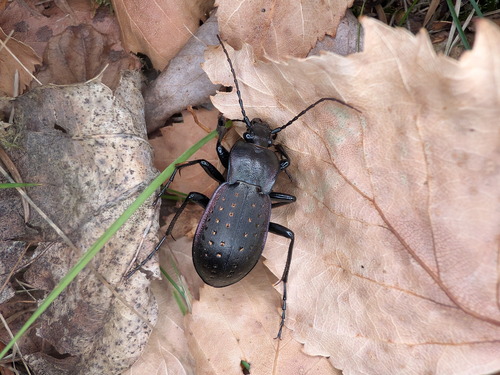
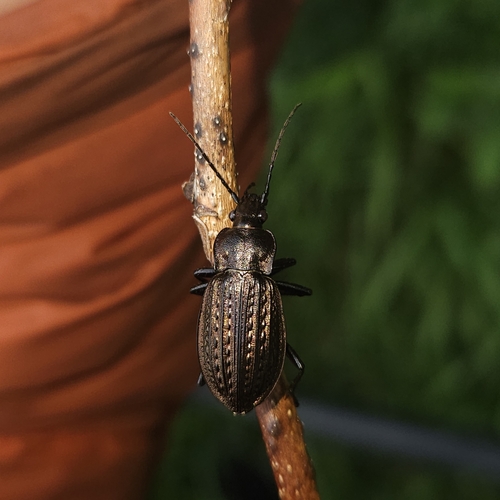
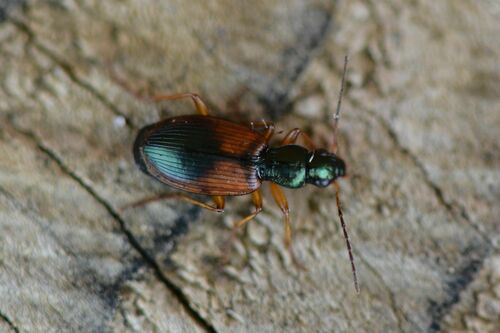
European Gazelle Beetle

European Gazelle Beetle

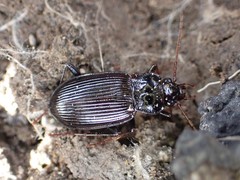
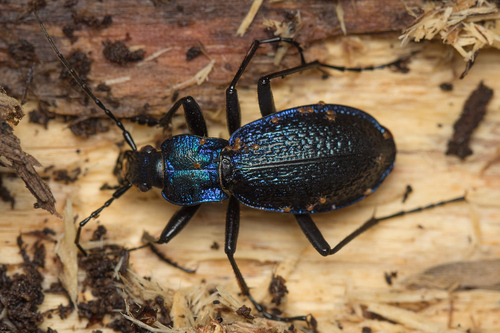
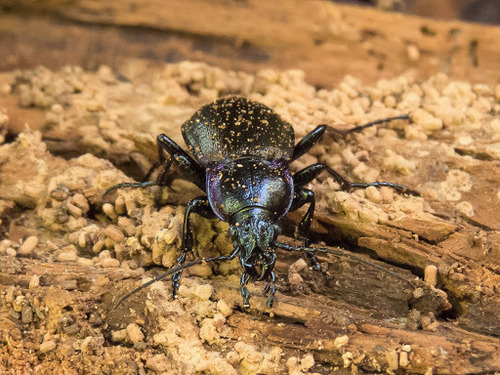
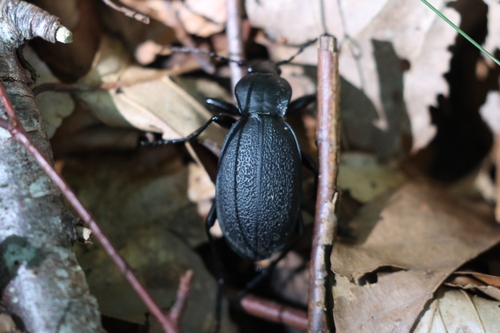
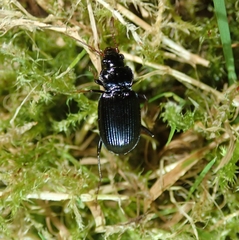
Nebria brevicollis

Daily sighting probability <5% · Rare
at Prague

In 3 days ~10% in a week ~30%

19 Verified sightings at Prague
22 In all 3 parks From 2019 to 2026
September Best month
☀️🌙 Day & Night When it's spotted

About the European Gazelle Beetle

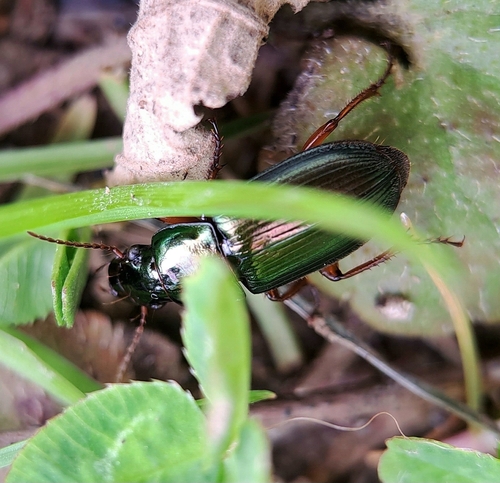
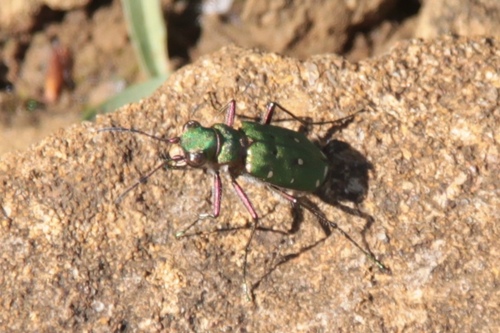
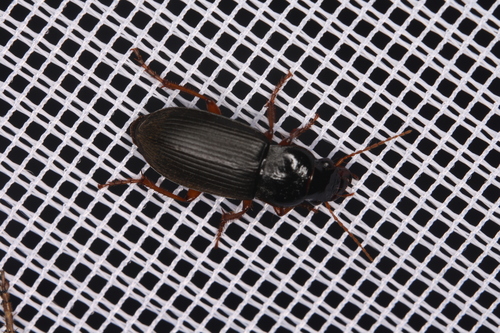
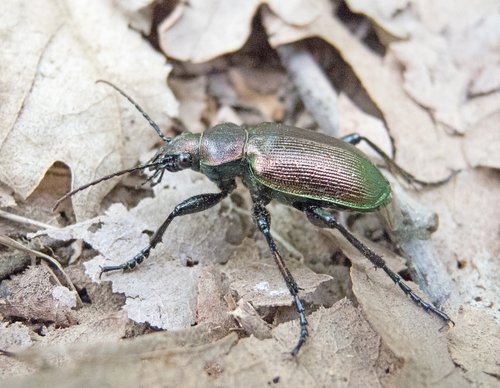
Nebria brevicollis, the short-collared gazelle beetle, belonging to the Carabidae family, is a ground beetle. With nearly 500 species and over 100 subspecies, Nebria is the most diverse genus within the Nebriini tribe of ground beetles. Members of the genus occupy a wide range of habitats. Nebria brevicollis is native to Europe and the Near East but has been introduced to the western United States and Canada. Its rapid expansion in North America is characteristic of an invasive species. Due to the variation in habitat, their diet consists of small arthropods (less than 4 mm in length) including Collembola, Diptera, earthworms, mites, and spiders.

Nebria brevicollis has a dark brown body with reddish-brown tibiae, tarsi, palpi, and antennae. The pronotum features two lateral setae on each side and is densely punctuate across its base. This species is most abundant between October and December, then from January through mid-May. It is of modest size, ranging in length from 10–14 mm. It has two sets of wings, protected by a hard shell that is black or dark brown. Only a few beetles have functional flight muscles. No sexual dimorphism has been observed between males and... Wikipedia →
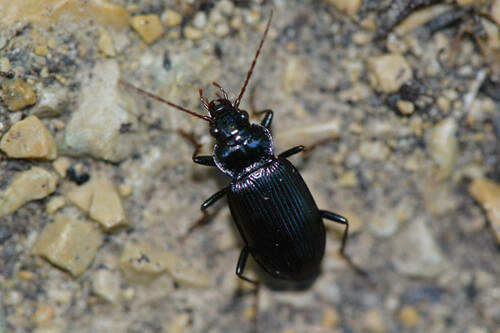
Global Distribution

Parks Where Found

# Park Country Daily sighting probability
1 Bavarian Forest National Park 🇩🇪 Germany
<5%
2 Wadden Sea National Park 🇩🇪 Germany
<5%
3 Pyrénées National Park 🇫🇷 France
<5%

Cities Where Found

# City Country Daily sighting probability
1 Portland 🇺🇸 United States
~10%
2 Vancouver 🇨🇦 Canada
~10%
3 Seattle 🇺🇸 United States
~10%
4 Rotterdam [The Hague] 🇳🇱 Netherlands
~10%
5 Birmingham 🇬🇧 United Kingdom
<5%
6 Prague 🇨🇿 Czechia
<5%
7 Liverpool 🇬🇧 United Kingdom
<5%
8 Kyiv 🇺🇦 Ukraine
<5%
9 London 🇬🇧 United Kingdom
<5%
10 Helsinki 🇫🇮 Finland
<5%

Before you go

What are the chances of seeing a European Gazelle Beetle in Prague?

Rare

Under 5% of wildlife watchers report a European Gazelle Beetle sighting in Prague on a given day, based on 19 verified sightings from GBIF citizen-science data. It is the 316th most-seen of the 724 insects we can rate there. Over three days the chance rises to about 10%, and over a week to about 30%, if each day is a fresh chance.

When is the best time to see a European Gazelle Beetle in Prague?

September and October

In those months about 10% of wildlife watchers report a European Gazelle Beetle in Prague on a given day, against under 5% in November to August, the lowest months.

What time of day is best to see a European Gazelle Beetle?

Between 10 pm and 1 am

Across all the parks we cover, that three-hour window holds the most European Gazelle Beetle sightings with a recorded time, and about 6 in 10 of them come between 6 pm and 6 am: it is seen both by day and at night.

Is Prague the best place to see a European Gazelle Beetle?

6th of 12

Of the 12 cities where we can rate European Gazelle Beetle sightings, Prague ranks 6th at under 5%. The best odds are in Portland (United States, about 10%), Vancouver (Canada, about 10%) and Seattle (United States, about 10%).

Which relatives of the European Gazelle Beetle live in Prague?

Same family: Carabidae

The closest relatives of the European Gazelle Beetle that you can see in Prague (family Carabidae, Ground Beetles) are Blue Ground Beetle (about 10%), Bronze Ground Beetle (about 10%) and Leather Beetle (about 10%), with each one's daily chance of a sighting.

Where does the European Gazelle Beetle sighting chance come from?

GBIF citizen-science records

It is estimated from how often the European Gazelle Beetle is recorded against all the insects logged in Prague (19 verified sightings), calibrated against known sighting rates. Figures are rounded to the nearest 10% because citizen-science data supports honest approximations, not decimals, and months with records from fewer than five people show "—". How it works.

← Back to Prague