Gonipterus platensis

Gonipterus platensis

Gonipterus platensis

Daily sighting probability ~30% · Possible
at Quito

In 3 days ~60% in a week ~90%

76 Verified sightings at Quito
May Best month

About the Gonipterus platensis

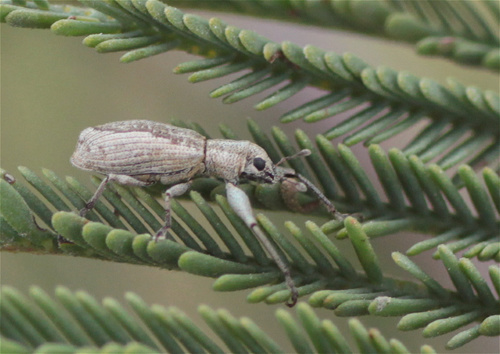
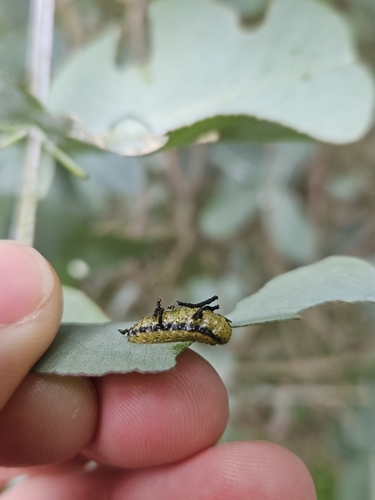
Gonipterus platensis is a species of weevil in the family Curculionidae. It is commonly known as the eucalyptus snout beetle, the eucalyptus weevil or the gum tree weevil. It feeds and breeds on Eucalyptus trees and is endemic to Australia, though it is also found in New Zealand, North America, Hawaii, India, and western Europe.

This weevil is greyish-brown with a light coloured transverse band. It is about thirteen millimetres long and not readily distinguishable from the closely related weevils, Gonipterus gibberus, Gonipterus pulverulentus, and Gonipterus scutellatus, all of which share the same common names, as they have historically been confused with one another.

Eucalyptus trees are the only hosts for the gum tree weevil. The gum tree weevil is endemic to Australia where Eucalyptus trees are native. This and other related species in the genus Gonipterus are invasive pests of eucalyptus in Africa, South America, North America, and Europe, and were historically misidentified as G. scutellatus until researchers examined the DNA of the pest species in 2012 and determined that none of the pests were genuine G. scutellatus. Populations... Wikipedia →
Global Distribution

Parks Where Found

# Park Country Daily sighting probability

More parks will be added in future updates.

Cities Where Found

# City Country Daily sighting probability
1 Quito 🇪🇨 Ecuador
~30%
2 Bogota 🇨🇴 Colombia
<5%
3 London 🇬🇧 United Kingdom
<5%
4 Los Angeles 🇺🇸 United States
<5%
5 San Francisco 🇺🇸 United States
<5%
6 San Diego 🇺🇸 United States
<5%

Before you go

What are the chances of seeing a Gonipterus platensis in Quito?

Possible

About 30% of wildlife watchers report a Gonipterus platensis sighting in Quito on a given day, based on 76 verified sightings from GBIF citizen-science data. It is the 13th most-seen of the 83 insects we can rate there. Over three days the chance rises to about 60%, and over a week to about 90%, if each day is a fresh chance.

When is the best time to see a Gonipterus platensis in Quito?

May

In that month about 40% of wildlife watchers report a Gonipterus platensis in Quito on a given day, against about 10% in February, the lowest month.

Is Quito the best place to see a Gonipterus platensis?

Yes

Of the 6 cities where we can rate Gonipterus platensis sightings, Quito has the highest daily chance: about 30%. Next come Bogota (Colombia, under 5%) and London (United Kingdom, under 5%).

Which relatives of the Gonipterus platensis live in Quito?

Same family: Curculionidae

The closest relatives of the Gonipterus platensis that you can see in Quito (family Curculionidae, True Weevils) are Asymmathetes episternalis (about 10%) and Pandeleteius hadromeroides (about 10%), with each one's daily chance of a sighting.

Where does the Gonipterus platensis sighting chance come from?

GBIF citizen-science records

It is estimated from how often the Gonipterus platensis is recorded against all the insects logged in Quito (76 verified sightings), calibrated against known sighting rates. Figures are rounded to the nearest 10% because citizen-science data supports honest approximations, not decimals, and months with records from fewer than five people show "—". How it works.

← Back to Quito