

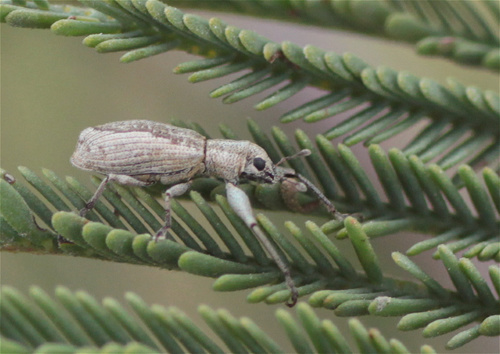
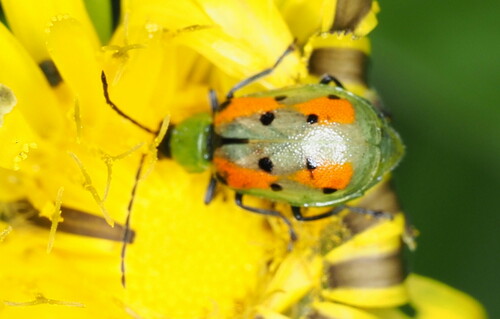
Six-Spotted Zigzag Ladybird

Six-Spotted Zigzag Ladybird

Cheilomenes sexmaculata

Daily sighting probability ~50% · Likely
at Quito

In 3 days ~90% in a week >90%

257 Verified sightings at Quito
177 In all 6 parks From 2019 to 2026
November Best month
☀️ Diurnal When it's spotted

About the Six-Spotted Zigzag Ladybird

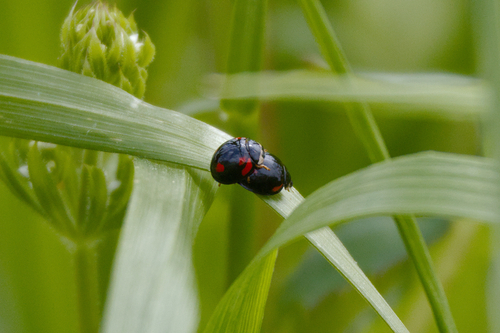
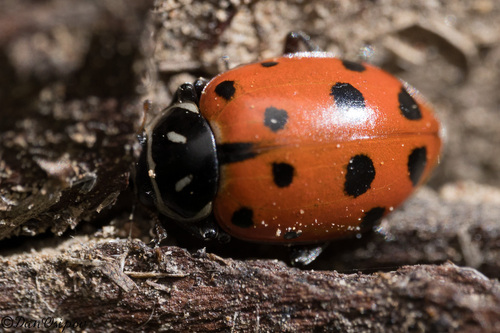
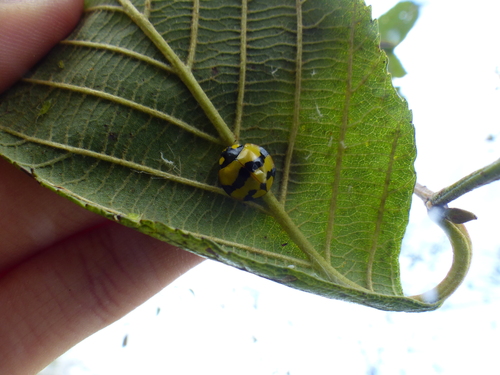
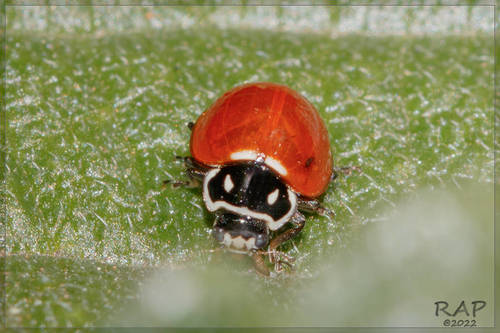
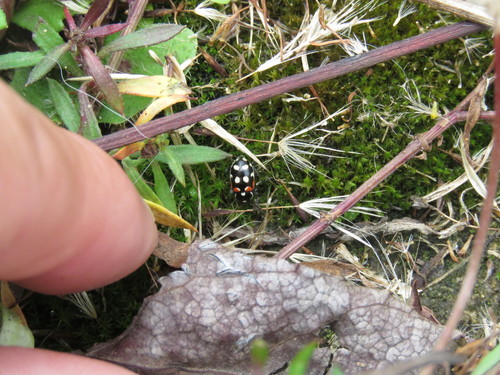
Cheilomenes sexmaculata is a species of ladybird. Although sometimes known by the common name of six-spotted zigzag ladybird, this is misleading as there are several colour morphs and some colour morphs of the species can be confused with Micraspis discolor and Chilocorus nigrita. The species has a wide distribution range within the Asian tropics and subtropical zones from India to Japan and parts of the Australian region. They have been introduced into the Caribbean islands as a biocontrol agent and their spread to South America was noted in 2019. It is well known as a predator of aphids and other small insects.

This species is about 3 to 4 mm in body length. It is a voracious predator on several whiteflies and aphids such as Aphis gossypii, Myzus persicae, Aphis craccivora, Amrasca, Empoasca and Leptocentrus. In addition to them, it feeds on a wide prey range including, scale insects, and diaspids.

The elytral colour has been identified as being controlled by two genes with two alleles each U-u and D-d and the phenotypes have been grouped into varieties quadriplagiata (“Q”) [UUDD,UUDd,UuDD,UuDd]; unifasciata (“U”) [Uudd,UUdd]; diversijunata... Wikipedia →

Global Distribution

Parks Where Found

# Park Country Daily sighting probability
1 Caroni Swamp 🇹🇹 Trinidad and Tobago
~20%
2 Galápagos Islands 🇪🇨 Ecuador
~20%
3 Volcán Barú National Park 🇵🇦 Panama
~10%
4 Taroko National Park 🇹🇼 Taiwan
~10%
5 La Amistad International Park (Panama) 🇵🇦 Panama
~10%
6 Kaeng Krachan National Park 🇹🇭 Thailand
~10%

Cities Where Found

# City Country Daily sighting probability
1 Quito 🇪🇨 Ecuador
~50%
2 Xiuying District 🇨🇳 China
~50%
3 Rajkot 🇮🇳 India
~40%
4 Tiruchirappalli 🇮🇳 India
~30%
5 Davao City 🇵🇭 Philippines
~30%
6 Dhaka 🇧🇩 Bangladesh
~30%
7 Nanchang 🇨🇳 China
~30%
8 Prayagraj 🇮🇳 India
~30%
9 Vasai-Virar 🇮🇳 India
~30%
10 Naha 🇯🇵 Japan
~30%

Before you go

What are the chances of seeing a Six-Spotted Zigzag Ladybird in Quito?

Likely

About 50% of wildlife watchers report a Six-Spotted Zigzag Ladybird sighting in Quito on a given day, based on 257 verified sightings from GBIF citizen-science data. It is the most-seen of the 83 insects we can rate there. Over three days the chance rises to about 90%, and over a week to over 90%, if each day is a fresh chance.

When is the best time to see a Six-Spotted Zigzag Ladybird in Quito?

September and November

In those months about 70% of wildlife watchers report a Six-Spotted Zigzag Ladybird in Quito on a given day, against about 30% in June, the lowest month.

What time of day is best to see a Six-Spotted Zigzag Ladybird?

Between 9 am and noon

Across all the parks we cover, that three-hour window holds the most Six-Spotted Zigzag Ladybird sightings with a recorded time, and nearly all of them come between 6 am and 6 pm: it is a daytime animal.

Is Quito the best place to see a Six-Spotted Zigzag Ladybird?

Yes

Of the 74 cities where we can rate Six-Spotted Zigzag Ladybird sightings, Quito has the highest daily chance: about 50%. Next come Xiuying District (China, about 50%) and Rajkot (India, about 40%).

Which relatives of the Six-Spotted Zigzag Ladybird live in Quito?

Same family: Coccinellidae

The closest relatives of the Six-Spotted Zigzag Ladybird that you can see in Quito (family Coccinellidae, Lady Beetles) are Asian Lady Beetle (about 50%), Convergent Lady Beetle (about 50%) and Neda norrisi (about 20%), with each one's daily chance of a sighting.

Where does the Six-Spotted Zigzag Ladybird sighting chance come from?

GBIF citizen-science records

It is estimated from how often the Six-Spotted Zigzag Ladybird is recorded against all the insects logged in Quito (257 verified sightings), calibrated against known sighting rates. Figures are rounded to the nearest 10% because citizen-science data supports honest approximations, not decimals, and months with records from fewer than five people show "—". How it works.

← Back to Quito