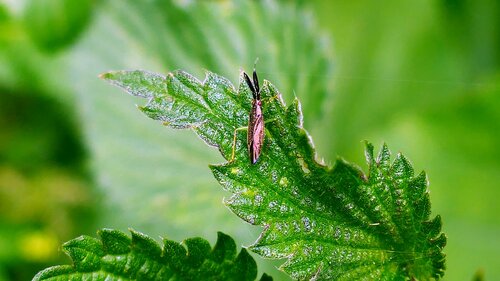
Big-Eyed Toad Bug

Big-Eyed Toad Bug

Gelastocoris oculatus

Daily sighting probability ~10% · With luck
at Sacramento

In 3 days ~20% in a week ~40%

40 Verified sightings at Sacramento
36 In all 4 parks From 2019 to 2026
July Best month
☀️ Diurnal When it's spotted

About the Big-Eyed Toad Bug

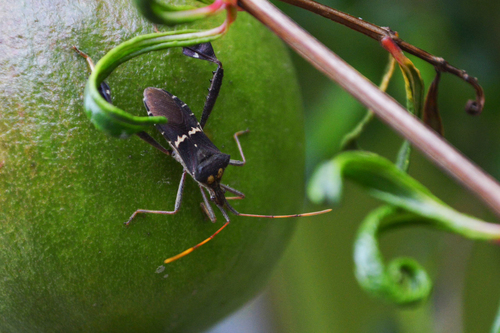
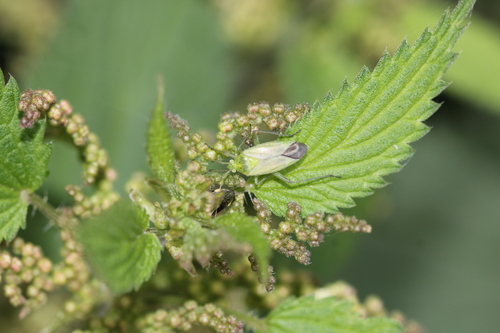
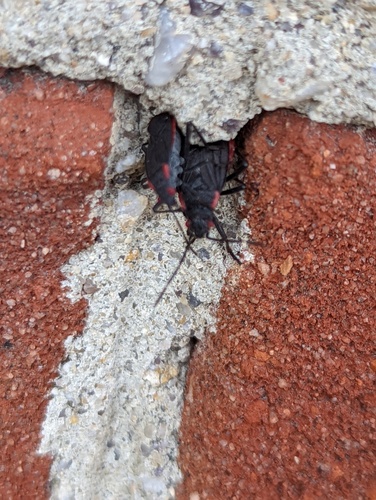
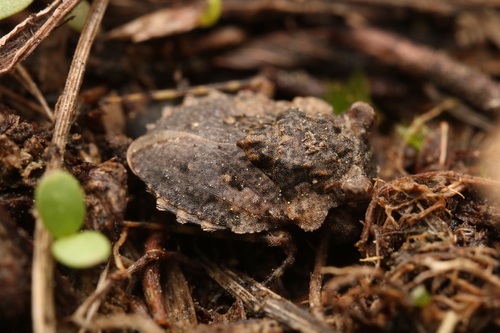
Gelastocoris oculatus, the big-eyed toad bug, is a species of toad bug in the family Gelastocoridae. It is found in Central America and North America. North of Mexico, it is found in 28 continental United States and 3 provinces of Canada. They are riparian insects that are found near the shores of freshwater lentic and lotic systems. They prefer damp substrates over saturated substrates. Their coloration, morphology, and hopping behavior resembles toads. Toad bugs use their cryptic coloration to blend in with the sand, soil, or pebble-rich substrate of their habitats to avoid predation. They are able to leap many times their body length to avoid predation, and can swim short distances. Both G. oculatus adults and nymphs capture smaller insects by jumping on them, and consume them with their piercing sucking mouthparts. Females lay their eggs under rocks or in sand or mud, and nymphs have 5 instars.

They are most active in spring to autumn and those in the northern range hibernate. Adults have been known to congregate sometimes. These two subspecies belong to the species Gelastocoris oculatus: Gelastocoris oculatus oculatus (Fabricius, 1798)

Gelastocoris oculatus... Wikipedia →

Global Distribution

Parks Where Found

# Park Country Daily sighting probability
1 Redwood National Park 🇺🇸 United States
~10%
2 Shenandoah National Park 🇺🇸 United States
~10%
3 Great Smoky Mountains National Park 🇺🇸 United States
<5%
4 Everglades National Park 🇺🇸 United States
<5%

Cities Where Found

# City Country Daily sighting probability
1 Sacramento 🇺🇸 United States
~10%
2 Washington 🇺🇸 United States
<5%
3 Dallas 🇺🇸 United States
<5%
4 Austin 🇺🇸 United States
<5%
5 Portland 🇺🇸 United States
<5%
6 Miami 🇺🇸 United States
<5%
7 Los Angeles 🇺🇸 United States
<5%
8 Houston 🇺🇸 United States
<5%
9 New York City 🇺🇸 United States
<5%

Before you go

What are the chances of seeing a Big-Eyed Toad Bug in Sacramento?

With luck

About 10% of wildlife watchers report a Big-Eyed Toad Bug sighting in Sacramento on a given day, based on 40 verified sightings from GBIF citizen-science data. It is the 123rd most-seen of the 386 insects we can rate there. Over three days the chance rises to about 20%, and over a week to about 40%, if each day is a fresh chance.

When is the best time to see a Big-Eyed Toad Bug in Sacramento?

February–April and June–October

In those months about 10% of wildlife watchers report a Big-Eyed Toad Bug in Sacramento on a given day, against under 5% in May and November–January, the lowest months.

What time of day is best to see a Big-Eyed Toad Bug?

Between 10 am and 1 pm

Across all the parks we cover, that three-hour window holds the most Big-Eyed Toad Bug sightings with a recorded time, and about 9 in 10 of them come between 6 am and 6 pm: it is a daytime animal.

Is Sacramento the best place to see a Big-Eyed Toad Bug?

Yes

Of the 9 cities where we can rate Big-Eyed Toad Bug sightings, Sacramento has the highest daily chance: about 10%. Next come Washington (United States, under 5%) and Dallas (United States, under 5%).

Which relatives of the Big-Eyed Toad Bug live in Sacramento?

Same order: Hemiptera

The closest relatives of the Big-Eyed Toad Bug that you can see in Sacramento (order Hemiptera, True Bugs, Hoppers, Aphids, and allies) are Leptoglossus zonatus (about 20%), Western Boxelder Bug (about 20%) and Leafhopper Assassin Bug (about 20%), with each one's daily chance of a sighting.

Where does the Big-Eyed Toad Bug sighting chance come from?

GBIF citizen-science records

It is estimated from how often the Big-Eyed Toad Bug is recorded against all the insects logged in Sacramento (40 verified sightings), calibrated against known sighting rates. Figures are rounded to the nearest 10% because citizen-science data supports honest approximations, not decimals, and months with records from fewer than five people show "—". How it works.

← Back to Sacramento