About the Immigrant Pavement Ant
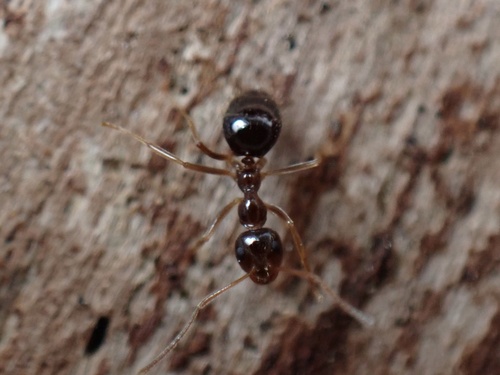
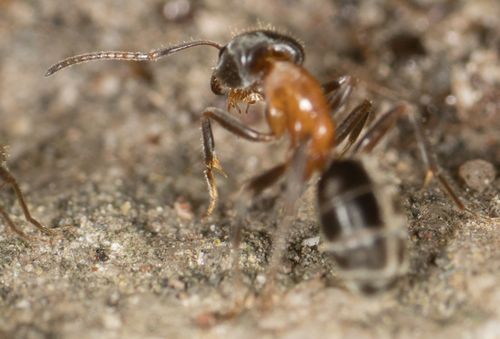
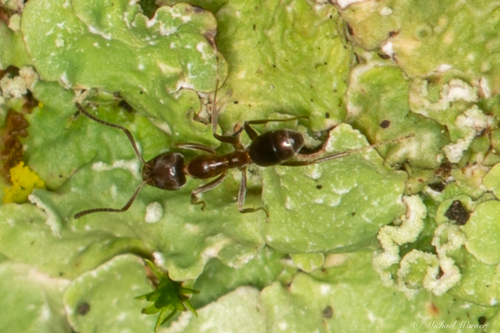
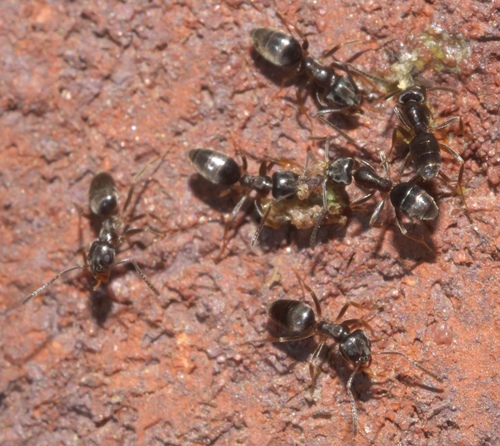
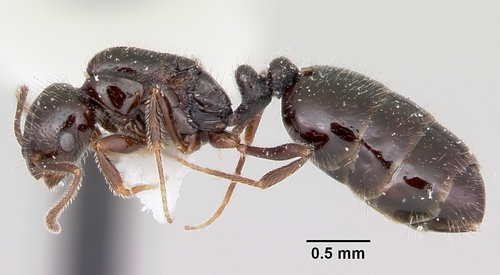
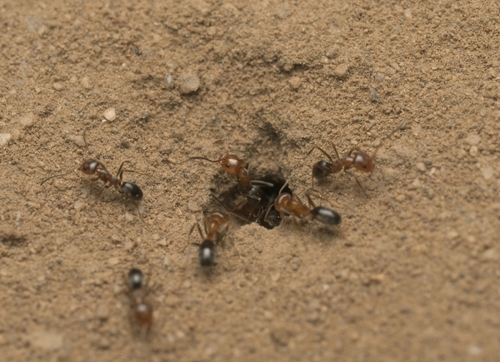
Tetramorium immigrans—also known as the immigrant pavement ant, pavement ant, and the sugar ant in parts of North America—is an ant native to Europe, which also occurs as an introduced pest in North America. Its common name comes from the fact that colonies in North America usually make their nests under pavement. This is one of the most commonly seen ants in North America, being well adapted to urban and suburban habitats. It is distinguished by a single pair of spines on the back, two nodes on the petiole, and grooves on the head and thorax.
Pavement ants have been studied on the International Space Station in 2014. The pavement ant is dark brown to blackish, and 2.5–4 millimeters (0.10–0.16 in) long. A colony is composed of workers, alates, drones (male ants), and a queen. Workers do have a small stinger, which can cause mild discomfort in humans but is essentially harmless. Alates, or new queen ants and drones, have wings, and are at least twice as large as the workers. Tetramorium nuptial flights occur in spring and summer; queens and drones leave the nest and find a mate. The drone's only job is to mate with the virgin queens. The dealate, or newly fertilized... Wikipedia →