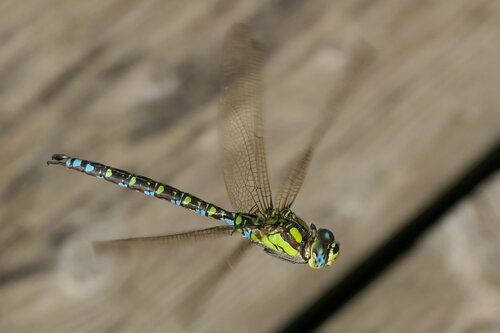
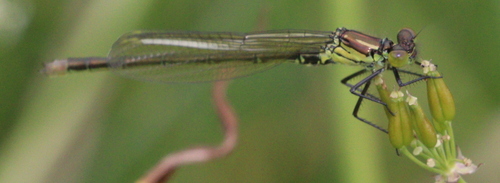
Yellow-Winged Darter

Yellow-Winged Darter

Sympetrum flaveolum

Daily sighting probability ~10% · With luck
at Saint Petersburg

In 3 days ~20% in a week ~30%

75 Verified sightings at Saint Petersburg
151 In all 3 parks From 2019 to 2026
August Best month
☀️ Diurnal When it's spotted

About the Yellow-Winged Darter

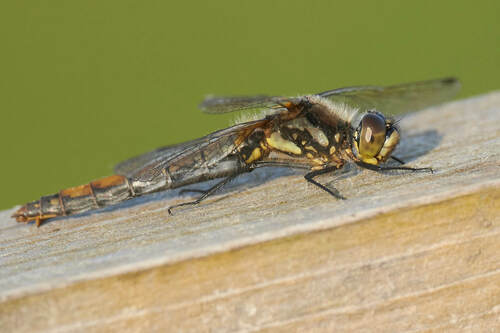
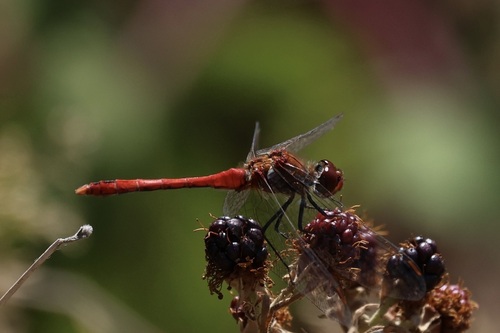
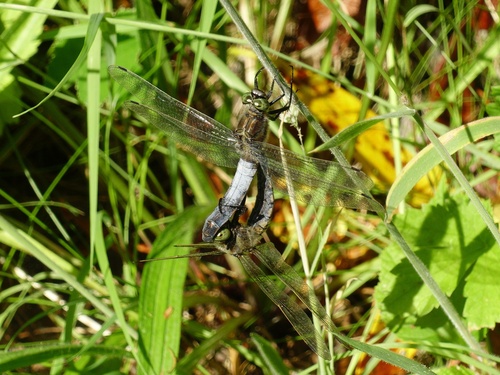
The yellow-winged darter (Sympetrum flaveolum) is a dragonfly found in Europe and mid and northern China. Breeding is confined to stagnant water, usually in peat bogs. Although not resident in the United Kingdom it occasionally migrates there in some numbers. Such 'Invasion Years' occurred in 1906, 1926, 1945, 1953, and 1995. On each occasion a small breeding colony appeared, but they have invariably died out after a few years.

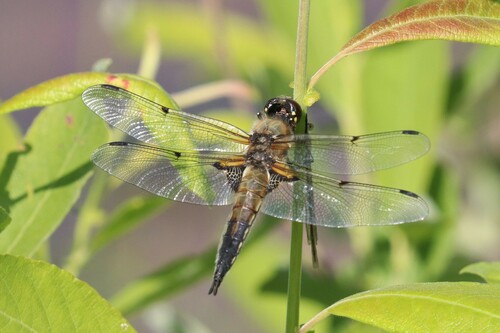
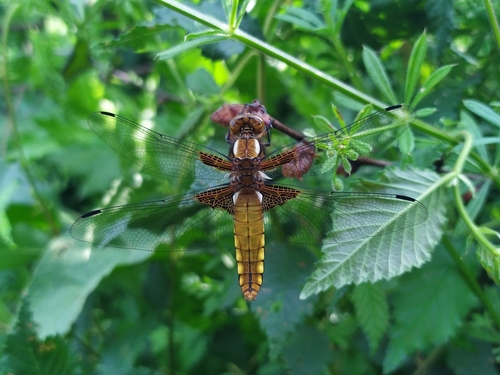
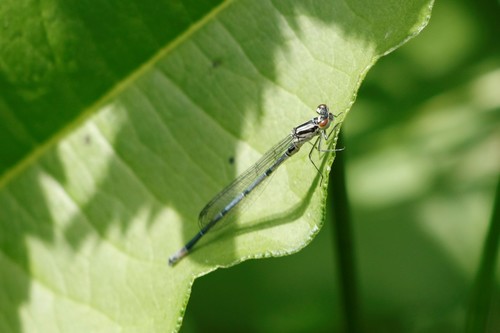
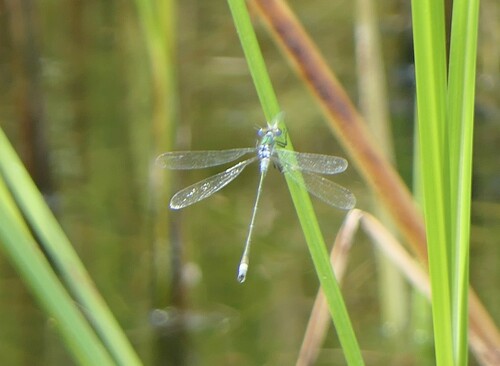
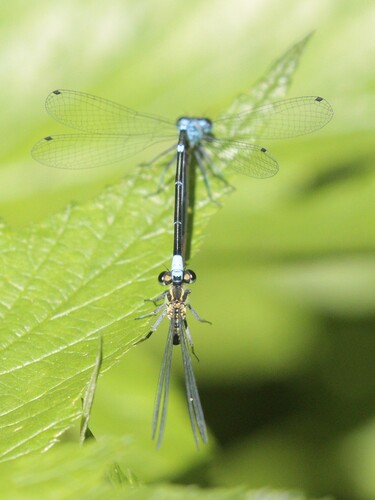
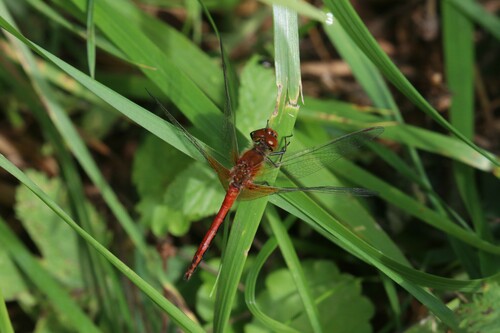
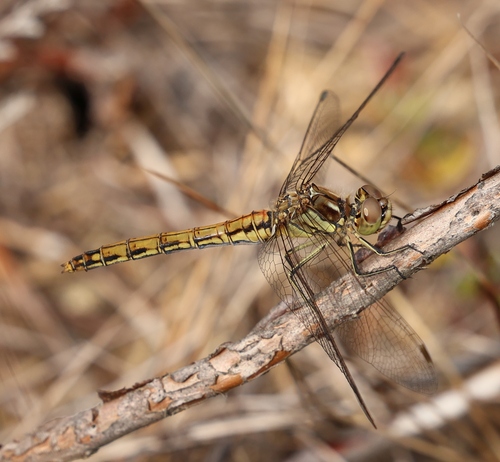
An almost unmistakable darter, red-bodied in the male, with both sexes having large amounts of saffron-yellow colouration to the basal area of each wing, which is particularly noticeable on the hind-wings. Other Sympetrum species may have limited yellow-orange colouration near the extreme wing-bases, especially in females, but never so extensively as in this species.

Sites which are likely to attract this species have thick rushy margins. The yellow-winged darter tends to make quite short flights when settled at a site, and frequently perches quite low down on vegetation. The yellow-winged darter has bred but is not established in the UK. It has occurred in Cumbria as single individuals on very few occasions. The most recent record was at Killington Reservoir in August 1995.

In Southern Europe, the nymphs of this dragonfly live in oligotrophic lakes with submerged vegetation, at high altitudes. As an abundant predator, the species has an important role in food chains of high altitude lakes. Wikipedia →
Global Distribution

Parks Where Found

# Park Country Daily sighting probability
1 Aigüestortes National Park 🇪🇸 Spain
~20%
2 Pyrénées National Park 🇫🇷 France
~10%
3 Cévennes National Park 🇫🇷 France
~10%

Cities Where Found

# City Country Daily sighting probability
1 Novosibirsk 🇷🇺 Russia
~20%
2 Helsinki 🇫🇮 Finland
~10%
3 Yekaterinburg 🇷🇺 Russia
~10%
4 Nizhny Novgorod 🇷🇺 Russia
~10%
5 Moscow 🇷🇺 Russia
~10%
6 Kazan 🇷🇺 Russia
~10%
7 Saint Petersburg 🇷🇺 Russia
~10%
8 Minsk 🇧🇾 Belarus
<5%

Before you go

What are the chances of seeing a Yellow-Winged Darter in Saint Petersburg?

With luck

About 10% of wildlife watchers report a Yellow-Winged Darter sighting in Saint Petersburg on a given day, based on 75 verified sightings from GBIF citizen-science data. It is the 29th most-seen of the 448 insects we can rate there. Over three days the chance rises to about 20%, and over a week to about 30%, if each day is a fresh chance.

When is the best time to see a Yellow-Winged Darter in Saint Petersburg?

July to September

In those months about 10% of wildlife watchers report a Yellow-Winged Darter in Saint Petersburg on a given day, against under 5% in October to June, the lowest months.

What time of day is best to see a Yellow-Winged Darter?

Between 1 and 4 pm

Across all the parks we cover, that three-hour window holds the most Yellow-Winged Darter sightings with a recorded time, and about 9 in 10 of them come between 6 am and 6 pm: it is a daytime animal.

Is Saint Petersburg the best place to see a Yellow-Winged Darter?

7th of 8

Of the 8 cities where we can rate Yellow-Winged Darter sightings, Saint Petersburg ranks 7th at about 10%. The best odds are in Novosibirsk (Russia, about 20%), Helsinki (Finland, about 10%) and Yekaterinburg (Russia, about 10%).

Which relatives of the Yellow-Winged Darter live in Saint Petersburg?

Same genus: Sympetrum

The closest relatives of the Yellow-Winged Darter that you can see in Saint Petersburg (genus Sympetrum, Meadowhawks) are Vagrant Darter (about 10%) and Black Meadowhawk (about 10%), with each one's daily chance of a sighting.

Where does the Yellow-Winged Darter sighting chance come from?

GBIF citizen-science records

It is estimated from how often the Yellow-Winged Darter is recorded against all the insects logged in Saint Petersburg (75 verified sightings), calibrated against known sighting rates. Figures are rounded to the nearest 10% because citizen-science data supports honest approximations, not decimals, and months with records from fewer than five people show "—". How it works.

← Back to Saint Petersburg