Aztec Dancer
Daily sighting probability <5% · Rare
at San Antonio

In 3 days ~10% in a week ~20%

11 Verified sightings at San Antonio
9 In 1 park From 2019 to 2026
August Best month
☀️ Diurnal When it's spotted

About the Aztec Dancer

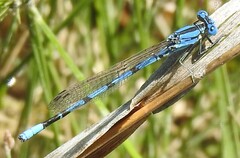
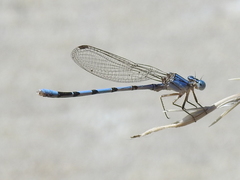
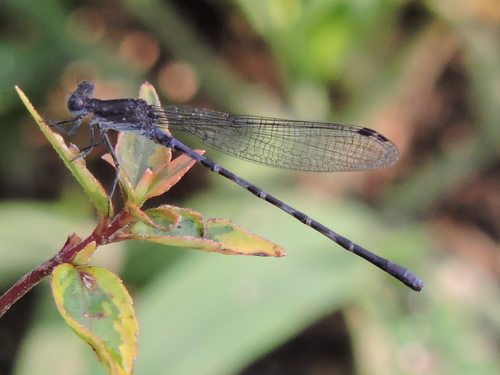
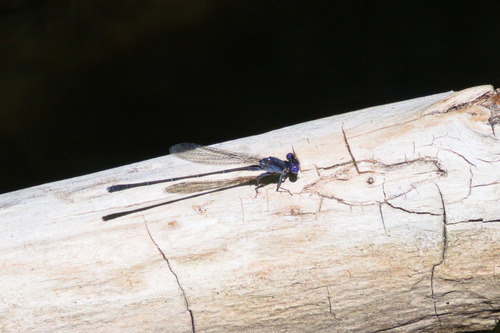
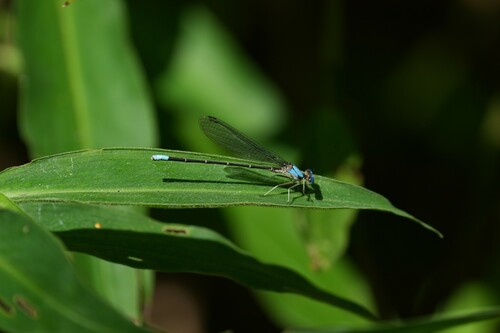
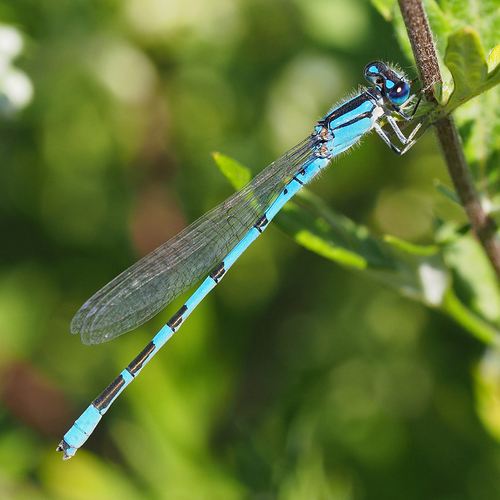
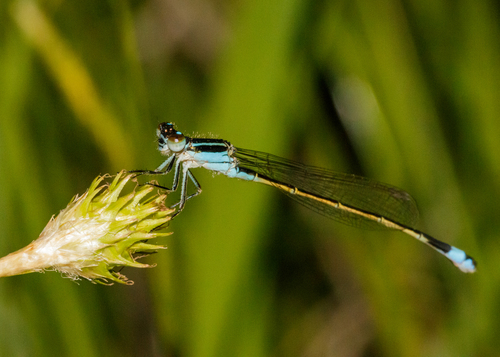
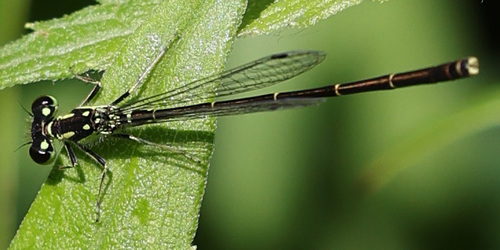
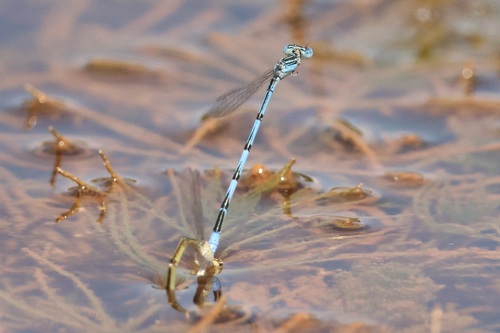
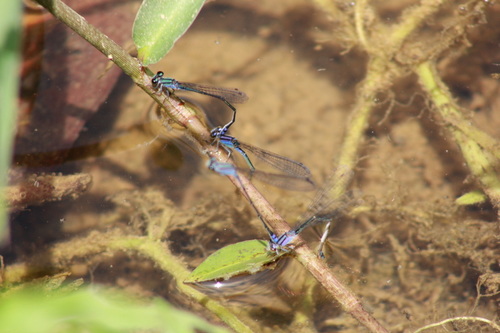
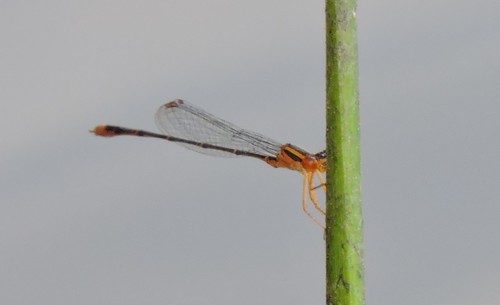
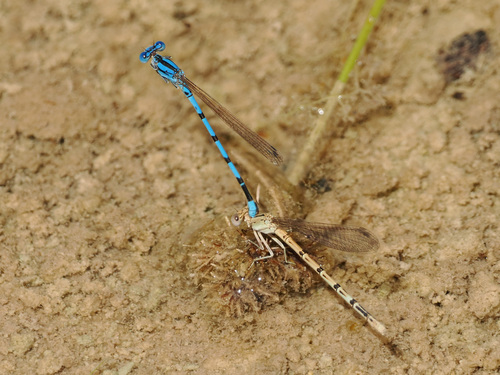
The Aztec dancer (Argia nahuana) damselfly is one of the pond damsels. Common name originates from the Aztecs, and scientific names comes from the Nahuas. The dark black stripe on the side of the thorax is forked from front to back. Other field marks include blue postocular spots, pale blue legs with a black stripe, and a blue ring on the seventh segment of the abdomen. Can be differentiated from similar subspecies by the larger width of the stripe down its mid dorsal thorax, and medial orientation of the cercus lobe. Additionally, the forewing contains four quadrangular cells and the hindwing has three. Females look similar to males with the exception of their mainly light brown coloring as opposed to the males' bright blue.

Other dancers share many physical traits with the Aztec dancer, and often occupy similar regions. Most commonly confused with Argia nahuana are Argia agrioides, Argia leonorae, Argia fumipennis, and Argia hinei. Aztec dancers were originally considered a variation of California dancers (Argia agrioides), until declared its own species in 1958.

Aztec dancers are most common in the Southwest, including... Wikipedia →
Global Distribution

Parks Where Found

# Park Country Daily sighting probability
1 Death Valley National Park 🇺🇸 United States
~10%

More parks will be added in future updates.

Cities Where Found

# City Country Daily sighting probability
1 Austin 🇺🇸 United States
~10%
2 Dallas 🇺🇸 United States
~10%
3 San Antonio 🇺🇸 United States
<5%

Before you go

What are the chances of seeing an Aztec Dancer in San Antonio?

Rare

Under 5% of wildlife watchers report an Aztec Dancer sighting in San Antonio on a given day, based on 11 verified sightings from GBIF citizen-science data. It is the 525th most-seen of the 697 insects we can rate there. Over three days the chance rises to about 10%, and over a week to about 20%, if each day is a fresh chance.

When is the best time to see an Aztec Dancer in San Antonio?

Any time of year

In every month with enough records, under 5% of wildlife watchers report an Aztec Dancer in San Antonio on a given day, so our monthly data shows no clear season.

What time of day is best to see an Aztec Dancer?

Between noon and 3 pm

Across all the parks we cover, that three-hour window holds the most Aztec Dancer sightings with a recorded time, and nearly all of them come between 6 am and 6 pm: it is a daytime animal.

Is San Antonio the best place to see an Aztec Dancer?

3rd of 3

Of the 3 cities where we can rate Aztec Dancer sightings, San Antonio ranks 3rd at under 5%. The best odds are in Austin (United States, about 10%) and Dallas (United States, about 10%).

Which relatives of the Aztec Dancer live in San Antonio?

Same genus: Argia

The closest relatives of the Aztec Dancer that you can see in San Antonio (genus Argia, Dancers) are Kiowa Dancer (about 10%), Dusky Dancer (about 10%) and Blue-Ringed Dancer (about 10%), with each one's daily chance of a sighting.

Where does the Aztec Dancer sighting chance come from?

GBIF citizen-science records

It is estimated from how often the Aztec Dancer is recorded against all the insects logged in San Antonio (11 verified sightings), calibrated against known sighting rates. Figures are rounded to the nearest 10% because citizen-science data supports honest approximations, not decimals, and months with records from fewer than five people show "—". How it works.

← Back to San Antonio