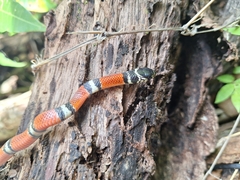
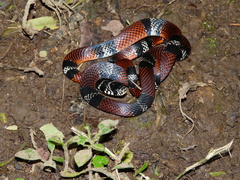
Double-banded Coral Snake Mimic

Double-banded Coral Snake Mimic

Erythrolamprus bizona

Silhouette: Alex Slavenko · PhyloPic

LCLeast ConcernNTVUENCR
Daily sighting probability ~10% · With luck
at San José

In 3 days ~10% in a week ~30%

7 Verified sightings at San José
20 In 1 park From 2019 to 2026
September Best month
☀️ Diurnal When it's spotted

About the Double-banded Coral Snake Mimic

Erythrolamprus bizona, commonly known as the double-banded false coral snake, is a species of colubrid snake, which is found in northern South America and Central America. Erythrolamprus bizona belongs to the genus Erythrolamprus, which contains over 50 species. The genus Erythrolamprus belongs to the subfamily Dipsadinae, which is sometimes referred to as the family Dipsadidae. The relationships of Erythrolamprus species located in northern South America (Venezuela) can be shown in the cladogram below, based on molecular DNA analysis:

It is found in Colombia, Venezuela, Costa Rica, Nicaragua, Panama, and on the island of Trinidad (in the Republic of Trinidad and Tobago). Similar in pattern to a coral snake, this species probably gains protection through mimicry.

It feeds mainly on other snakes. It is a forest dweller, often found in the leaf litter or burrowed in the soil in rain forests. It burrows primarily near the Pouteria caimito, commonly known as the abiu, a tropical fruit tree, the nutrients of which supply the snake's clutch of eggs. In turn the tree is fertilized... Wikipedia →

Global Distribution

Parks Where Found

# Park Country Daily sighting probability
1 Monteverde Cloud Forest Reserve 🇨🇷 Costa Rica
~10%

More parks will be added in future updates.

Cities Where Found

# City Country Daily sighting probability
1 San José 🇨🇷 Costa Rica
~10%

Before you go

What are the chances of seeing a Double-banded Coral Snake Mimic in San José?

With luck

About 10% of wildlife watchers report a Double-banded Coral Snake Mimic sighting in San José on a given day, based on 7 verified sightings from GBIF citizen-science data. It is the 17th most-seen of the 24 reptiles we can rate there. Over three days the chance rises to about 10%, and over a week to about 30%, if each day is a fresh chance.

When is the best time to see a Double-banded Coral Snake Mimic in San José?

February–March, May–June and August–September

In those months about 10% of wildlife watchers report a Double-banded Coral Snake Mimic in San José on a given day, against under 5% in April, July and October–January, the lowest months.

What time of day is best to see a Double-banded Coral Snake Mimic?

Between 9 am and noon

Across all the parks we cover, that three-hour window holds the most Double-banded Coral Snake Mimic sightings with a recorded time, and about 9 in 10 of them come between 6 am and 6 pm: it is a daytime animal.

Where else can you see a Double-banded Coral Snake Mimic?

Only San José, in our data

San José is the only city on Wallace's Line with enough records to rate Double-banded Coral Snake Mimic sightings: about 10% of wildlife watchers there report one on a given day.

Which relatives of the Double-banded Coral Snake Mimic live in San José?

Same family: Colubridae

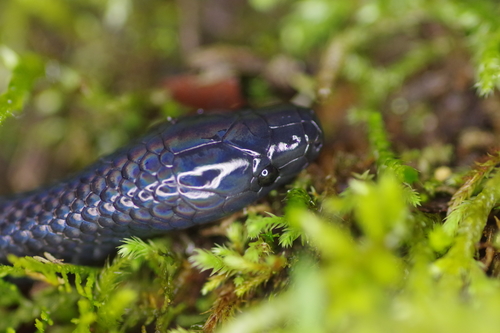
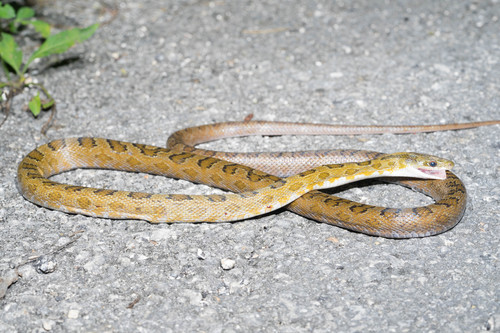
The closest relatives of the Double-banded Coral Snake Mimic that you can see in San José (family Colubridae, Colubrid Snakes) are Spotted Coffee Snake (about 10%), Hoffmann's Earth Snake (about 10%) and Green Rat Snake (about 10%), with each one's daily chance of a sighting.

Where does the Double-banded Coral Snake Mimic sighting chance come from?

GBIF citizen-science records

It is estimated from how often the Double-banded Coral Snake Mimic is recorded against all the reptiles logged in San José (7 verified sightings), calibrated against known sighting rates. Figures are rounded to the nearest 10% because citizen-science data supports honest approximations, not decimals, and months with records from fewer than five people show "—". How it works.

← Back to San José